

Wes Anderson (producer): I had dinner one night with Noah and Nico, his brother, in the back room of Primola. Noah and Nico made their way into telling some stories. I said, “Have you thought about doing this as a movie?” And Noah said, “I have.” He was working on it. So I said, “I would like to help you any way I can.”
Baumbach: It started from a very personal and, in very basic ways, autobiographical place. They were writers; they lived in Park Slope. There’s two sons. I mean, all of that was actually true of my childhood. But those are things that become a base to fictionalize off of.
Halley Feiffer (actor, Sophie Greenberg): I was also a burgeoning writer at the time, and I remember just falling in love with the writing. I was like, “This is Hemingway as a screenplay.” It’s so muscular, it’s so sparse, and yet there’s so much depth and pain and humor in every single line.
Douglas Aibel (casting director): There were many traps with a project like this, because it can seem too bitter or mean-spirited. And I just thought it had just the right sense of humor, the wittiness and heart.
Dean Wareham (composer): While we’re making this film, I was going through a divorce myself, and I was really sympathetic to the Jeff Daniels character. When he’s going out to dinner, I’m like, “Well, it was expensive! Maybe he didn’t have much money!”

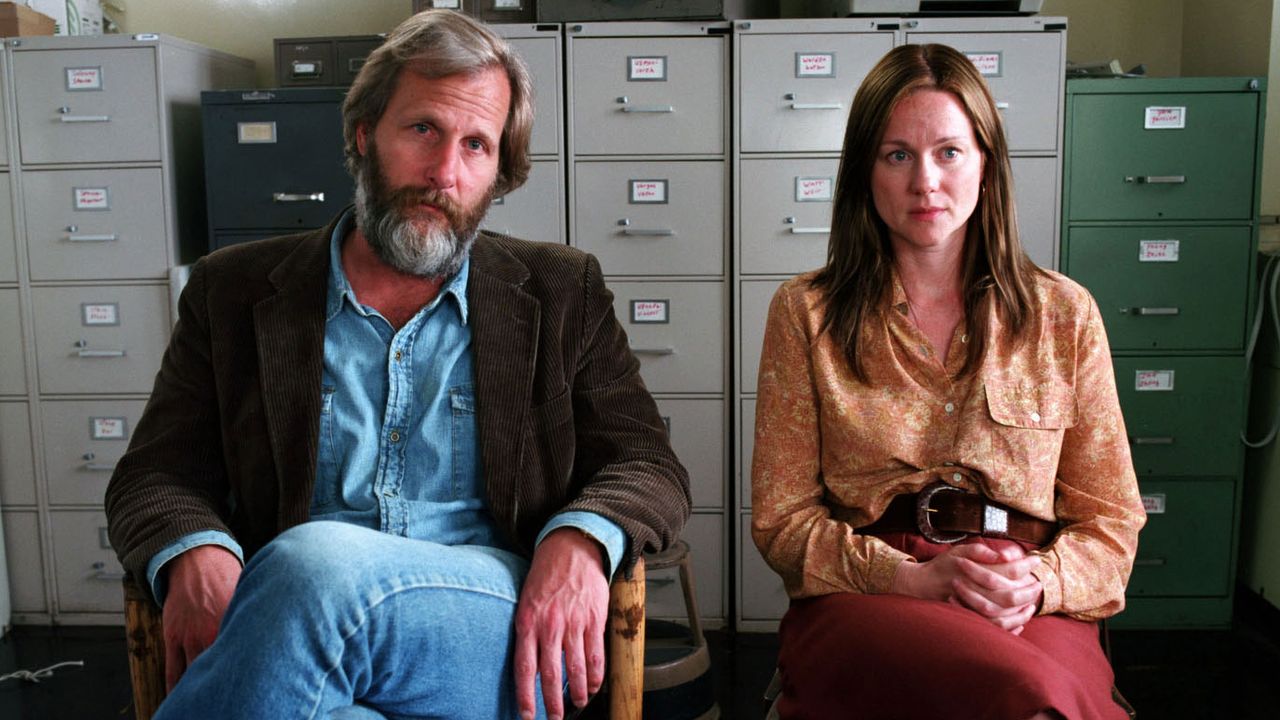
When the script was complete, Laura Linney, who knew Baumbach socially, signed on to play the family’s mother, Joan. But Baumbach struggled to find both financing and the right actor to play the father, Bernard.
Laura Linney (actor, Joan Berkman): My parents were divorced, and while my situation was different from Noah’s, there was certainly an understanding of what that does to a group of people. And also, ironically, my father and his father were at an artist colony together. They knew each other, and they had a lot of similarities.
