

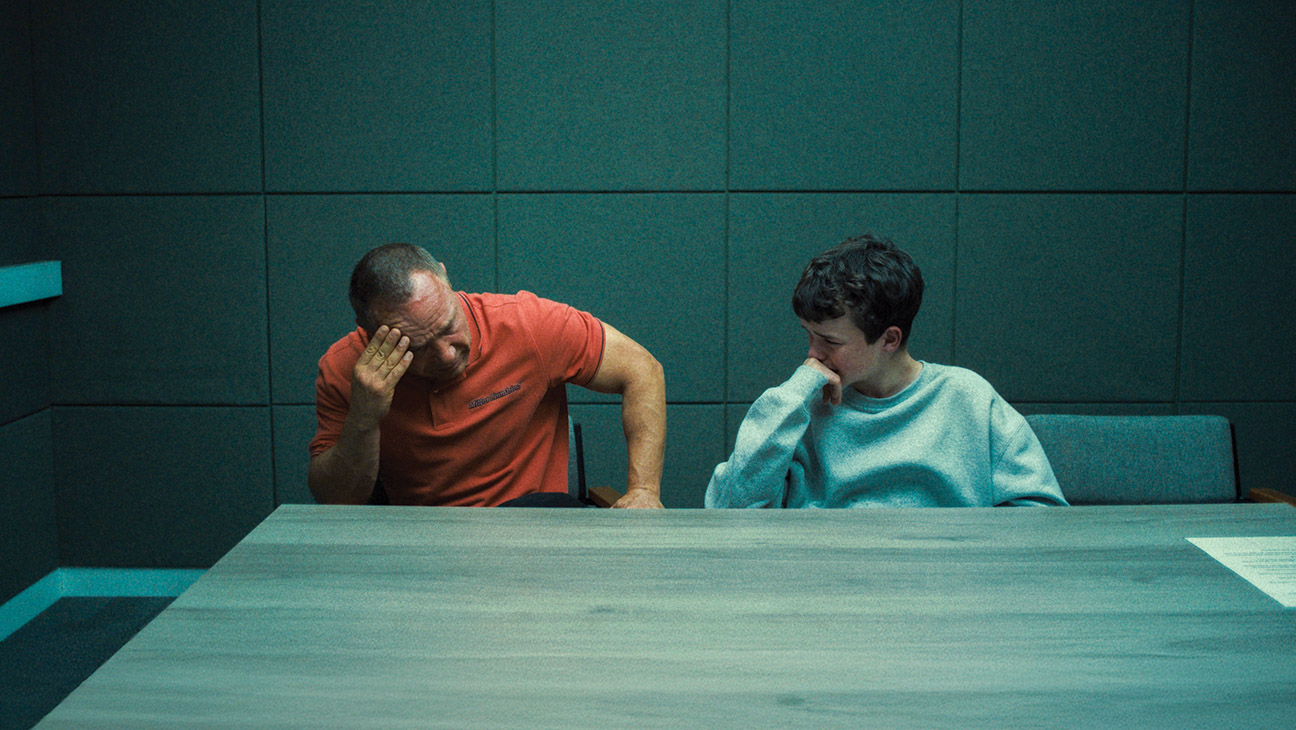
Can the international success of Adolescence be repeated?
That was the key question at a keynote Content London panel on Tuesday as the TV conference booked screenwriter Jack Thorne, director Phillip Barantini and Warp Films CCO Emily Feller to talk about the global impact of the Netflix hit. Frontman Stephen Graham was lined up to talk as well, but couldn’t get away from set, attendees were told.
The show’s cast, including Graham, Owen Cooper, Ashley Walters and Erin Doherty, were cover stars for The Hollywood Reporter when the series flew to the top of Netflix‘s charts upon its March release. It is the second most-watched Netflix show of all time, right behind Wednesday, notching up over 540 million hours of viewing time. Adolescence is also the most-watched U.K. title ever on the platform, following in the footsteps of Richard Gadd’s Baby Reindeer with its focus on British talent and storytelling.
U.K. ministers were being scalded on national television for not watching the show — following a young boy, radicalized online, who is convicted of the murder of a female classmate — and prime minister Keir Starmer approved the screening of Adolescence in schools. The show swept up at the Emmys.
Fellow industry creatives at the venue in central London were desperate to know: what’s the Adolescence formula? How can others re-produce agenda-setting global drama? “If I could [understand exactly why it broke through], then I’d feel a lot more confident about the rest of my career,” said Thorne. “I don’t think any of us really get it. I think there were issues in it that people were interested in. I think people were fascinated by the one-shot. I think the performances were incredible. I think there was just something about those things all coming together… But I also think we caught a lucky moment, and there was a wave that formed, and we were on that wave,” he continued, “I don’t think there are any sort of key lessons that people can take […] if I did know, I probably wouldn’t tell anyone here,” he laughed.
Feller added: “I think as producers, we get to support creative vision. And we get really lucky because we get to hear what people want to tell and we can put that infrastructure in place and support that visionary through a process, and I think that lessons to be learned support the vision and support the creative and allow that freedom to flow. And that absolutely happened with Netflix. They supported us, they supported Warp, and they allowed it.” She said: “They allowed Jack, Phil, Stephen to tell their story.”
It was here that Thorne said Netflix’s support for Adolescence was a vital ingredient in its global impact. “If we were on Channel 4, I think we’d have done well in the U.K., [but] I’d be really interested in if we’d have sold abroad,” he wondered. “Would other countries have wanted to buy this show? Because my experience of selling British shows abroad is that the shows that don’t really sell are the ones with regional accents, where it’s about something that’s particularly British.” Adolescence was about something very British, he said, and the accents — Liverpudlian, mostly — were “pretty strong.”
“I don’t know whether we’d have got those sort of international sales, that meant that we’d have been in multiple countries abroad and had any chance of doing well.”
Thorne, the President of the Writers’ Guild of Great Britain (WGGB), also took a moment to lament the current TV obsession with crime. “At the moment, there is a lot of writers, and they’re in real trouble. And part of that is the recession… [But] I feel writers are being trapped in cul-de-sacs,” he said. “And one thing that Adolescence doesn’t seem to have changed at all is the fact that […] if you want to get a show made, you should have a body in it, and there should be someone that’s a bit sad who’s trying to investigate the body.”
The playwright and screenwriter thinks “those shows are amazing,” but “crime has taken hold. It means that writers who are capable of amazing leaps of imagination are being boxed into these places, and I hope that that is going to change, but it doesn’t seem to be changing. The things we’re hearing within the Guild is that there’s a tremendous amount of frustration at the attitudes within commissioning.”
Content London 2025 runs through Thursday.
