

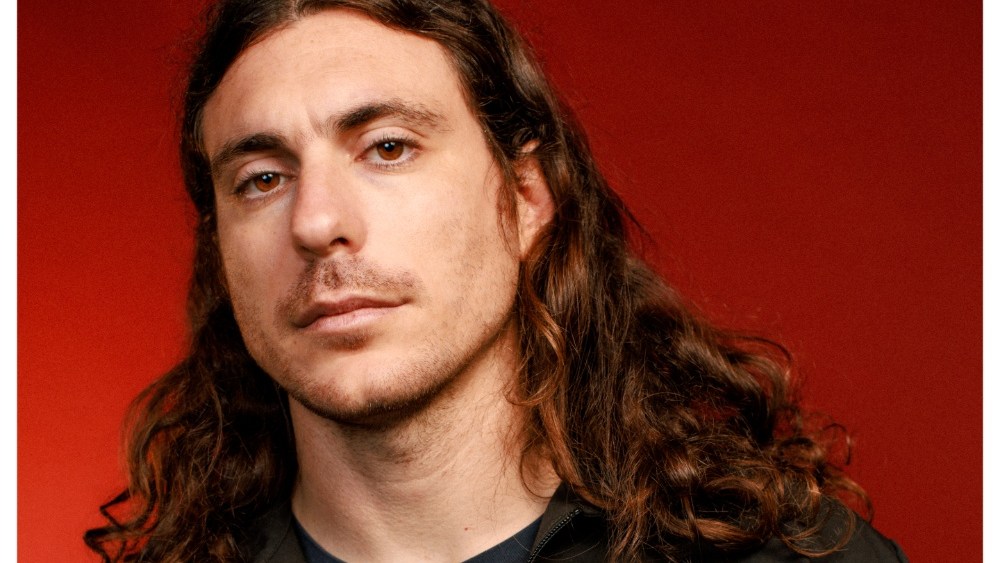
First-time Italian director Giulio Bertelli, who is fashion designer Miuccia Prada’s son, made what is probably this year’s most offbeat Italian feature film debut with “Agon,” an allegorical drama that follows three female athletes competing in judo, fencing and target shooting within a fictional live-streamed global sports tournament called the Ludoj 2024 Games.
“Agon” (which takes its title from the Ancient Greek word for a struggle, contest or competition) was inspired by the historical figures of Joan of Arc, Cleopatra and a Russian cavalry officer called Nadezhda Durova. The experimental drama examines the social pressures of competitive sports, the use of technology and social media applied to sports, and the link between sports and war, providing a fresh and realistic look at contemporary athletic agonism.
The film stars Italian judo athlete and Olympic Gold medalist Alice Bellandi and “La Chimera” stars Yile Vianello and Sofija Zobina.
Following its premiere in the Venice Film Festival’s Critics’ Week in September, “Agon” was released in Italian cinemas, kicking off Mubi’s Italian theatrical release slate, and has travelled widely on the festival circuit including the Rio, Thessaloniki, Geneva, and Brisbane fests.
Bertelli speaks to Variety about his personal connection to the film’s subject matter and how he brought Mubi and The Match Factory on board as producer, Italian theatrical distributor, and global distributor.
You’ve been involved with the Italian sailing team that competed in the America’s Cup. Is that what prompted you to depict the world of highly competitive sports?
Yes, I definitely have a personal connection to this film. But there is also a broader context. It’s true that “Agon” is centred around the world of sports. And of course it’s open to interpretations. But I also use the sports world backdrop of these fictional Olympics that are almost a geopolitical platform, to make a reflection on the role that competitive sports have taken on over the past century. And also to talk more in general about the feeling in life of not being able to achieve one’s goal. So, at one level it’s also the story of three teenagers who are unable to do what they want. This is observed very differently with respect to each character, contextualising this journey in the preparation for competition in a minor sports category of a hypothetical Olympics. Then there’s the broader issue of macro connections between how we came to call sports what they are today. Where does that comes from? And the relationship between war, violence, and sports.
Talk to me about your decision to cast real life world champion judo athlete Alice Bellandi in the film.
I initially conceived “Agon” as an animation project. Then, when I decided to make it live-action, I had two big problems. One was: how do I give it a realistic flavour that establishes trust with the audience? For fencing, I knew I could use a stunt person because in fencing you wear a mask. With shooting, I also knew that it was not a big problem because the athlete has to be very still. But when it comes to judo, I knew I had to find a real judoka. Then reality surpassed my expectations when I met Bellandi, who agreed to be in the film. Then five months after we shot she won the Olympic gold medal in Paris.
In simplistic terms, “Agon” explores the relationship between sports and technology, which is very clear in competitive sailing. Talk to me about how you weaved this into the film’s narrative.
I’m interested in the relationship between sports and technology, but in a broader sense, which is what I think I’ll continue to look at in the future. What really interests me is the rapport between the organic world and technology, “organic” pertaining to the body in this movie. One example is the surgery [scene] in the film, which is obviously a very crude scene. For me it’s very important because it’s not a metaphor. There are other directors who have addressed this theme [of technology and the body] using metaphorical devices that have shaped my imagination. But I’m fascinated by looking at this [rapport] where it doesn’t exist as a metaphor, but exists purely as reality: a robot that digs into the flesh, into the blood.
Talk to me about your relationship with Mubi. How did you bring them on board in such a big way?
Actually, Mubi was involved in “Agon” since the beginning, before anyone else. When I wrote this story as an animation project, I wasn’t actually actively trying to get this film off the ground. I met Efe Cackarel in 2017 when Mubi was much smaller than it is now. We talked about it. I mentioned that I had this story in mind and I’d like to maybe make movies in the future. He said: “I’m interested. I’m also interested in starting to produce in the future and not just be a platform. Why don’t you write the screenplay?” So I wrote the screenplay and started talking about it directly with Mubi. At first we started developing it directly in London as an animation film, but then we realised that it would be too expensive and complex to do it as an animation project.
Meanwhile, my life was changing. I thought: “maybe this could actually be my first feature film. And Efe, rightly, said to me: “Look, you need you to find a producer to take this project forward. But we are on board.” So, with [Italian producer] Max Brun, I introduced myself to Jules Daley, who had just come out of RSA Films. She loved the project and decided to help me and become my producer on this film. So, little by little, “Agon” was born. Then, when the project began to take shape, Mubi came on board. From the very beginning, there was the idea that they would distribute it. But they also became an equity investor. At that point, Mubi had acquired, or was in the process of acquiring, The Match Factory. So, to my great joy, I found myself working with The Match Factory as an international sales agent. Then they said: “Instead of selling the project, we’ll distribute it directly in Italy, because they wanted to start distributing in Italy.”
This interview has been edited and condensed for clarity.

Courtesy Filmitalia
