
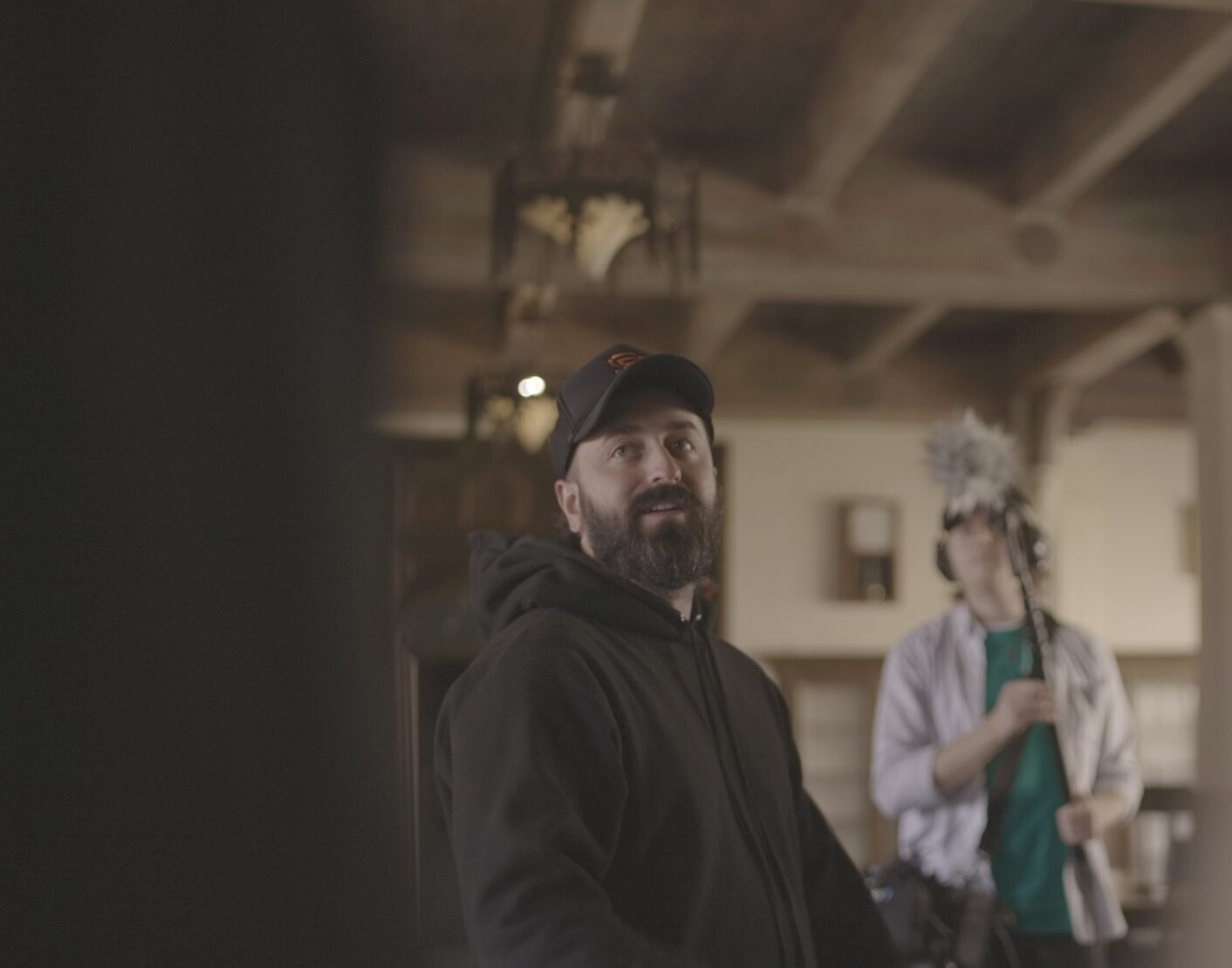
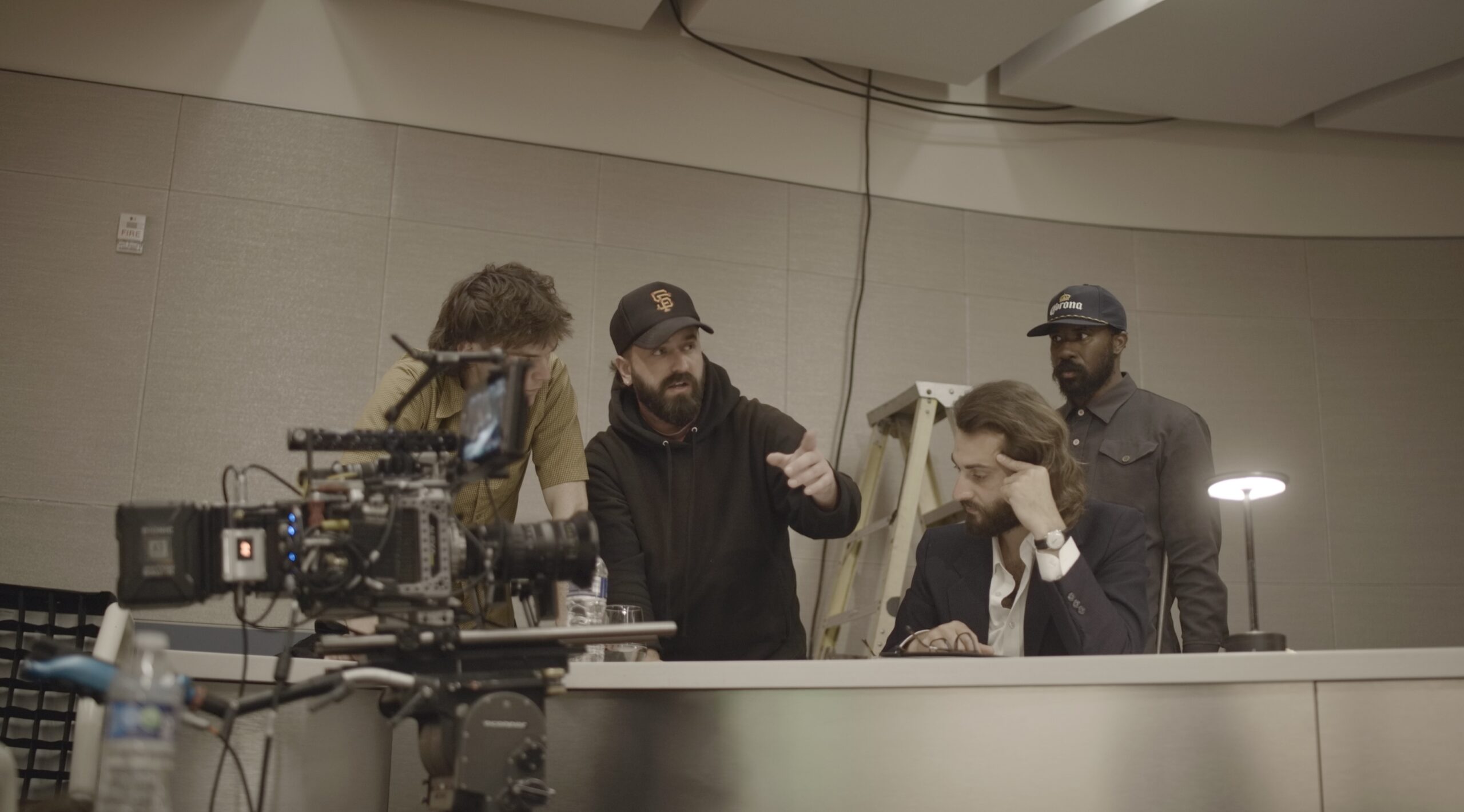
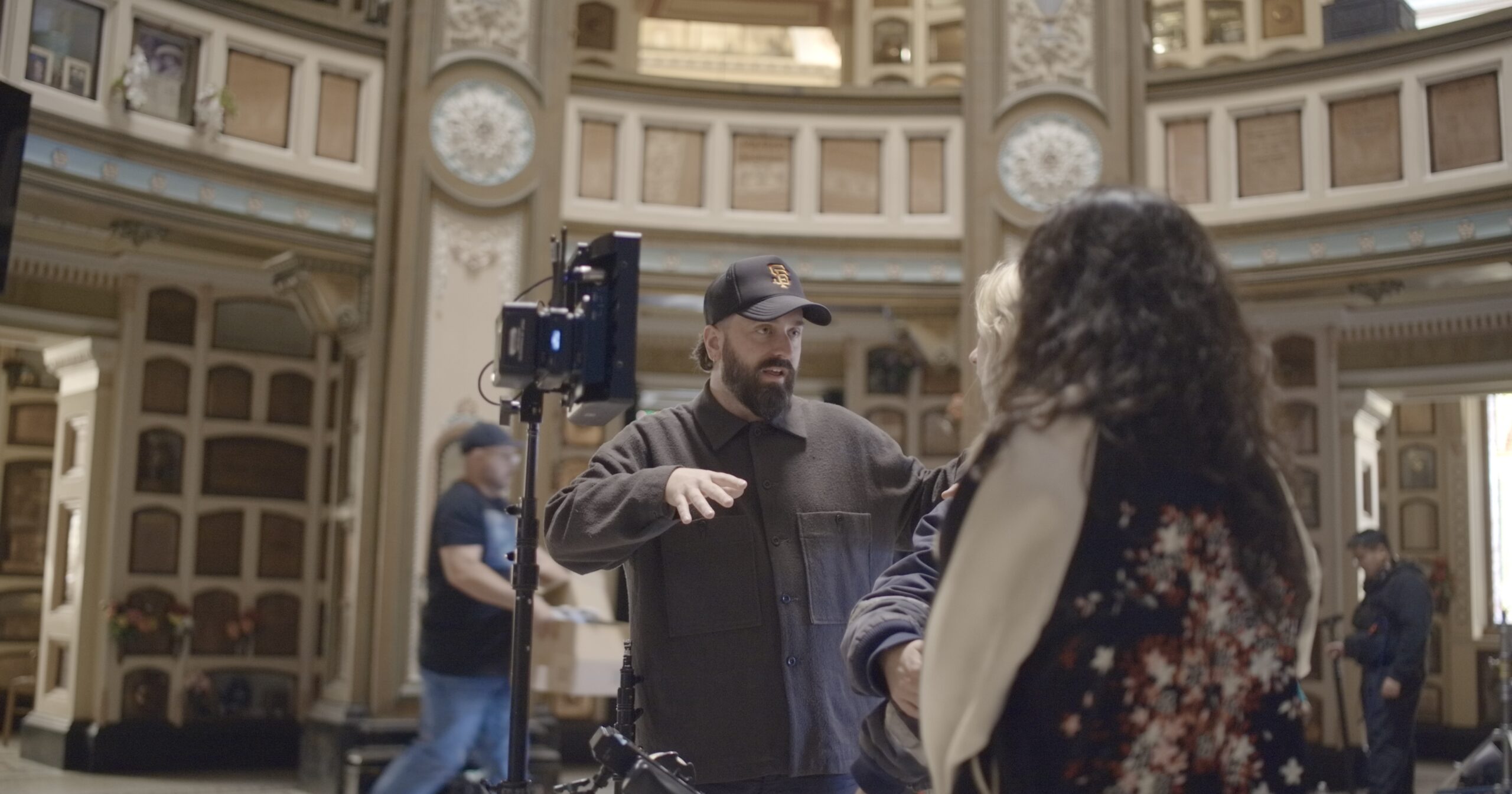
Joe Talbot, photographed by Evan Crowder.
I first watched Joe Talbot’s luminous 2019 debut feature, The Last Black Man in San Francisco, while living in New York. The film enshrined for me a portrait of the city in all its layered contradictions—its beauty and sheer nuttiness—making an impression so potent that, by the time I moved to the Bay Area three years later, I’d been inoculated against the creeping pessimism that had begun to emerge in the wake of gentrification, an airless tech monoculture, and the mass exodus caused by the pandemic.
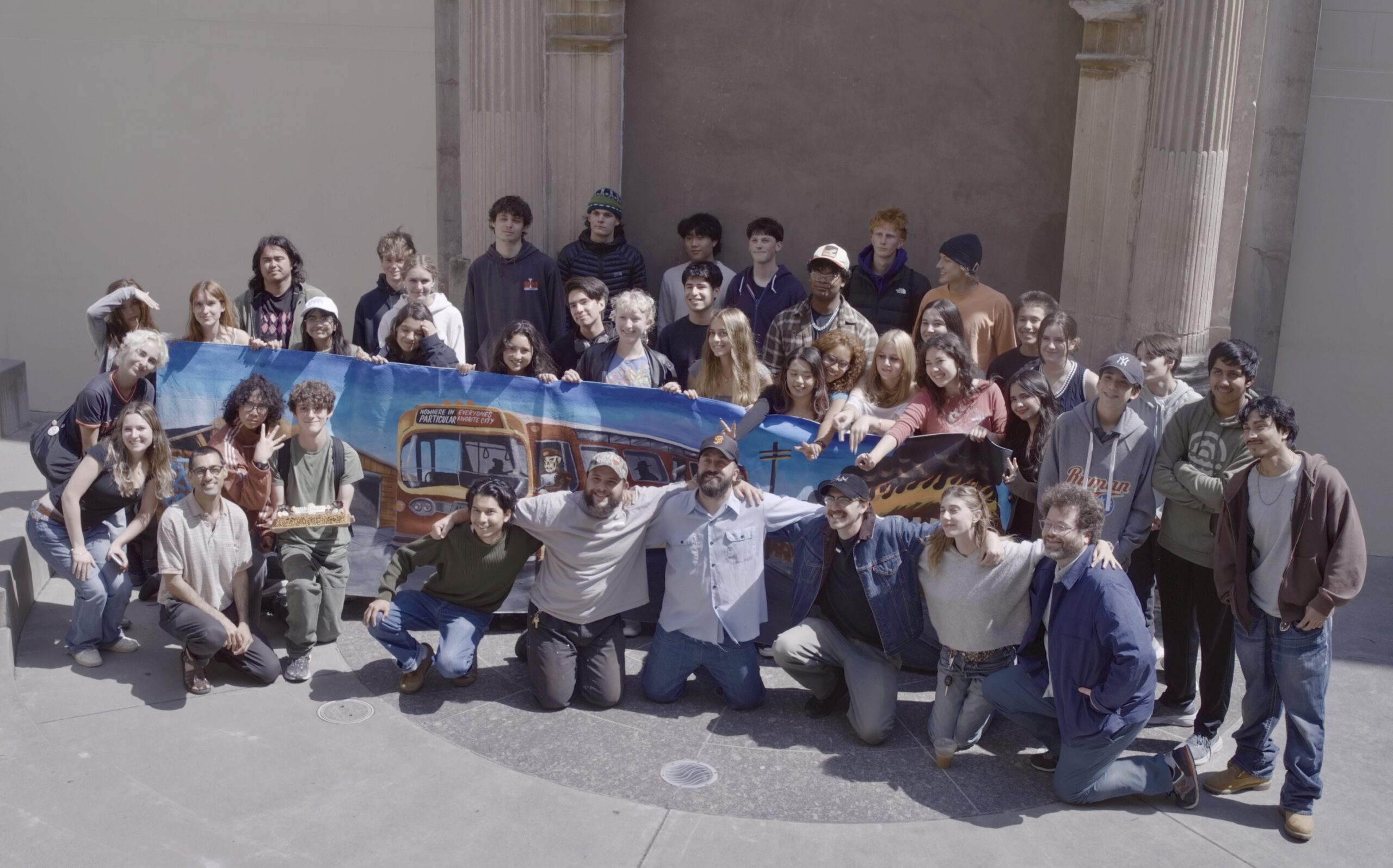
When Talbot and the gang behind the film ran a camp for teenagers called 48 Hills, designed as “a masterclass in how to make a great San Francisco movie,” I invited myself, age limit be damned, for a neighborhood microhistory walk with the legendary San Francisco historian Gary Kamiya, a cinematic mixtape of classic San Francisco films, a student pitch session with Oscar-nominated producer Christina Oh, and more.
The camp culminated in the premiere of the short film The Jar, a zany, richly realized ode to the city. Though unmistakably San Franciscan, the film stirred in me both a rare nostalgia for Seoul, my childhood home, and a pang of guilt for feeling it so rarely. But soon enough, the guilt gave way to a renewed anticipation for my next visit.
Later, in San Francisco’s Bernal Heights, I met Talbot at his brother Nat’s pizza shop, Fatty Natty’s, not far from the house where he grew up. In person, Talbot is an easeful, attentive presence who speaks with a pulse-lowering calm. But as our conversation unspooled, I sensed that this gentle disposition wasn’t born from obliviousness to hardship but was instead shaped by it, during the more searching years of his youth. As we talked—misquoting our favorite artists and not bothering to reach for our phones to check—his childhood friends who help run the shop drifted in, bringing their easy camaraderie. Talbot often brings to mind what Tobias Wolff once said of George Saunders: “He’s such a generous spirit, you’d be embarrassed to behave in a small way around him.” Above all, he’s just a good hang.
———
SHEON HAN: How are you, Joe?
JOE TALBOT: Doing good. How are you, Sheon?
HAN: I’m good. For the record, we should note that we’re at Fatty Natty’s, which, I guess, is about to transform into your brother’s pizza place.
TALBOT: Yeah. My brother started selling pizza out of our house, in part to help us keep our childhood home, actually. He’s worked in kitchens and stuff, but he always found the kitchen culture kind of toxic and unnecessarily brutal, so he just taught himself how to make pizzas and had a lot more fun selling them out of a house. But then one day, he was taking my dad, who had a stroke, for a walk, and he ran into Charlie [Harb], who runs this place. Anyone that’s lived the pursuit of art for the last quarter-century knows Charlie. He’s a great guy. So Charlie invited Nat to start selling pizzas here on Thursdays, doing pop-ups.
HAN: Also, this is the neighborhood you grew up in.
TALBOT: Yeah. It was a pretty different neighborhood when I was growing up.
HAN: Oh, how so?
TALBOT: When I was growing up, Bernal [Heights] was called Red Hill because there were so many Communists who lived there. Someone who moved here in the late ’70s once told me it almost felt like this was the real outskirts of San Francisco. So it attracted a lot of musicians and cartoonists. Someone told me that Tom Waits once lived here.
HAN: Artists of all types, I guess.
TALBOT: Yeah. I think Robert Crumb lived here at one point. Timothy Rodriguez was here.
HAN: No way.
TALBOT: My favorite filmmaker, who I ran into on the way here, Terry Zwigoff, has been here for a long time, which I found out in a very funny way. I saw the movie Ghost World when I was in high school and it really affected me. Years later, when I was in my early 20s, Jimmie [Fails] and I were working on the concept trailer for The Last Black Man in San Francisco, which was essentially us with a cheap camera filming and hanging out of the car while my brother drove. And then I saw Terry drive by. I was like, “Oh my god, it’s Terry.” I didn’t know he lived in San Francisco. None of his films really have a strong San Francisco association.
HAN: It was almost like a good omen.
TALBOT: Yes, exactly. It was like my film god just drove through our set. So we raced after him, and I realized he lived at the top of my street my entire life. Not like a block over—literally on my street. Anyway, Bernal felt wondrous in that way. It felt like people that chose to raise their kids in Bernal Heights were always a little more eccentric.
HAN: Self-selective in the best way possible.
TALBOT: Yeah, a Bernal kid is a very particular kind of San Francisco kid.
HAN: How did you learn filmmaking?
TALBOT: A lot of my dad’s side were journalists and writers. And my mom’s brother, Don, who was the family historian, always had a camera and he was always documenting all the holidays we’ve spent together. In his spare time, he loved Walt Disney and was obsessed with it. Now he’s become this pretty respected historian of Disney. So we’d go to Disneyland every year, kind of through Don, and he was always filming it. Somewhere in that made me really like the idea of filming things, so we started making ragtag productions with my cousins and we were filming stuff all the time. Then, my best friend and I started to go around Bernal Heights and doorbell ditch. We made a film called Pranking and the Human Response, which was the first film I ever made. He always indulged us and he filmed these movies of ours which made absolutely no sense. It’s probably part of why my films still don’t make any sense. I was encouraged by my uncle at a young critical age, but him doing that—and the way he took us so seriously, even when he had no reason to—got me really excited about the prospect of making movies. It felt like magic.
HAN: How young were you?
TALBOT: I was in middle school.
HAN: So it was pretty young.
TALBOT: Yeah. I remember being in sixth grade or something when 9/11 happened, my dad was in New York and was supposed to fly to San Francisco. We weren’t sure if he was on one of the planes. It was a very harrowing morning, and I was filming the TV as the planes were flying into the towers. Then, we realized he was okay. But we were all sent home and we would go out to doorbell ditched for the rest of the day. That age is a lot of switching between—
HAN: Pranks and then filming? [Laughs]
TALBOT: Yes. And earnest panic, and then being a little teenage brat or something.
HAN: I’m curious about one acronym I learned this summer—SOTA [School of the Arts]. And all the art school acronyms.
TALBOT: Yeah, now they call mine RASOTA [Ruth Asawa San Francisco School of the Arts].
HAN: How was that?
TALBOT: RASOTA was great because until RASOTA, I was literally running around Bernal Heights with any group of friends that would want to make movies together. And as a kid who was moving away from sports and towards art, it felt kind of ripe and enchanting. And then when I went to RASOTA, that was the first time I’d ever had any sort of formal film education. And to this day, it’s my only real formal film education. I had an amazing teacher there named Scott Everhart.
HAN: Yeah, tell me about him.
TALBOT: I came into RASOTA and I had some sense of what I liked in movies, but there was so much I hadn’t seen. And Scott had great taste. He had a really strange sense of humor. When I was a freshman, he showed us La Haine and City of God and all these movies, and they blew my mind. He’d laugh at really weird moments and I remember being like, “Oh, he must be really smart because he’s laughing in the places that we don’t get.” And then eventually it became my taste too, and I got why those things were funny. But even when we were making The Last Black Man years later, I remember writing things and thinking, “Oh, Scott will think this is funny.” And oddly enough, the scene that gets the biggest laughs in The Last Black Man in San Francisco is at the end of the film when there’s an open house and Jonathan Majors’ character is hiding in this kind of secret passageway and he jumps out at this gentrifier. There’s always kind of a cathartic laugh that happens for audiences in that part. Scott plays the gentrifier in that scene.
HAN: Oh, no way.
TALBOT: So it felt like this real full circle moment.
HAN: I was watching it again a few months ago and I realized that the first skateboarding shot, where there were different cuts of people who were looking at the skateboarding duo, was something that completely passed while I was living in New York. But now I get to see how they were the real faces of San Francisco.
TALBOT: Wow, thank you. It was hard because we’re establishing two things at once. There’s Jimmie and Mont in San Francisco at the edge of the city that’s very different from the city that they are adventuring into. In that opening sequence, we wanted to show the contrast, but also how even if San Francisco’s changing, the way it’s morphed and shifted isn’t always binary. You can spend your life being really angry about what’s happening—and in some ways righteously so—but sometimes then you miss all these great things that still miraculously persist. And lately, that’s what I’ve been feeling really excited about and grateful for.
HAN: Yeah. I remember you saying that even the place that you shot The Last Black Man in San Francisco has changed.
TALBOT: Several of the main locations are almost unidentifiable. Even beyond the buildings, the feeling here has changed several times over since we made it.
HAN: Something I remember from one of your old interviews was you and Jimmie saying it was an angrier film, but then you changed it.
TALBOT: Yeah. When we started, I dropped out of high school and I didn’t really know what I was going to do, and I was really scared that my life would never amount to anything. I had all these feelings I wanted to put into something, but I didn’t know how. I watched my friends leave but I had some friends that stayed in San Francisco, which can be a dark and difficult path. This city, in some ways, is a destination for a lot of people who are fleeing wherever they’re from. They’re trying to come here to be the person that they couldn’t be elsewhere. Ironically, when you grow up here, it can also be this place that traps you. It’s full of a lot of pain. But in a way, I was mired in that myself. I would lie and pretend my life was more interesting than it was, because I was really embarrassed at the state of my life. I really wasn’t doing anything.
HAN: This was in your teens?
TALBOT: Yeah. Even older, like my late teens and then in my early 20s. Around that time, Jimmie had gone off to college in New York for a year, and I remember really missing him. I always felt like New York was taking all the people that I loved. I thought, “Well, if none of us leave, then we can do something really interesting.” So I was always trying to draft people back to San Francisco. I was a very bad influence in that way, because clearly they were growing and becoming interesting and I selfishly wanted them back here. I remember how Jimmie missed San Francisco, and he really didn’t like the school he was at that much. So he came back and he moved in with us, and we bonded on being little shit-talkers. Again, deep down, we were just afraid. And in some ways, when you’re in that age, you develop an acerbic wit, where you’re really good at criticizing things because it’s so much scarier to actually make something. So the first drafts of the movie were even more obnoxious. [Laughs] But then we were forced to grow because we put out this concept trailer for the movie and all these people started to reach out and say they wanted to help us get this movie made. And during that process, we couldn’t afford to keep being angry because the world was showing us that there were still so many wonderful, compassionate, kind, enthusiastic, creative people here that not only connected to the film, but wanted to help us make it and did. So each draft got lovelier and nuanced.
HAN: It is a very loving film, but if you were an artist who was naturally empathetic, it could have veered off to sentimentality. I guess a dark twin of empathy is sentimentality, which is one of the worst things you can commit to as an artist.
TALBOT: [Laughs]
HAN: But at the same time, anger is also a pre-sublimated form of artistry. I don’t think there can be an artist without a wound, in a way.
TALBOT: Yeah. I mean, I wouldn’t wish your 20s on anybody. I was so scared and you make some of the worst decisions out of fear. In my case, I was afraid that we would work on this movie and it would never happen, and I would be a guy who was living in my childhood bedroom way too late in life. And even worse, people would go, “Oh, whatever happened to that movie?” So one of my sins—in addition to sentimentality—was my fear.
HAN: But then I did not see sentimentality in your film.
TALBOT: Well, that’s nice. In some ways, I feel like a generally happy person, which is maybe a strike against me as an artist. But in other ways, I feel neurotic and sensitive, and in talking with you about goodness and where it comes from, I’m often wondering which part of me—my more neurotic and sensitive side or my more generally positive side—is where goodness comes from. And sometimes, I admire and feel jealous of friends of mine who seemed good in a way that doesn’t come from that same kind of internal wrestling.
HAN: Jennifer Egan, the novelist, said something about how growing up in San Francisco in the ’70s is to regret not having grown up in San Francisco in the ’60s.
TALBOT: [Laughs] Yeah, exactly. I feel two things at once like, there really are things being lost that are tragic, and I’ll get hit with even a memory of what was and it’s really overwhelming. Even in the last decade, you feel something real has changed. But I also do think that we are uniquely nostalgic here. It can really lead you down to some painful rabbit holes. And making movies, I’m not helping my own cause. It’s a nostalgic art form because you’re trying to validate something that’s fleeting.
HAN: How did the idea of starting a film camp begin?
TALBOT: I am the least qualified person to lead any kind of summer camp because not only have I never taught, but I never really even went to one. But I was back in San Francisco and my brother and I have been helping take care of our parents. They’ve been dealt with some difficult diagnoses and I was thinking a lot about their lives, how much I loved my high school, my teachers, and how influential Scott was to me. They live in everything I make, those people. So I started talking to a few friends and a really amazing San Franciscan who also went to RASOTA, years younger than me, Link Wolf. I come to them with crazy ideas and they’re kind of a barometer for how crazy the idea is. They thought it was a little nutty, but they were immediately game to try to do it. In a way, pitching is such a big part of your life as a filmmaker.
HAN: Was the pitch about making San Francisco-based movies?
TALBOT: That was part of it. First, I got excited about doing some sort of summer camp, teaching film. I felt really unqualified, but I could actually be helpful in teaching high school kids how to make a San Francisco movie, having made one and having spent years mining the city for inspiration. And we were lucky—a lot of people signed up, hundreds of people were saying they wanted to participate. We had a lot of people in their 20s and 30s. Those were fun days.
HAN: It was amazing.
TALBOT: That was really fun. See? I’m already nostalgic for those days. [Laughs] I didn’t want to teach something introductory because that requires some sort of patience and intelligence. And I hoped we would have kids come to the camp who were already making pretty incredible things on their own, and that this would be a chance to help push them to an even higher level of ambition. I knew it would be scary. I wanted to throw them into a real set environment. And we got lucky because it’s 71 kids, and they were so smart.
HAN: They were so great.
TALBOT: It felt also emotionally really restorative after L.A. When we started recording, we’d been through the fires, and before that, the strike. Now, it’s fearing the future dominated by AI. I brought up all of my most talented friends to help teach the camera. It’s Adam Newport-Barris teaching cinematography, Liam Moore teaching production design, and Emile [Mosseri] teaching film score. I saw them all get softened too. It reminded us of why we do it. That was certainly the case for me, and for them it was hard. We were trying to pull off making one movie with 71 kids who were at the helm and 40 adults supporting them. Each scene would be directed by a different director and production designer. So how do you make something cohesive? We knew it was going to be tricky. I saw my friends get really giddy. The kids were so fun and smart and curious. So you don’t feel like you’re teaching; you feel like you’re getting to have conversations with other really smart, interesting people, which is amazing.
HAN: I was looking at them like, “Why didn’t I have that experience in high school?” I told you this already, but watching them answering Q&A’s after the movie, that was the first time that I thought, “I want to have a kid.”
TALBOT: [Laughs] Oh my, that’s beautiful, Sheon. What did teenagers do for fun in Seoul?
HAN: We have a very strong gaming culture, but I wasn’t much of a gamer. There’s not much freedom to be creative and do whatever you want to do when you’re in middle school and high school.
TALBOT: How did you maintain your career this far?
HAN: I don’t think I became conscious until I was like, 26.
TALBOT: So it was dormant inside you.
HAN: Yeah. But it is also weird because I see interesting movies and TV shows and music coming out in Korea. Where does it come from?
TALBOT: There’s so much incredible film and music.
HAN: Yeah. I need to ask you about transgressive films, because we had some interesting conversations about why there are so few truly transgressive films.
TALBOT: In some ways, maybe it’s funny that I, of all people, am interested in transgressive filmmaking because I don’t think that The Last Black Man in San Francisco is an especially transgressive movie. It wasn’t pushing up against any orthodoxies or daring to challenge them in some huge way, but I do find myself craving more and more films that feel daring and implicate you as the audience and feel like they’re pushing you towards less simplistic conclusions and more complex ones. Our stories are getting, for one, much less interesting, but they’re also suffering from a larger cultural narcissism and self-indulgence that feels inherently opposite to something curious and built around exploration, because those things often don’t leave you with any simple conclusions. We’ve got to wade into more daring territory. Who in my generation will finally relieve our daring and weird elders who’ve been holding the torch, who are probably understandably disappointed in filmmakers my age?
HAN: Maybe they’re afraid of the market or offending people. l also can’t stand a sanctimonious piece of work that doesn’t recognize the creator’s own flaw.
TALBOT: l go as far as to say that when you watch a moralizing film, not only is it hard to find anything to connect to, but it can sometimes be a painful experience because the most manipulative ones pretend that they’re presenting flawed and complex characters, but those flaws always feel like they’re acceptable flaws. They’re flaws that aren’t really that bad. Those movies prioritize likability over lovability and acceptability over something you can actually relate to.
HAN: Is there going to be a season two of 48 Hills Camp?
TALBOT: We definitely want to do another 48 Hills summer camp next year. We have a crazy, ambitious dream for what that can be. Something that pushes even beyond film and incorporates not only teenage students, but adults as well. That is still developing, and right now we’re trying to determine whether it’s even gonna be possible to pull off this big wild dream that we have, but it is in the works.
HAN: We should have some pizzas.
TALBOT: Oh, I’m so hungry.