

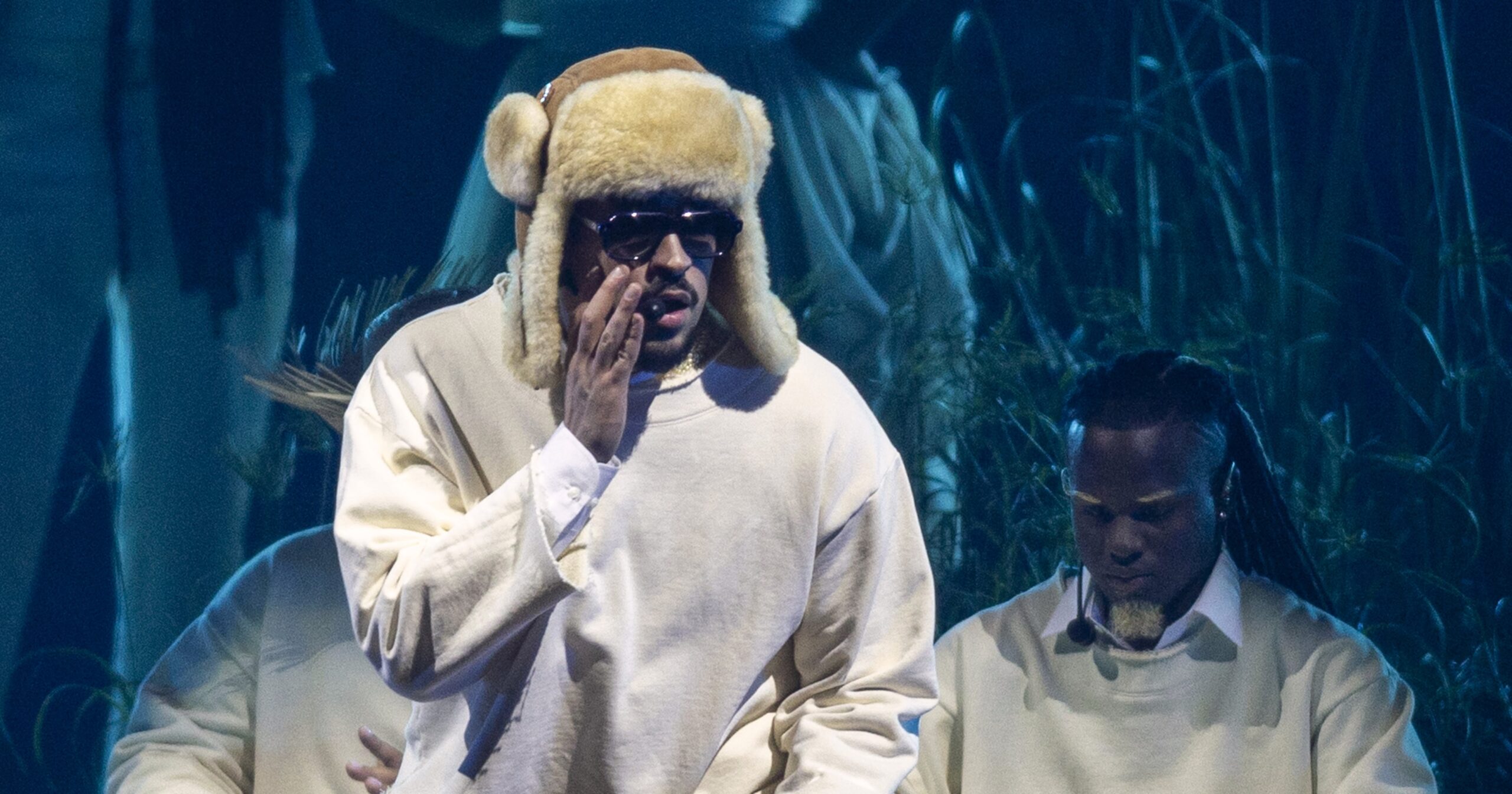
“Dominicans and Puerto Ricans have a lot in common. One of those things is that it’s summer all year here,” Bad Bunny said passionately from the stage at the Félix Sánchez Olympic Stadium in Santo Domingo, Dominican Republic, on Nov. 21. The concert marked the start of his highly anticipated “Debí Tirar Más Fotos World Tour,” which will take him through Latin America, Europe, and Asia following his historic 31-show residency in Puerto Rico.
As a Dominican American born and raised in NYC, Bad Bunny has always made me — and my community — feel seen. It’s one of the many reasons why seeing him perform in my parents’ home country has been on my manifestation list, even after catching his show in Puerto Rico in July. I was honored to be among the journalists and content creators invited by Hennessy, the tour’s main liquor sponsor, to experience it all firsthand. And as expected, Benito Antonio Martínez Ocasio did not disappoint.
The relationship between Dominicans and Puerto Ricans has always been complicated. But as someone who grew up among both communities — especially with my primas hermanas being half Nuyorican — it’s always been clear to me that we’re essentially the same people. It’s why Dominicans and Puerto Ricans who don’t have beef affectionately call one another primos.
We share deep historical roots through the Taíno people, something that became even more evident during my recent time in Santo Domingo after visiting the Centro Cultural Taíno Casa del Cordón in the Zona Colonial. Both cultures are shaped by Taíno, African, and Spanish influence, which is why our food, music, slang, and devotion to baseball feel so interconnected.
We are island people — caribeños at heart — whether we were raised on the islands or not. And as Benito recognizes, we carry a similar spirit and vibrancy for life.
But growing up, I also witnessed tension between the two groups in NYC — from economic competition to jokes about our dialectal differences to debates over who makes the best pernil, mofongo, arroz con guandules (or gandules, like Boricuas say), and pasteles. There were also perceived racial differences and political tensions tied to our different immigration realities: Puerto Ricans are US citizens, while Dominicans are not. And while some might insist this is all just “friendly competition,” Dominicans living on the island of Puerto Rico have experienced discrimination rooted in racism and xenophobia. That’s why seeing Bad Bunny not only show love to Dominicans but consistently highlight our similarities — welcoming us with open arms and doing his part to ease any tension that does exist between the islands — is something I’ve always taken note of.
During his “No Me Quiero Ir de Aquí” residency in Puerto Rico, Bad Bunny frequently shouted out the Dominican community, often referring to the Dominican Republic as his “second home” and expressing solidarity with Dominicans on the island — especially around the immigration challenges they face in Puerto Rico. In the Dominican Republic, he expressed the same sentiment and just as strongly.
“I’ve really enjoyed being a tourist here — though I don’t know if ‘tour’ is the right word because when I’m here, I feel at home,” he said Thursday night to the crowd. The show opened with a phenomenal performance by Puerto Rican band Chuwi, who is joining Bad Bunny as the opening act for the 27-show world tour across Latin America and Australia. The set list differed slightly from the one he performed during his Puerto Rico residency, blending tracks from “Debí Tirar Más Fotos” with hits beloved by the Dominican community — including “Tití Me Pregunto,” the song he dedicated to the DR in 2022 after winning the Latin Grammy for Best Urban Fusion/Performance.
He also performed major Dominican favorites like “La Romana,” featuring El Alfa, and “Diles,” which includes Dominican artists Ozuna and Arcángel. He closed the night with “DtmF” and “Eo0” from “Debí Tirar Más Fotos.”
Notable attendees at Thursday night’s show included Puerto Rican supermodel Joan Smalls; Dominican American actress Dasha Polanco; Dominican MLB All-Star and World Series champion Juan Soto; Dominican MLB All-Star and Gold Glove Award winner Starling Marte; Netflix’s “Owning Manhattan” reality TV star and entertainment journalist for Telemundo Genesis Suero; and award-winning DJ, radio host, and Latin music personality Alex Sensation. At Saturday night’s show, the King of Bachata, Romeo Santos, even joined Bad Bunny onstage for a surprise bachata version of “BoKete.”
The Puerto Rican global superstar certainly delivered on his promise to give the audience a truly unique night. “We’re going to dance a lot, we’re going to have a good time, we’re going to laugh, we’re going to cry,” he said as he opened up the show. On Nov. 24, he even posted a love letter to the Dominican Republic on X — expressing his gratitude for the island and the Dominican community.
Everything about this experience reminded me of the sibling-like relationship that exists between Dominicans and Puerto Ricans — a bond Benito clearly wants to honor. My time in DR began with the Hennessy block party in downtown Santo Domingo, filled with Dominican and Puerto Rican flags and a mix of Latin music, from salsa to bachata. We then had an intimate dinner at Salomé, created by two-Michelin-starred Dominican chef María Marte, with cocktails curated by brand ambassador Jacqueline Sanabia. The entire experience highlighted ingredients and flavors inspired by both Puerto Rican and Dominican culture.
I also got to explore a bit of the capital — the city where both my parents were raised — and saw touches of Puerto Rico everywhere, from the merch vendors to the jíbaro straw hats being sold in honor of Bad Bunny’s show.
We’re living in a time when Latines coming together across the diaspora is more critical than ever. So seeing a Puerto Rican artist like Bad Bunny — literally the No. 1 global music artist — use his platform to highlight our shared history and cultural connection, while also expressing solidarity, is a big part of why he resonates so deeply not just with fellow Dominicans like myself but with Latines across the globe.
Benito understands the impact music has on people and how his work has fostered a sense of community, shared experience, and unity — something our broader Latine community has desperately needed. There’s power in numbers, and our collective impact is undeniable. Yet we often get in our own way by focusing on our differences rather than our shared strengths. Politics aside, music has the power to bring people from all walks of life together — and if there’s one artist who has truly made that happen, it’s Benito.
Johanna Ferreira is the content director for PS Juntos. With more than 10 years of experience, Johanna focuses on how intersectional identities are a central part of Latine culture. Previously, she spent close to three years as the deputy editor at HipLatina, and she has freelanced for numerous outlets including Refinery29, Oprah magazine, Allure, InStyle, and Well+Good. She has also moderated and spoken on numerous panels on Latine identity.
