

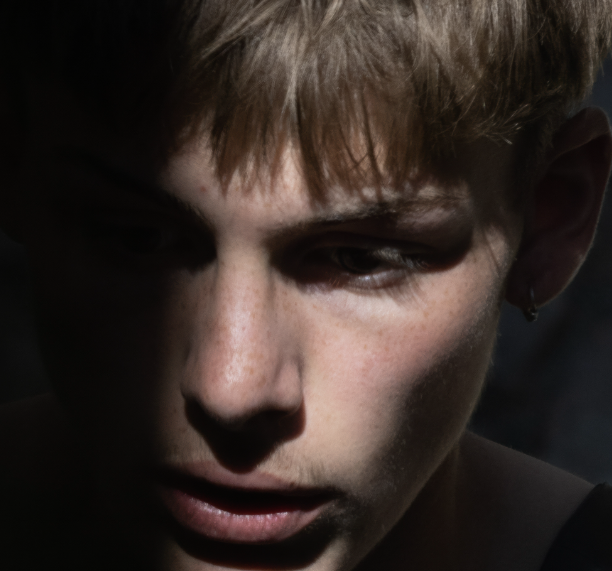
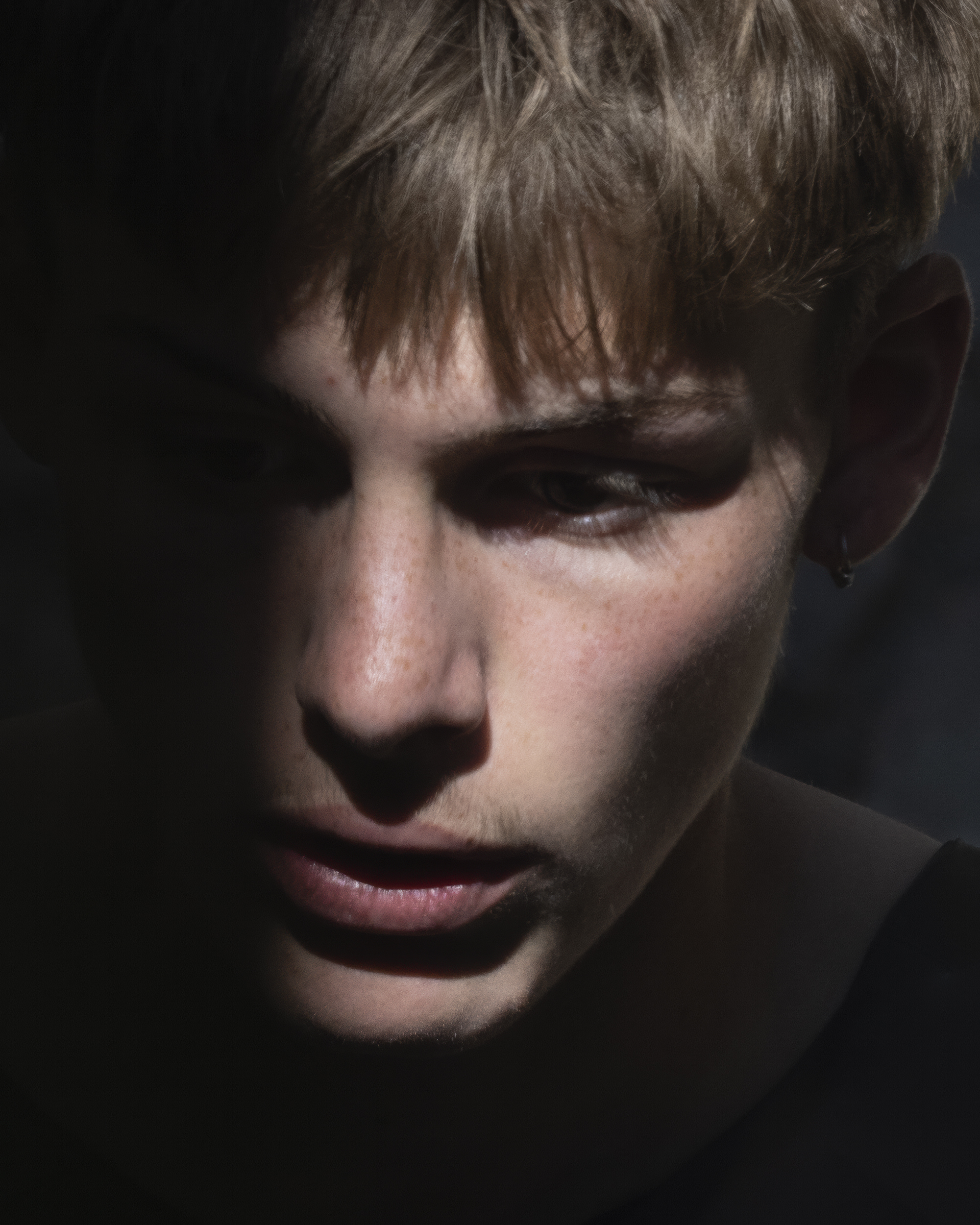
All photos from WOLVES by Winter Vandenbrink, published by IDEA.
What’s the point of fitting in, anyway? Photographer Winter Vandenbrink wants to know. His new book Wolves, out today via IDEA, follows packs of young people across Paris, Venice, Amsterdam, and Milan. Who moves together, who stands alone, and why? Hanging back discreetly with a long lens, Vandenbrink’s work is a study in group dynamics, peer pressure, and the way relational identities form. At first glance, the portraits seem cool and composed, but beneath the surface runs a current of anxiety, pride, and longing. The book itself is perhaps his most ambitious object yet, so much so that several printers refused to attempt it. In collaboration with designer Linda van Deursen, it features posters that don’t unfold tucked inside the pages, plus a book jacket that folds out into a larger poster with the book hanging from its center. If that sounds complex, it’s because it is. We caught up with Vandenbrink while he was in Paris to talk about the films that shaped this work, growing up on the outside, and how he finally cracked the code on editorial shooting.
FRIDAY 7pm, JUNE 12, 2026, PARIS
———
EMILY SANDSTROM: Where are you right now?
WINTER VANDENBRINK: I’m in Paris at the moment.
SANDSTROM: Nice. I looked through the new book and I just love it so much. I read that one of the printers told IDEA that it was physically impossible to make?
VANDENBRINK: Yeah, they did.
SANDSTROM: Why was that? And what did you want the physical experience of holding the book to be?

All photos from WOLVES by Winter Vandenbrink, published by IDEA.
VANDENBRINK: Well, I’ve been working with this great book designer called Linda van Deursen. She came up with this idea to insert posters that you can’t unfold inside the book. So they’re stuck in there, but they’re tactile and give a bit of a visual surprise. Then she suggested that we wrap the cover up in a poster. This poster can unfold, and then the book sort of hangs from the middle, like glued to the poster. These two things together were a difficult task for a lot of printers. But we found one in Holland that was able to, so it worked out. I haven’t seen it in real life yet because it’s at the printers now being glued, but the feeling will be like a book, but wrapped in something. Then you can fold it out into a big object.
SANDSTROM: Amazing. How did you meet Linda?
VANDENBRINK: I met her through a mutual friend who is also a photographer. His name is Bart Julius Peters. He was suggesting Linda to me when I was doing my first book with IDEA, Vandals. So she was on my mind already for quite a long time. I wanted to do more like a photographic artbook. Vandals is more like an archive. Now I want to have something a bit more specific. I thought she was the right designer for that, to make it a bit more about the photography instead of a complete archive of the work.
SANDSTROM: This is your third book with IDEA, right?
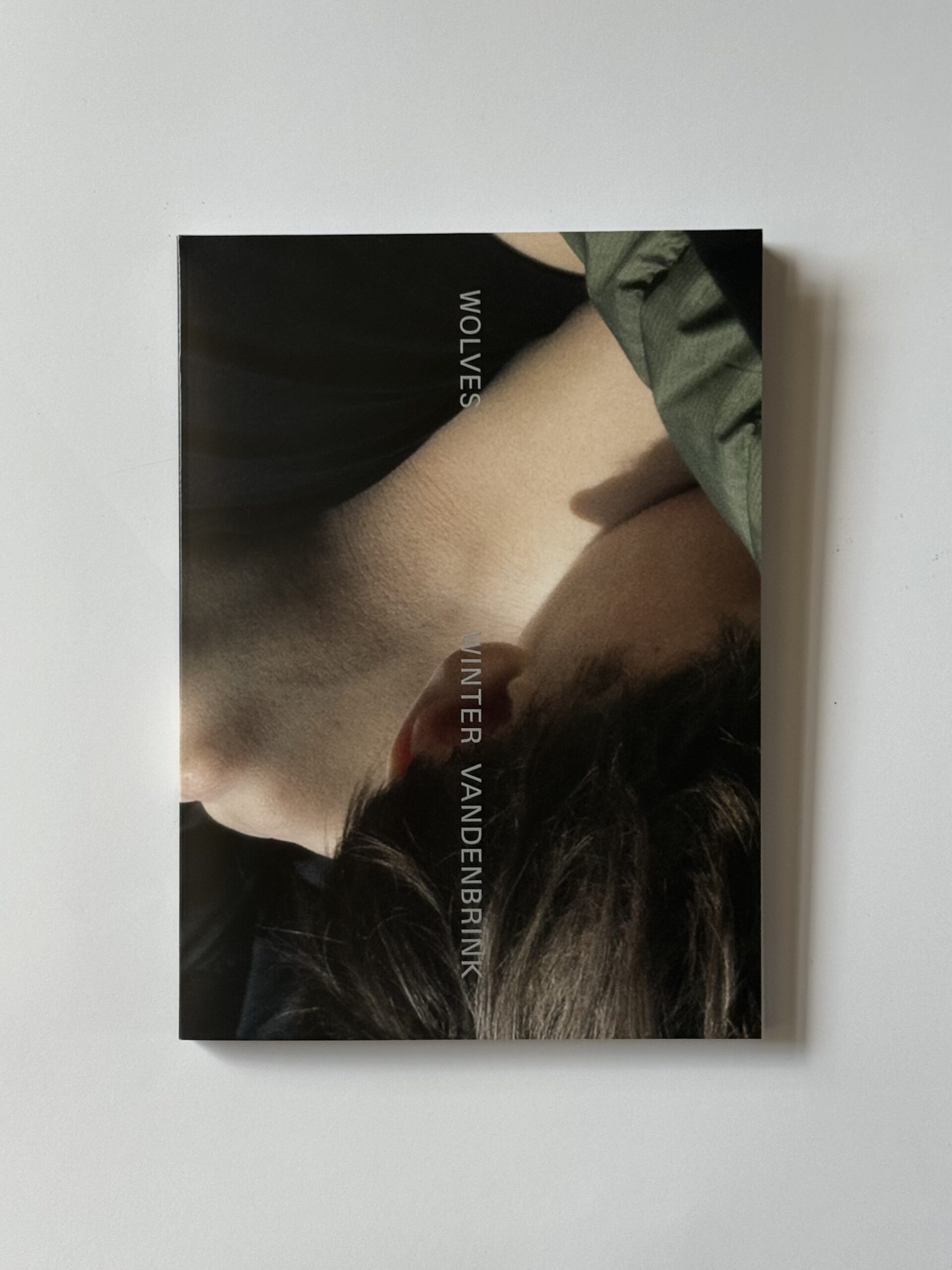
VANDENBRINK: Yeah. I made four total. I made one with Etudes, a clothing brand, maybe two years before my first book with IDEA.
SANDSTROM: Do you think in terms of books now?
VANDENBRINK: Yeah, almost. I already have two new ideas for books, but it’s strange because the work, and the way I work stays the same. It’s more in the editing process, you start to think of the collection all together. Or for instance, my boyfriend and I discovered an artist in Morocco who makes little drawings, and they really look like my work. So I’m also thinking maybe we can make a book about that and combine it with my pictures.
SANDSTROM: I love that idea.
VANDENBRINK: But yeah, I’m thinking more and more in books. Also because I like it a bit more now than editorials.
SANDSTROM: Are editorials just a really different way of thinking?
VANDENBRINK: It’s very, very different. For an editorial, you’re mostly on your own, or with a stylist in the selection process. Whereas with a book, you’ve already gone through that phase, and then you’re coming together with a designer. Then you have a lot of talks and decisions have to be made. The process was much longer for this book. I think it took six months.

SANDSTROM: For this book you’re looking at these packs of kids. I often say my worst fear is groups of teenagers. Sometimes they say mean things or make a lot of noise or they’ll knock into you, but they’re fascinating. What do you find interesting about group dynamics like that?
VANDENBRINK: It’s exactly that. How one individual, for instance, belongs to a group. That’s also where the title comes from. It comes from a text by [Gilles] Deleuze and [Félix] Guattari [“One or Several Wolves?” from the book A Thousand Plateaus]. deals with packs, and how as an individual you’re up against that group. Do you want to be a little bit outside, or do you want to be in the middle of the group fully accepted? Or do you want to be really on the edge? Maybe not fully accepted, but still you need the group. Basically, this is a study on that behavior. I’m interested in both the mainstream and the kids that want to be a little bit outside of their group. That’s how that interest translates into pictures.
SANDSTROM: What was your personal experience of that stuff growing up?
VANDENBRINK: I wanted to be a little bit outside of the mainstream. That’s also what I find interesting, because I’ve been in it myself. You think you’re really an individual, and that you’re different from the rest. But when you grow up, you’re listening to bands like The Cure or Depeche Mode. But if you look back, there are complete groups that did that. You were not the only one. You might think you were very special from that, but there’s just another group that you belong to. You always need a group, I think.
SANDSTROM: What do you think is different about the kids now?

VANDENBRINK: Maybe not that much. Only their surroundings are different. They have the social media thing, which can be a lot. You can be a lot meaner to your peers, because you can do it anonymously. But I still don’t think much has changed, only the technical ways of expressing yourself. Maybe society is a little bit harsher for them as well. Maybe there are fewer possibilities. Or maybe possibilities are even more. I can’t really decide on that.
SANDSTROM: It seems like the possibilities are just extremely different.
VANDENBRINK: They’re different, yes. But I don’t think the kids themselves have changed.
SANDSTROM: You shot in Paris, Venice, Amsterdam, and Milan. Were you seeing differences from city to city, or was there something more universal going on?
VANDENBRINK: There’s a universal thing with sportswear, like everyone’s wearing Nike, Puma and Adidas and all. But in Milan, the kids that are wearing tracksuits look much more elevated in it. It’s more tailored to them. It’s really strange because it’s the same brands and the same thing. But it also has to do with how they style their hair, and even pluck their eyebrows. There’s a lot more grooming going on.

SANDSTROM: Were you able to see hierarchy explicitly in these groups?
VANDENBRINK: Yeah. Because I’m shooting a lot of boys, you do see alpha males at a very young age. That’s why it’s the title of the book–there’s always a leader. You can really tell. Then there’s movement around the leader. It’s really fascinating. Maybe I should start filming it.
SANDSTROM: You should. Were there any movies that influenced this body of work?
VANDENBRINK: Yeah, totally. Early on, I watched a lot of Larry Clark and Gus Van Sant. More recently, I found an amazing director from Spain called Eloy de Iglesias who makes films about groups of kids who are a bit criminal and prostitute themselves. It’s all shot in the ’70s and it’s really about this community of kids, like Larry Clark does.
SANDSTROM: I’m wondering if you can talk more about the mindset that you have to be in to do the editorial work that you do as opposed to street shooting.

VANDENBRINK: Yeah, it took me a long time to get used to that because it’s very different. So I found some really good tricks. Also, working with a long lens, trying to make them feel a little bit awkward and lost, that really worked. But it did take me maybe two or three years to really be able to do that because before, it was too pose-y. Now I can make it look more like my street work. For instance, I did a great shoot for a really big brand with teenage girls a few weeks ago and that one really worked. The girls were really not aware of me anymore and they really were like a group of friends.
SANDSTROM: Was this the one that you posted recently for Zara?
VANDENBRINK: Yeah.
SANDSTROM: Yes, I saw that and I was like, “They look so mean—”
VANDENBRINK: Yeah, mean girls.
SANDSTROM: So good.
VANDENBRINK: Oh, thanks.

Upscaled with Gigapixel v1.1.3. 2000×2500 => 8000×10000 (4x) Model: High Fidelity V2, denoise: 0.05, sharpen: 0.1, decompression: 0.01
SANDSTROM: There’s such an iciness that runs through all of your work. Do you think that has to do with the long lens?
VANDENBRINK: I think so. Because I’m not interacting with them, I’m observing sometimes from afar and sometimes also really close. But because it’s a long lens, they don’t really see where you’re aiming. That’s always helpful. I don’t mean to photograph “icy” in a way that’s emotionless, more so because I’m looking for emotions in between the groups. It’s an observing thing. I’m not in the group, so they’re not sending their energy to me.
SANDSTROM: Would you ever do a documentary?
VANDENBRINK: No, not yet. I’m going to make a film this summer, but it’s not a documentary. It’s fictional. It will be my first. I do film sometimes on the street, but not feature-length. This one’s going to be a bit fictional and not documentary. But I would love to do something like that. Maybe in the future I will.
