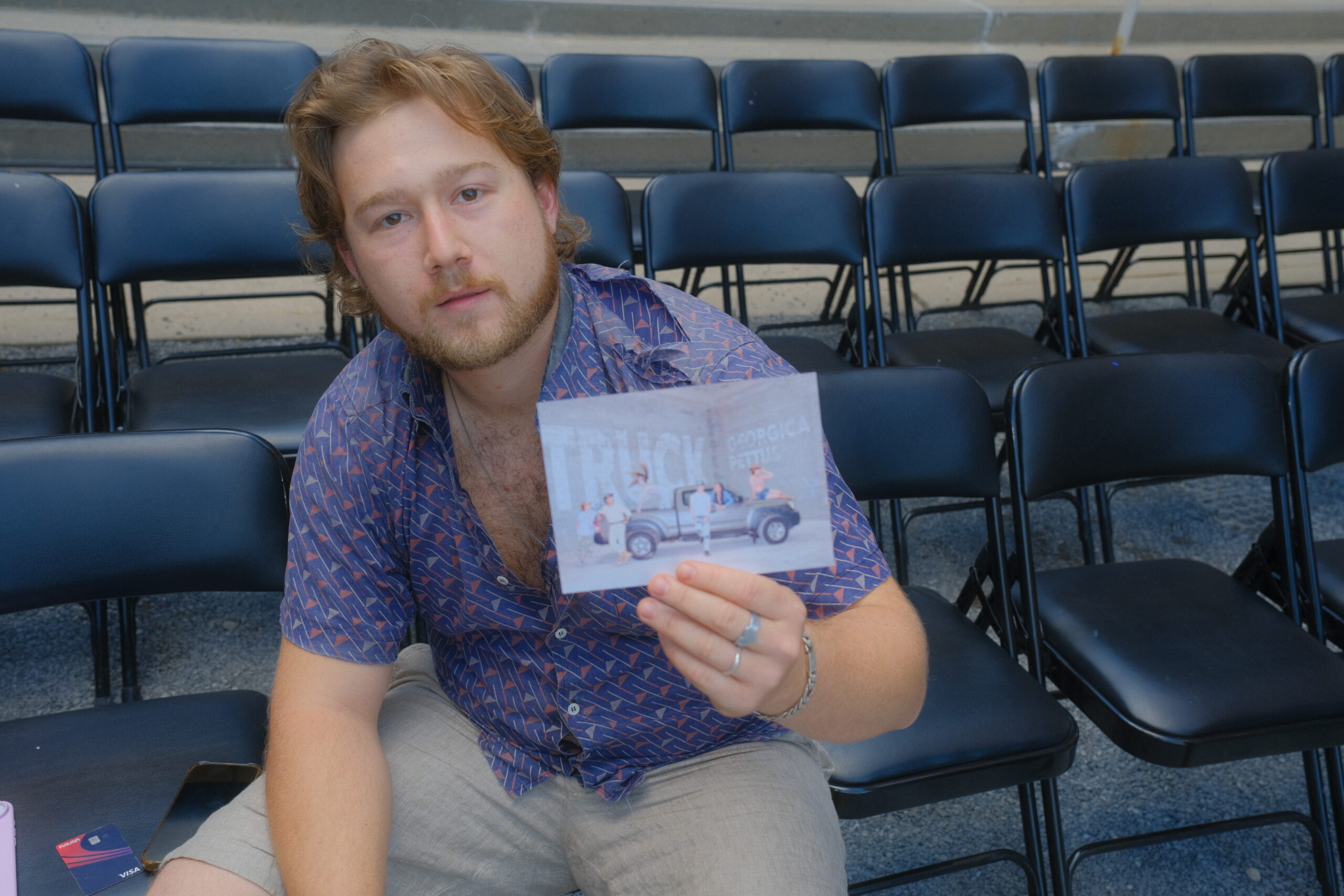



Rehearsal of Georgica Pettus: Truck. Courtesy of MoMA PS1. All photos: Mila Mancuso/Brian Tank.
SATURDAY 7:15 PM JUNE 27, 2026 QUEENS
Georgica Pettus’s Truck is like if Death of a Salesman were written by a Zillennial. Yearning monologues? You bet. Wounded dignity? Plenty. But Pettus’s new play captures something about our era that Arthur Miller could scarcely have imagined in his: that the American dream would not only become dangerously difficult to grasp, but comically stupid to want.
In Truck, the American dream is a truck. In its debut production—as part of MoMA PS1’s Greater New York Performances series on June 27th—the truck is a silver Toyota Tacoma. In the summer of the bisequicentennial, five losers and oddballs gather around the vehicle to participate in a “Hands on a Hardbody” challenge—a promotional stunt held in the parking lot of a car dealership in Liberty, Texas. Each competitor has been strengthened by a lifetime of wanting and waiting. For their big break in show business. For the end of their work shift, their combat tour, their prison sentence. The rules are simple: the contestant who keeps their hand on the truck the longest gets to take it home.
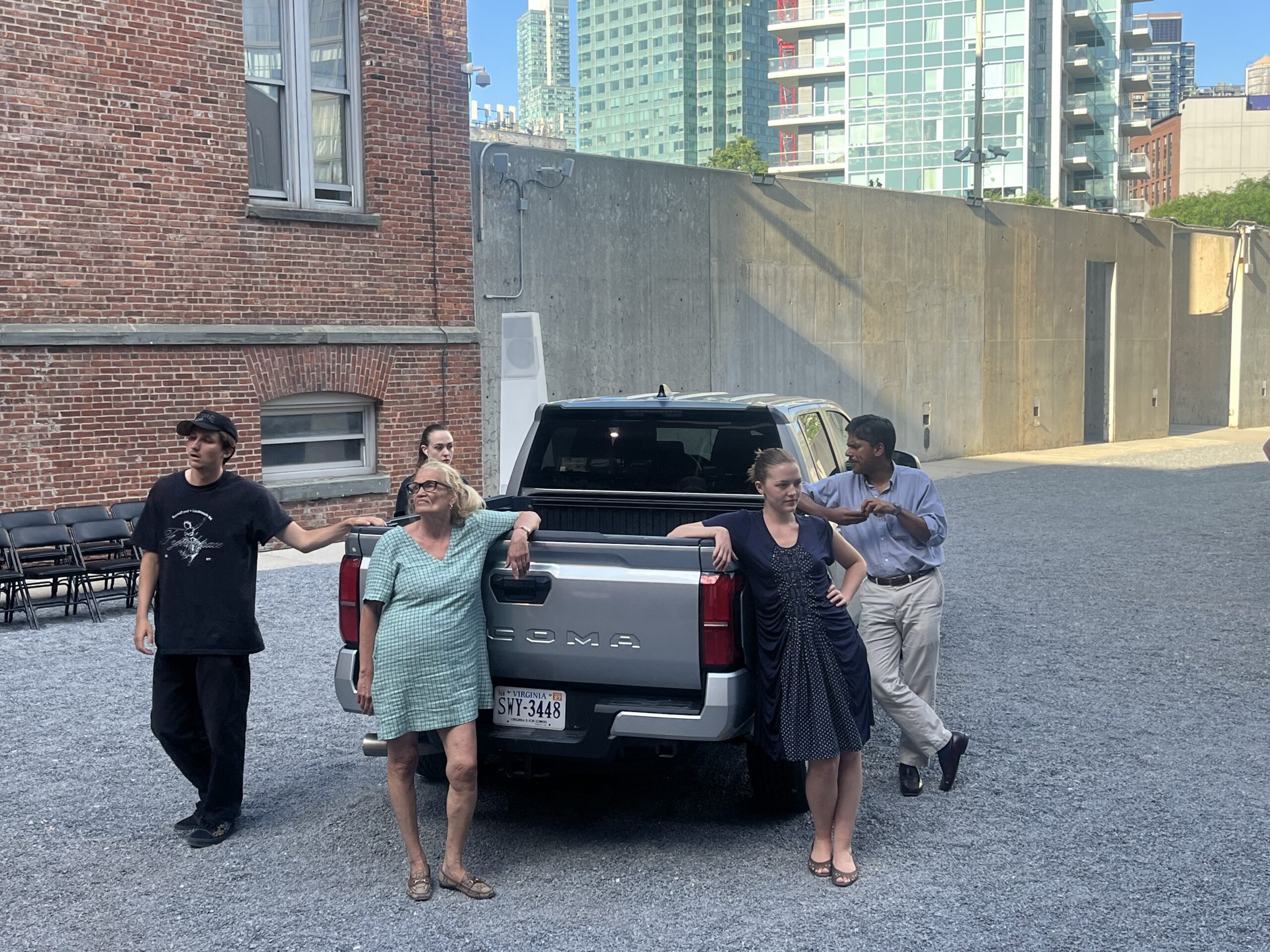
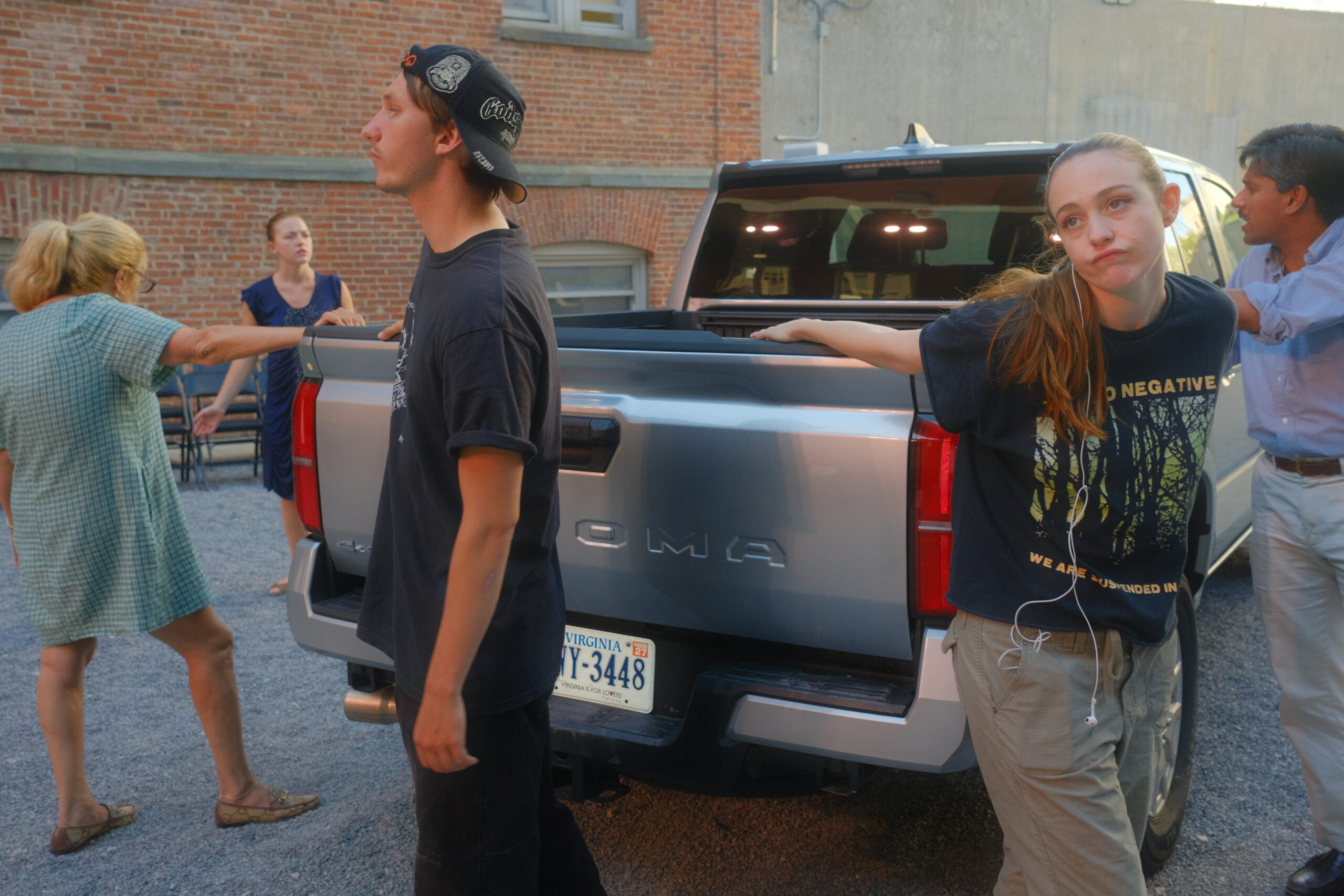
The premise is perfect for Pettus, whose last play, Seconds Minutes Hours (2025), explored the dimensionlessness of time for characters in forced proximity, and the loopy insights such waiting can produce. In Truck, the five players, each seeking to outlast the others, make apprehensive small talk as the hours and days of their endurance elapse. Along the way, they map out in miniature the deluded schisms that characterize our national mindset, from vaccine mandates to the value of military service. Each cares passionately about holding the others to the rules, but would happily cheat if they knew they could get away with it. Sometimes they wonder if the prize is even worth it. Could they win faster by convincing the others it’s not? They are watched over by two dealership employees and half-assed referees whose stilted dialogue evokes Waiting for Godot, if Vladimir and Estragon had been hourly employees at a parking lot in rural Texas. The second place prize is a $500 Buc-ees gift card.
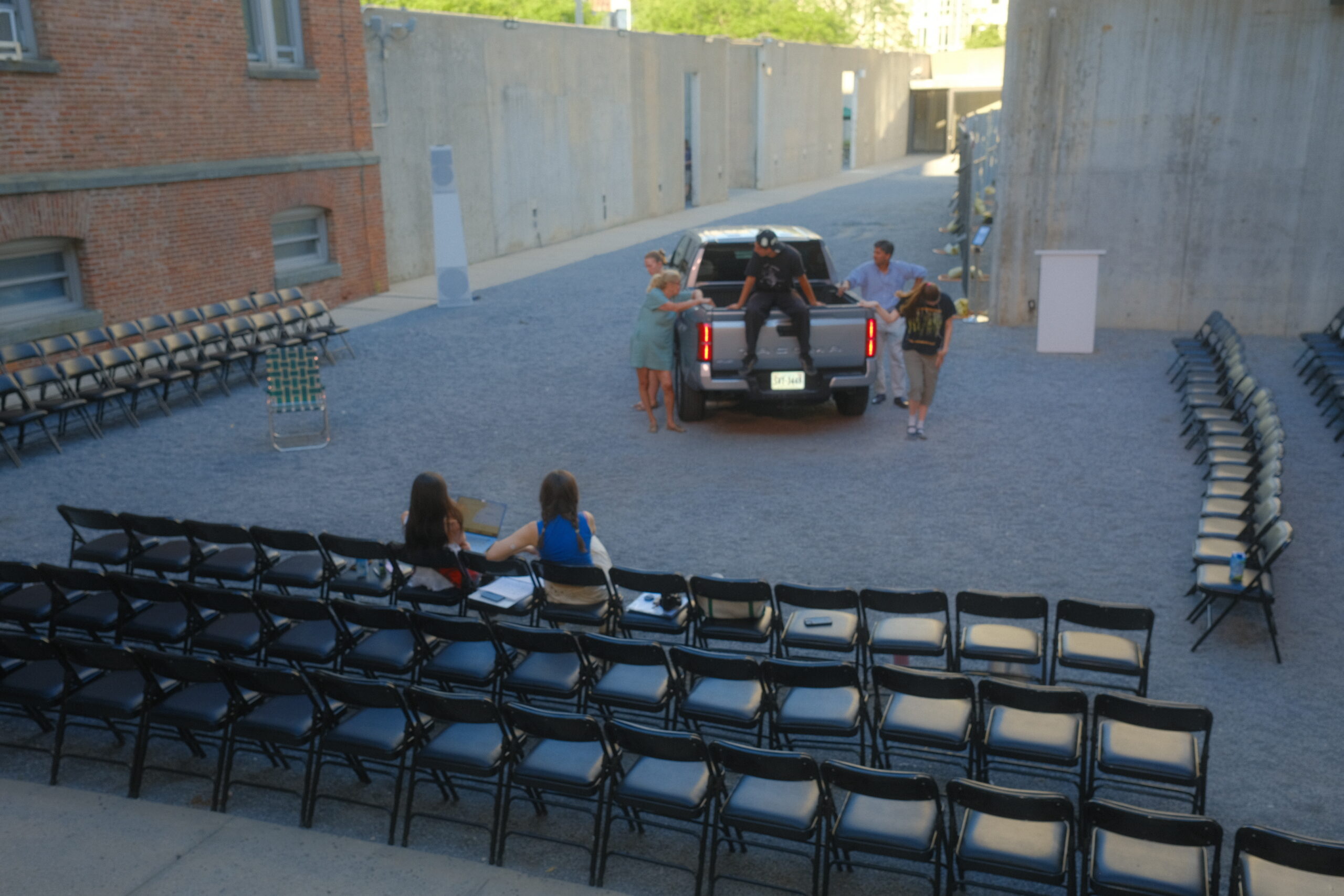
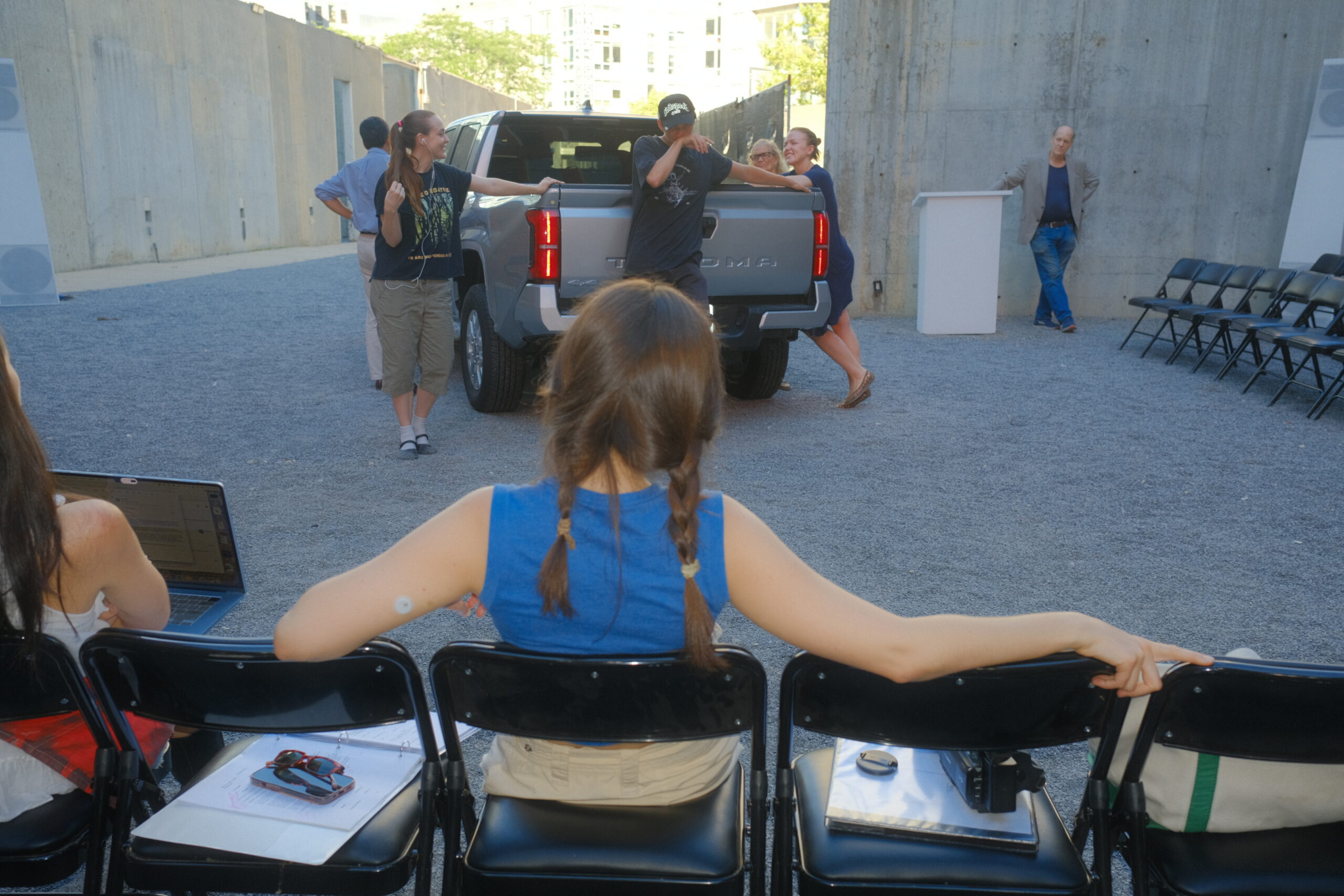

As time passes, reality begins to loosen its grip. The competition lasts around 75 hours by my count, but feels endless well before the play’s halfway point. In that time, friends and enemies are made, hearts broken, pants soiled, effects stolen, and offspring potentially conceived. Inspired by a real competition once held annually in the town of Longview, Texas, the “Hardbody” challenge is, at the end of the day, a marketing ploy, designed by the dealership to sell a certain number of vehicles before the end of the month. At some point in the play, that deadline passes, thus rendering the logic of the entire scheme obsolete. The contestants don’t care. All they want is the truck they were promised, a dream so depleted that only its outline remains.
Fiercely competitive but surprisingly passive, an exciting opportunity that’s also kind of a scam, Truck’s premise feels alarmingly apt for our times. As recent cage matches on the White House lawn may have reminded people, life in America is increasingly winner takes all—leaving the loser to limp home a bloody mess. Fates worse than this await some characters in Truck, and Pettus toys with our acceptance of manufactured scarcity and zero-sum gains by putting us variously inside the head of every contestant, each of whom believes they’re exceptional and uniquely advantaged. By the time they realize there are things in life that are more important than winning, it’s too late. They’ve already lost.