

FRIDAY 4:20 PM FEBRUARY 13, 2026, WILLIAMSBURG
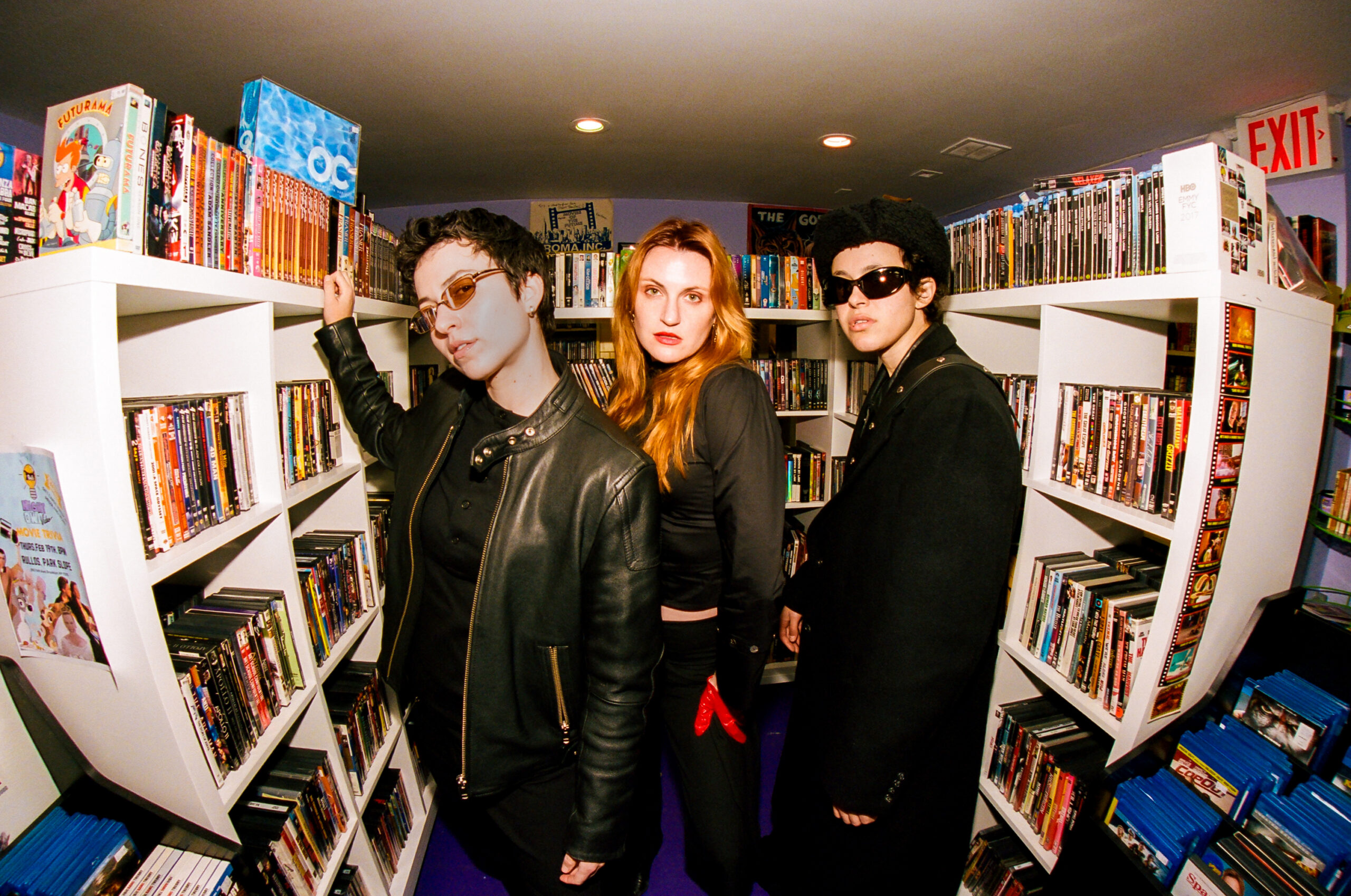
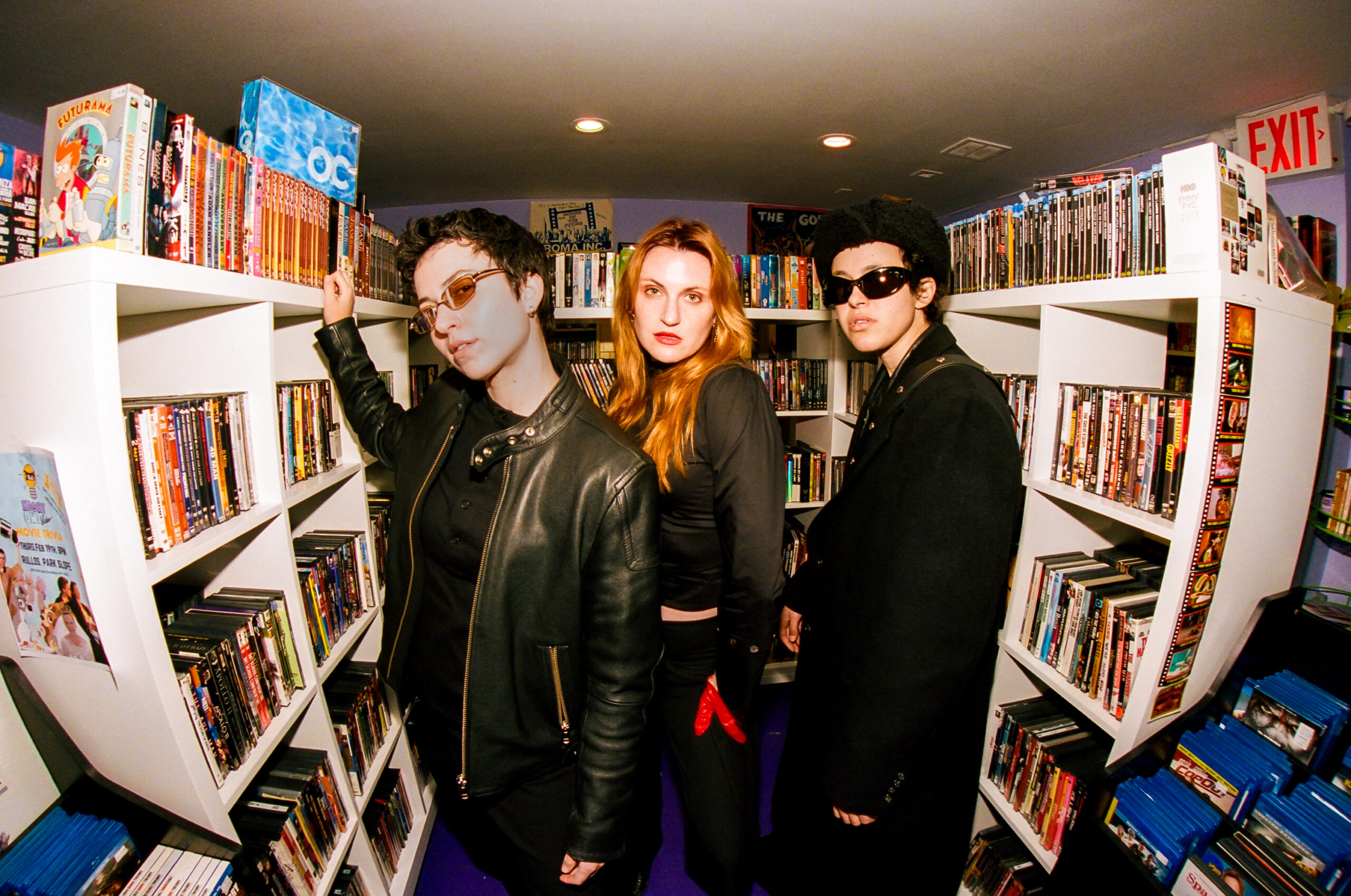
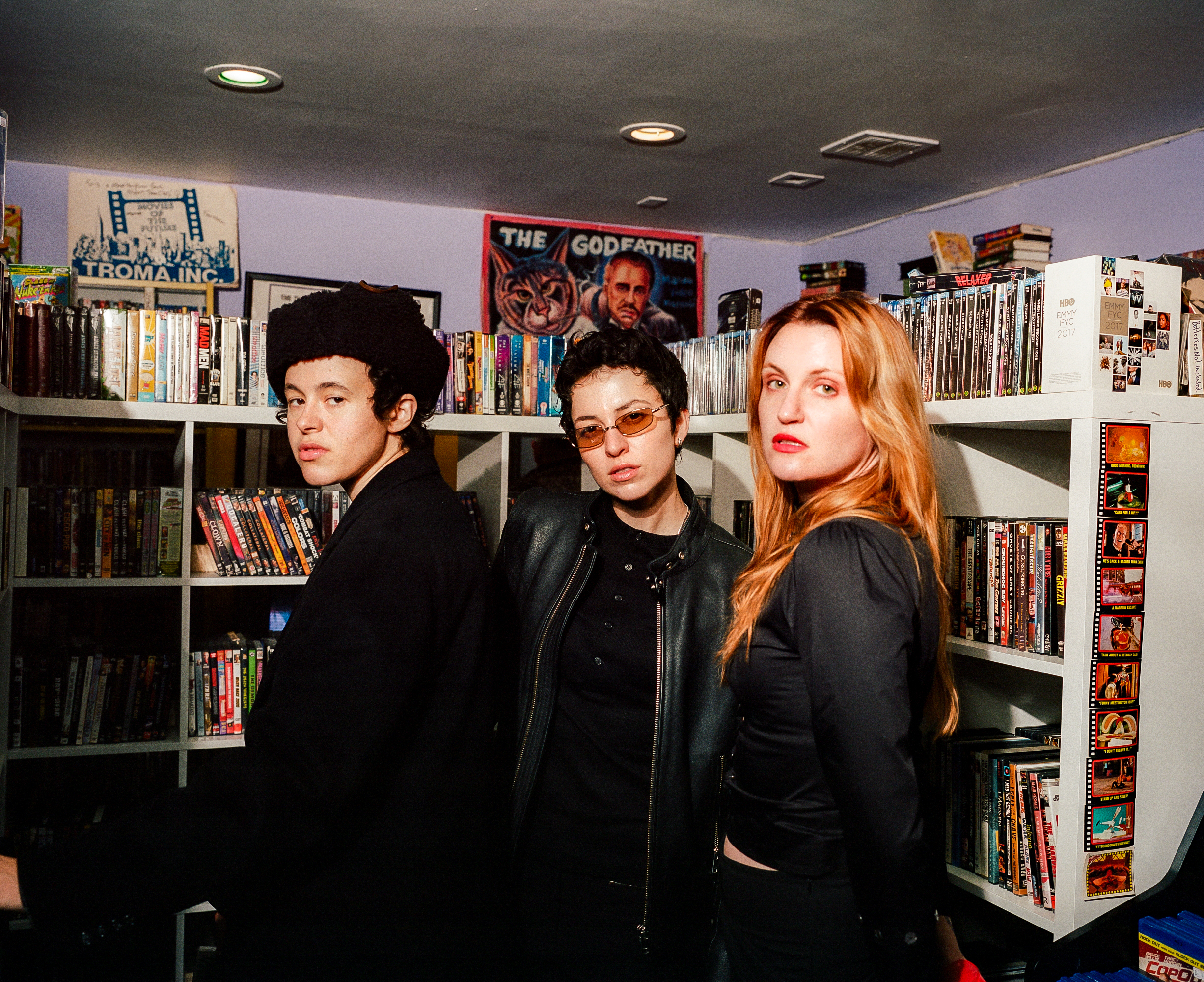
Walking through the aisles of DVDs at Night Owl Video, I glanced outside just in time to see the members of Muna tumbling out of a black Sprinter van in a fit of chaotic giggles. The band, composed of Katie Gavin, Naomi McPherson, and Josette Maskin, first formed in 2013 while the trio were students at USC. Now, with three albums under their belt, the band chalks the strength of their music down to the interpersonal connection they have as best friends.
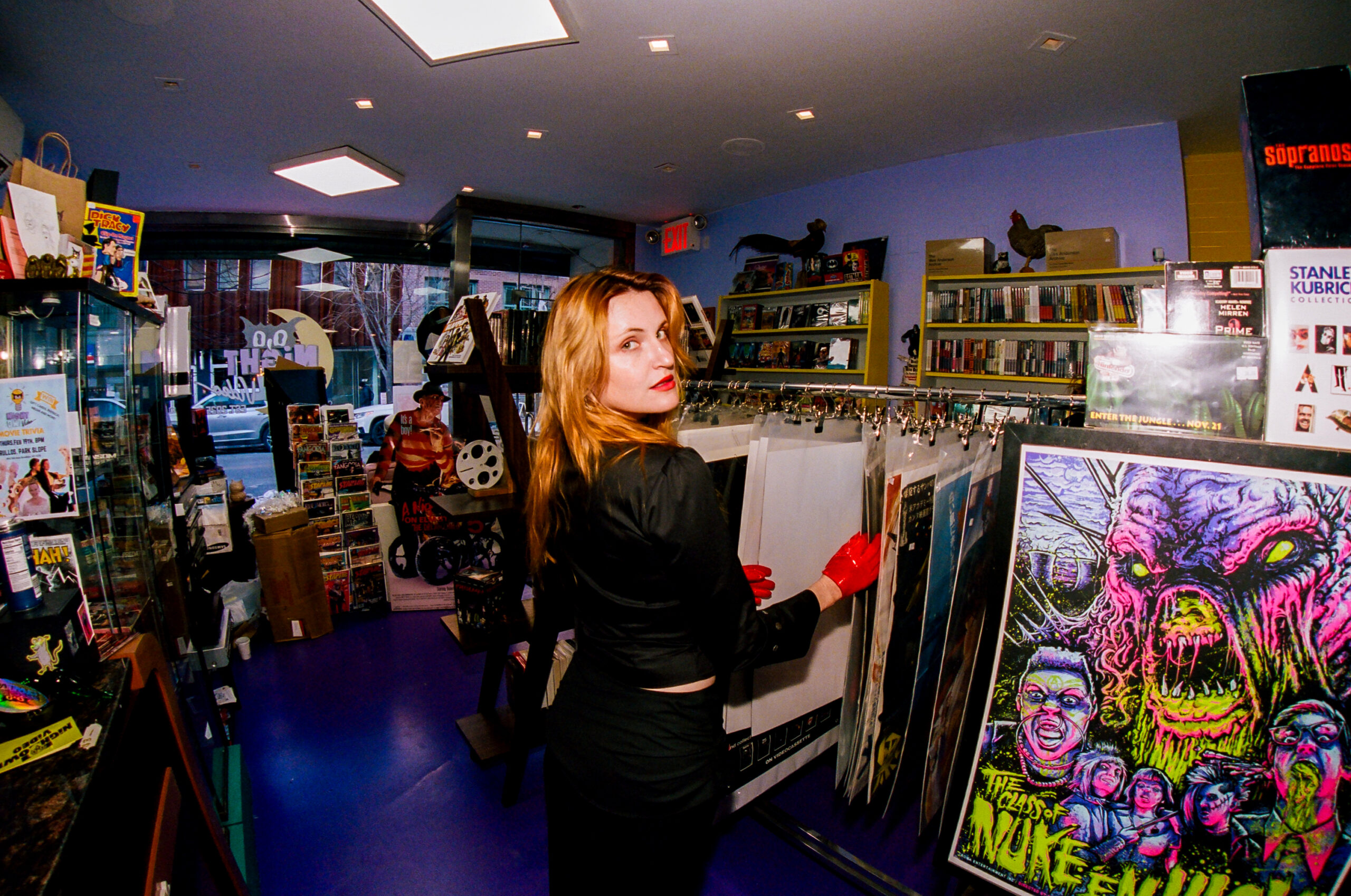
On May 8th, the band plan to release their fourth musical offering, Dancing on the Wall, an ode to the post-punk rave scene of the ‘90s. In the weeks leading up to the album drop, the group has been releasing singles that give us a tantalizing taste of the queer, erotic, and political themes they have in store. After digging through the video store’s cinema treasure troves together, we sat down to talk movies, the masc shortage, and why–despite requests to the contrary–they don’t plan on shutting up any time soon.
———
ARY RUSSELL: So, I’ve been warned not to ask you about your Letterboxd top four. [Laughs] But I will ask you about what kind of films have inspired your music, specifically this project.
JOSETTE MASKIN: What was the movie that we watched when we were in Nashville?
KATIE GAVIN: Oh, we watched 24 Hour Party People. It’s a mocumentary about a guy named Tony [Wilson] who’s a real person—
NAOMI MCPHERSON: Who started the label that signed Joy Division and New Order.
GAVIN: He ran a club in the nineties in Manchester that was kind of the birth of rave culture there. We were definitely really interested in British nineties club culture. I watched Hedwig and The Angry Inch for the first time when we were writing this album, and anytime I’m seeing queer, iconic art that really helps me be like, “I want to contribute to this canon.”
MASKIN: This isn’t a movie, but when I was a kid I had a VHS of 20 years of Madonna’s best music videos. She’s someone that we constantly look to because she was always pushing the envelope and also bringing forward different parts of culture that the mainstream weren’t exposed to.
RUSSELL: I accept her as your movie answer.
MASKIN: Thank you.
RUSSELL: I know you guys are LA loyalists, but what do you like to do when you’re in New York?
GAVIN: I feel more like indulging in pleasures of the flesh when I’m here. The city makes me want to be out of my house in a way that LA doesn’t make me feel.
MASKIN: I like to walk. You can walk in LA, but you can’t walk in the same way.
GAVIN: You can’t walk and see sexy people.
RUSSELL: Do you like to party in New York? We have a really good queer party scene.
GAVIN: I’ve been missing them the last few times I’ve come here. But my partner and their friends like to go to PAT, the JD Samson party. I don’t think I’ve ever made it to Body Hack, but I’ve heard good stuff about it.
MCPHERSON: We’ll need you to give us tips.
RUSSELL: There’s the infamous The Woods Wednesday.
MCPHERSON: Oh, yep. I’ve heard that is probably a toxic lesbian space. I’ve heard the drama.
RUSSELL: You have your song “Eastside Girls.” Do you think that there’s a difference between the New York lesbian scene and the LA lesbian scene?
MASKIN: It’s more like LA is just so low-key. If you live in New York, you’re doing stuff. It’s not a stay-at-home PJs culture. You know what I’m saying?
GAVIN: I would imagine that the kind of culture that we’re really celebrating in “Eastside Girls” also exists in certain parts of New York City.
RUSSELL: True. There’s a growing level of debauchery here.
MCPHERSON: That’s important because we’re already repressed enough. But “Eastside Girls” is both celebrating and making fun of the stereotypes. It’s not fully earnest. It’s a little bit making fun of the stereotypical hipster LA dyke culture.
GAVIN: We’re making fun of it, but we’re making fun of it with love.
RUSSELL: Your album is very unapologetically horny, as is a lot of your music.
MASKIN: How powerful that you felt that way.
RUSSELL: Sometimes the lyrics can be super sad, but sonically you feel hot and bothered. With the rise of fascism, not to get too…
GAVIN: No, let’s take it there. We’re there.
RUSSELL: How do you address the tension between wanting to make really horny music as we’re becoming really puritanical as a culture?
MASKIN: That is the thesis of the record.
MCPHERSON: I don’t think we can begin to address it because we’re in it. The only thing that we can try to do is present that cognitive dissonance in the piece. It’ll only become clear to us really what it really means years from now. But the record is about feeling this incredible amount of untapped frustration, horniness, or romantic longing, but under the dark cloud of the moment that we’re living in.
MASKIN: It’s cool that you picked up on that.
GAVIN: It makes me think about M. Gessen’s book about surviving autocracy and totalitarian governments. One of the things that they highlight in studies is that the ideal population for a totalitarian regime is one that is gullible and pessimistic. And being in your body and being connected to your desire makes you less pessimistic. In times that are this hard, what’s carrying us from one day to the next is a desire for something. Sometimes it actually is your horniness that is providing you with a will to live. I’m interested in a world where people can fuck and at the same time strive to treat each other well. It’s a horny record and it’s also a record where it’s like, “Some of you guys really need to get your act together.”
MCPHERSON: “Girl’s Girl” is like a player-hater anthem.

RUSSELL: There are queer people who want to live out their player fantasy as a way to gain power in this world where queer people don’t have it. So the way to do that is to—
MASKIN: Assert it over others.
GAVIN: It doesn’t give you a pass.
RUSSELL: You never shy away from politics. You speak about Palestinian rights, you speak about ICE. Is there any sense of fear there?
GAVIN: We’re just past the point of no return, probably have been since 2014.
MCPHERSON: We walk with god.
MASKIN: Obviously, my experience is so minimal; I’m still fucking white. But just the little bit of adversity that we’ve all experienced, how can you not see your privilege and how can you not stand up for other people?
GAVIN: I mean, our first festival that we ever played we made shirts that had red paint on it that said, “Fuck Trump.” The line could be crossed at any time and we’ll have to keep reassessing.
RUSSELL: We’re in an unprecedented time where we don’t know the level of retaliation.
GAVIN: That comes into play when you’re thinking about things like, “Am I willing to get arrested at a direct action? What information is going to be on my passport?” We work with people that have different statuses and you think about not wanting to put those people at risk.
MCPHERSON: We do have to move carefully, but also we’re not going to shut the hell up. They want us quiet, scared, and isolated. We want to be connected. “Big Stick” does a really good job of articulating that. Sometimes being in this industry can feel—
GAVIN: Like it’s vapid?
MCPHERSON: Or that it’s compromising, morally and ethically. Our whole last album cycle was pinned as this celebration of queer joy. And our joy is sacred, but our rage is sacred too. We have to treat those feelings with the sanctity that they deserve.

GAVIN: Being in a band is actually really cool preparation for being a part of a social movement in that way.
MASKIN: The reason we’re able to do what we do is because of the interpersonal connection that we have with each other. It’s like the minutia of existing with each other for the common purpose of the band and what it symbolizes, that we’re able to achieve what we’re striving to be.
MCPHERSON: It literally keeps me up at night thinking that some people don’t have best friends.
GAVIN: It’s really bad.
MASKIN: The thing is it’s not like we’re always together. Interpersonal relationships are about strength.
GAVIN: You can just say you love me.
MCPHERSON: No, that’s gay as fuck.
MASKIN: The thing that people are afraid to do is have conflict. Have conflict and be okay with being wrong at times because you’re trying to move to this higher purpose together, and accepting people for their faults. Being real friends is not beautiful. It’s horribly messy. They’re my witness to life because we’re witnessing each other through our best and worst times. We’ve gotten too used to things being easy.
RUSSELL: When I was listening to “Wannabeher,” I was thinking of two things.
MASKIN: I know exactly what you’re going to say.
RUSSELL: What do you think I’m going to say? [Laughs]
MASKIN: Do you want to sleep with them or do you want to be them?
RUSSELL: Exactly. Being in a relationship with someone you love, but also being jealous of them because they have qualities that you wish you had or they’re viewed by other people in a way that maybe you want to be.
MCPHERSON: Of course. That’s what you seek when you date?
RUSSELL: Yeah, 100 percent. I look for people that have qualities that I wish I had.
MCPHERSON: I do the same exact thing.
RUSSELL: I’m a yapper, an extrovert.
MCPHERSON: You look for brooding, quiet.
RUSSELL: I had problems in my childhood. [Laughs]
MCPHERSON: Same.
RUSSELL: When making “Wannabeher,” what kind of emotions were coming up?
MCPHERSON: I mean, from a conceptual side, this song has a direct lineage to “Rebel Girl” by Bikini Kill. I felt it this morning with Katie where she has this cool bonnet that she bought. I’m a masc, so sometimes I get jealous when girls are so cunt. I get like, “Oh my god, I wish. I would never in my body but, if I were you, I would love to wear that.”
MASKIN: That’s because you’re so secure in your gender expression now and you can feel that.
MCPHERSON: Sometimes, when there’s a cool red carpet look or something, I’m like, “Oh, that is such a serve. I could never.”
GAVIN: So that’s the meaning of when I say, “She let me try on her dress,” that’s what you’re thinking. “I would never want to wear the dress, but I wish to be so cunt as to wear the dress.”
RUSSELL: No, that’s so funny because my type is mascs, and mascs are not attracted to me–
GAVIN: Honey, I’m telling you right now, that’s not true.
RUSSELL: But I normally dress very feminine, so I did an experiment where I was like, “I’m going to go to a bar and wear my most butch outfit.”
MCPHERSON: Oh no.
RUSSELL: Don’t laugh at me.
GAVIN: I’ve done it. Every femme has done it.
MASKIN: Gender is a performance, and to perform high femininity is intimidating. I can’t perform that way.
GAVIN: When you say mascs aren’t interested in you, are you hitting on them?
MCPHERSON: Let’s get into it. [Laughs]
RUSSELL: I’ve tried both.
GAVIN: When you’re in your twenties, the mascs might look good but they’re so scared.
MCPHERSON: They’re shy. Or they’re a mess. Now I’m in my early thirties, but when I was younger, I was so afraid that if I hit on someone, they would think I was—
GAVIN: Disgusting?
MCPHERSON: The creepiest freak in the history of the world. So I literally need someone to come up to me and hit me with a pan.
GAVIN: Before we kissed, we were literally laying down on a stairwell in an apartment complex in every possible position for five hours, not saying goodbye, just because you were trying to figure it out.
MCPHERSON: No, I can’t make a move and then be seen as a creep or something. That’s my nightmare.
MASKIN: To be a masc or to be on either side of the gender spectrum, you’re existing through your life hating yourself and feeling like an other. I always am like, “I don’t want to offend you. I’m the phantom of the opera. I’m a monster.”

MCPHERSON: I hope that’s not the case for people anymore.
RUSSELL: I don’t know if you know about the masc shortage?
MCPHERSON: We’ve heard about it.
MASKIN: Is that actually real?
MCPHERSON: Well, they say it’s real.
GAVIN: So, when somebody has one, they’re holding on.
RUSSELL: They’re a hot commodity. I wanted to ask about the physical transformations that you’ve gone through. With this era, which one came first, the music or the style?
GAVIN: I think it was the music.
MASKIN: Music has a feeling, and then the feeling leads to how we’re going to dress. But let’s be honest, we’re in a better place than we’ve ever been in terms of our resources. We can wear things that we want. I spend money on my clothes versus getting free bad clothes.
GAVIN: Talking about resources, the biggest resource was time. We had a lot of time to work on this album.
MASKIN: To change from our last tour.
GAVIN: That allowed us to also experiment with trying different looks and stuff. I bleached my hair for the first time. But knowing that if I really felt that I looked super fucked, I could just go back because I had time. Aesthetically, it feels like a big return to the people that we were when we made our first album.
MCPHERSON: I started last cycle with really long hair.
RUSSELL: Do you miss it ever?
MCPHERSON: Sometimes I do. I don’t really, in a practical sense.
MASKIN: Your hair is a sensitive thing.
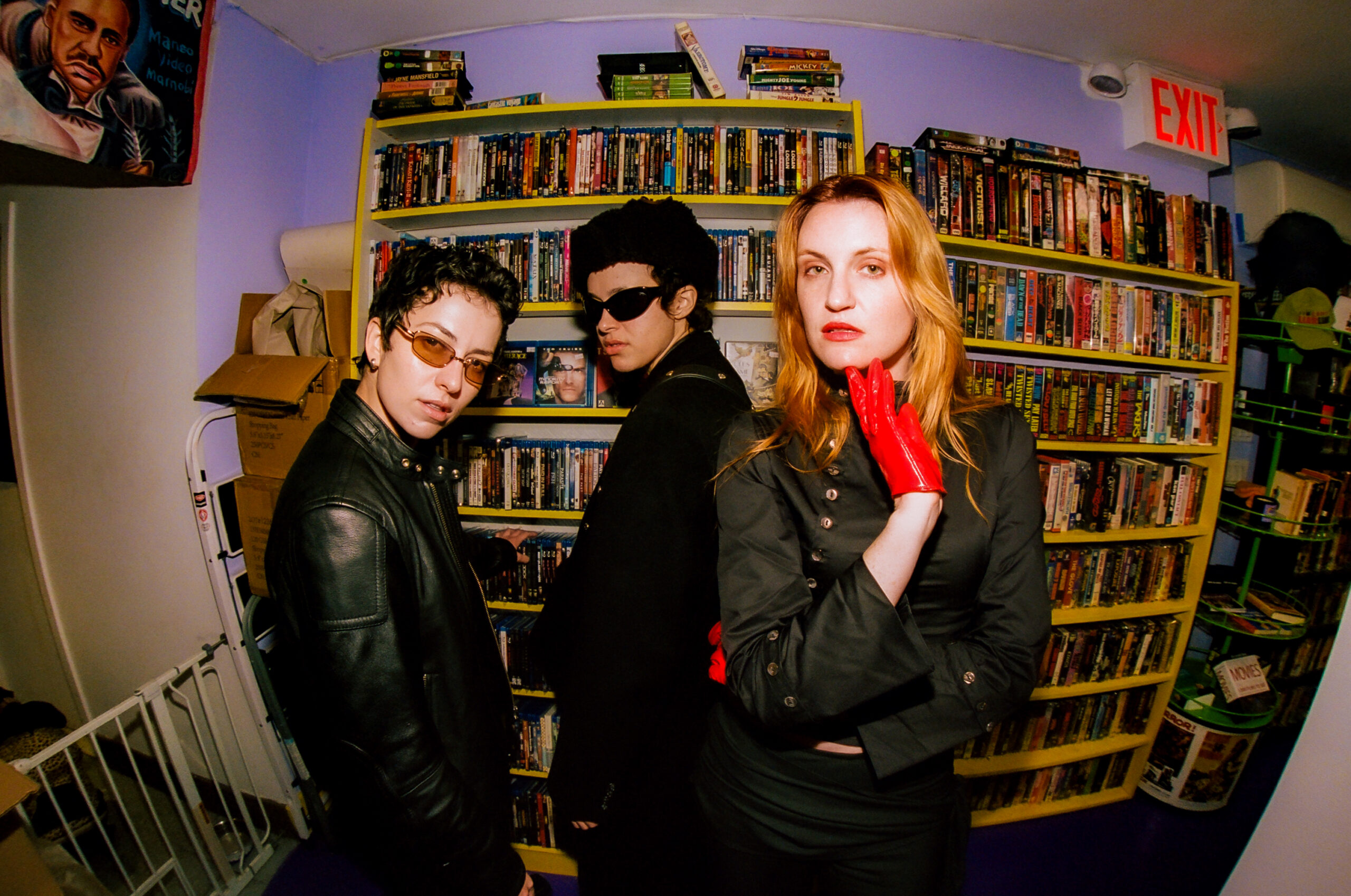
MCPHERSON: For a long time I was like, “Who am I without my big head of curly hair?” And also it has ties to race. I’m mixed and I look like this.
RUSSELL: So it acts like a signifier.
MCPHERSON: Yeah. Are people just going to think I’m some white person? But they never do. So it was sensitive for me to cut it.
MASKIN: I didn’t know that.
MCPHERSON: But I’m happier with this short hair. And you know what? Maybe I’ll get a fade for the next album.
RUSSELL: Your album is called Dancing on the Wall. Where do you dance?
MASKIN: In my house.
MCPHERSON: In the house while preparing for music videos.
GAVIN: I took them to a dance studio. We all did dance performances for each other. I still dance in the warehouses.
MCPHERSON: I want to dance more.
