

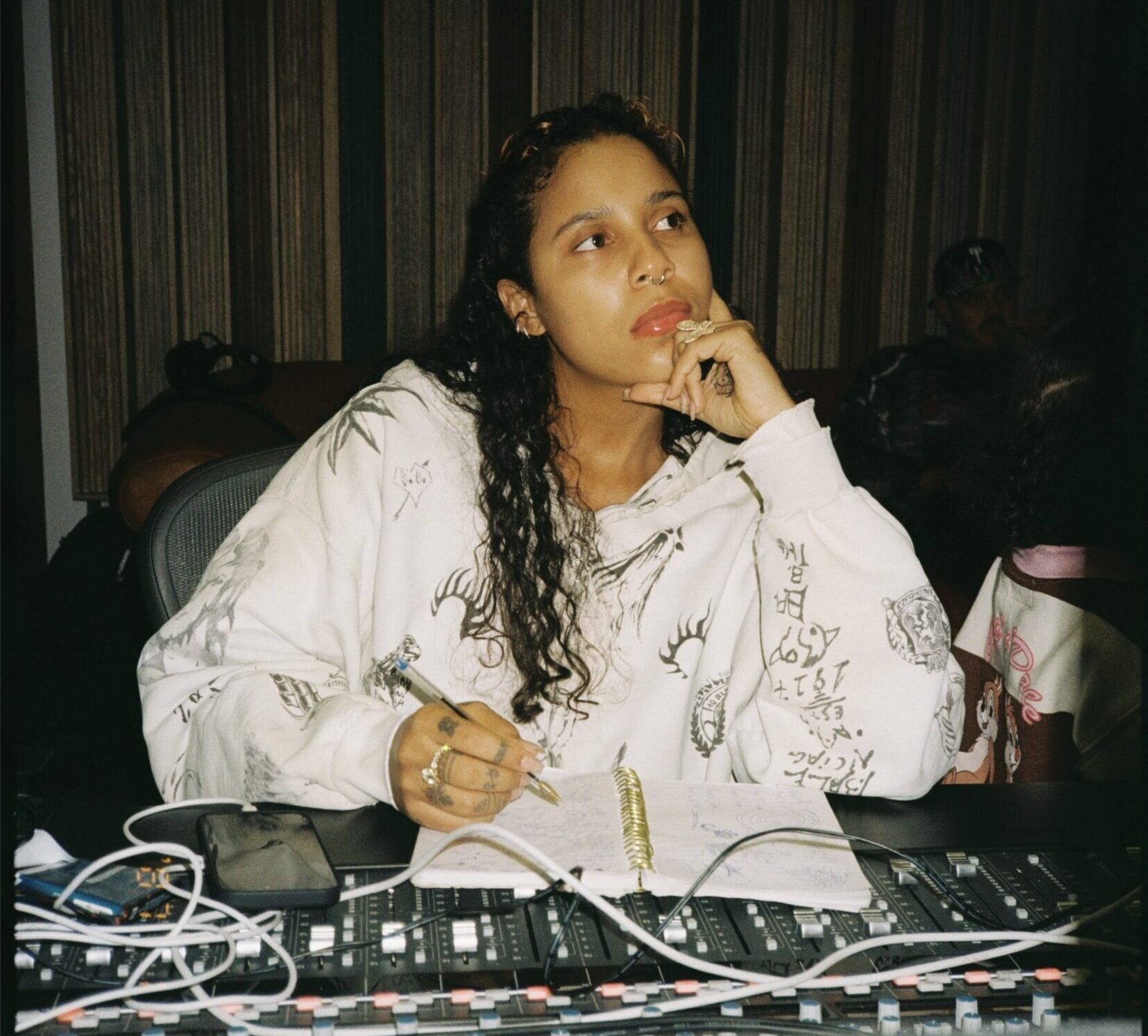
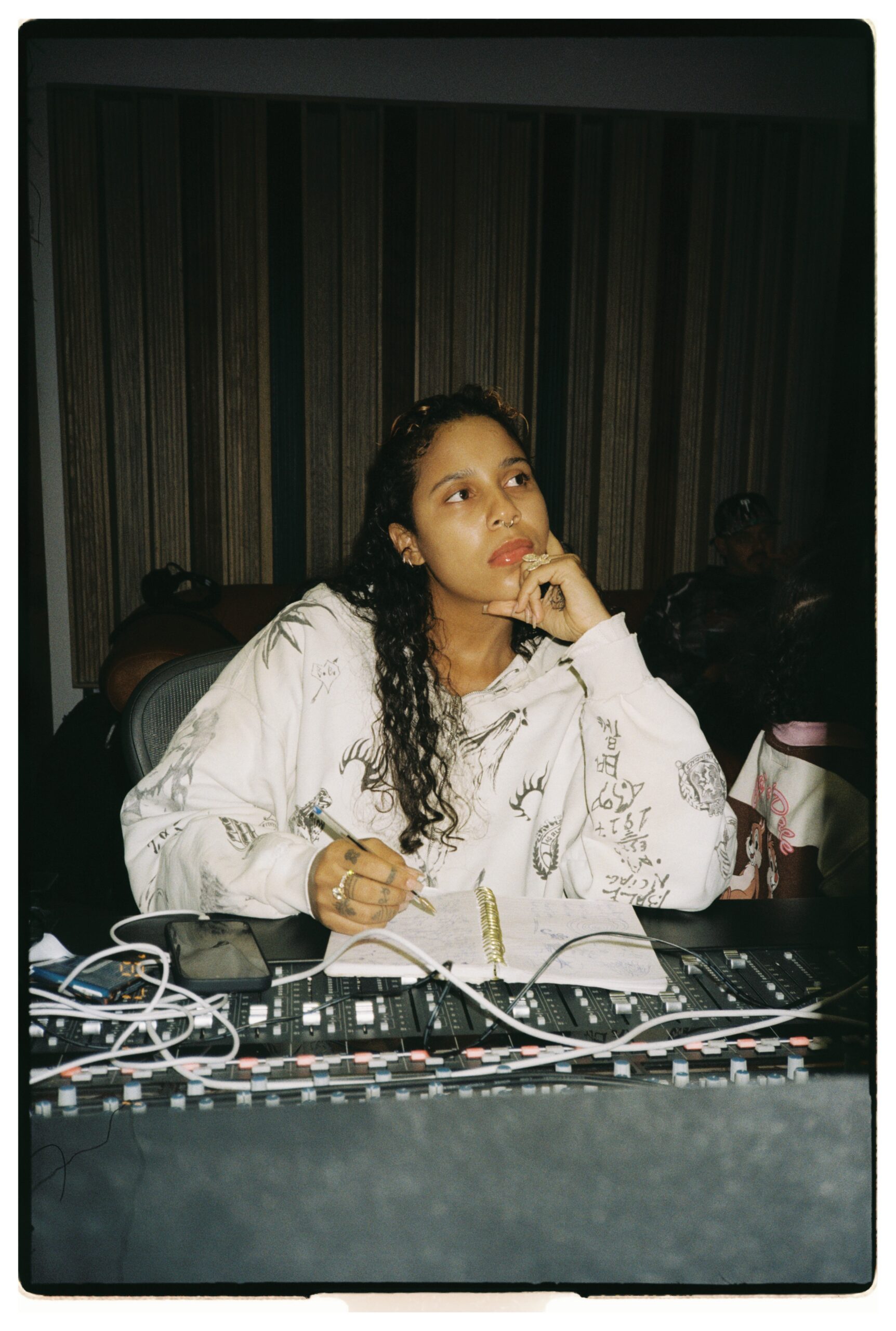
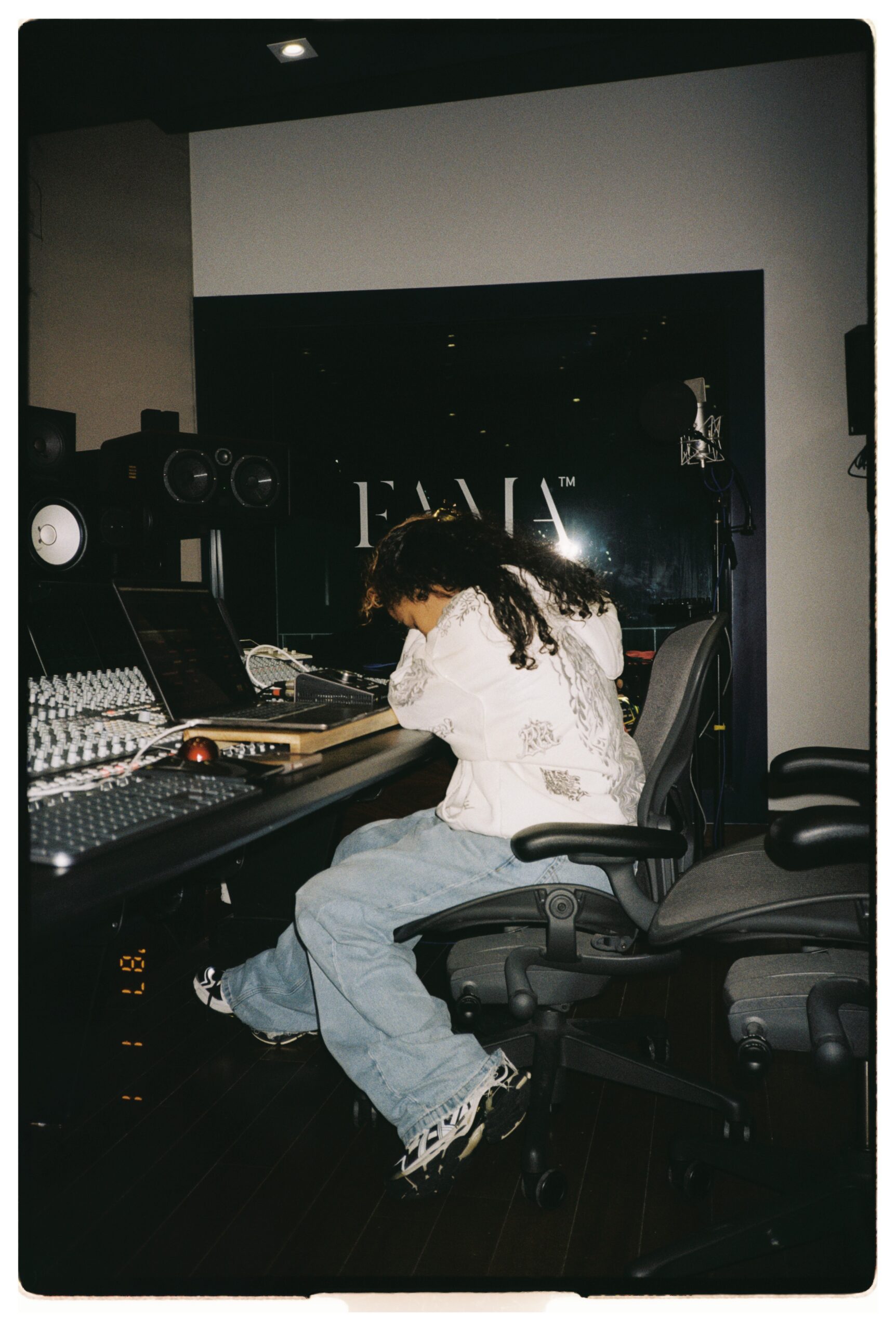
All photos courtesy of Tokischa.
If “what doesn’t kill you makes you stronger” was a person, Tokischa would be the poster child. Born in Santo Domingo, Dominican Republic, she’d be the first to tell you her come up was anything but easy, from absent fathers to substance abuse to toxic relationships. For her latest album Amor & Droga, set to drop April 16, Tokischa unpacks what it means to lose your innocence and come out on the other side changed but unscathed. Because, for her, there was no other option. Known as a disruptor in the Latin music scene, the “Thootie” singer has never shied away from speaking bluntly about her sexuality, politics, and classism. Before she shared her album with the world, I called Tokischa to talk sobriety, spirituality, and why avoiding Dominican men is the key to protecting your peace. She was candid in a way I’d never experienced interviewing musicians. No PR answers, no word salad, and absolutely no bullshit.
———
ARY RUSSELL: I’m so happy to be talking to you. I’ve been a fan for so long. How are you?
TOKISCHA: Good. Just getting a little compression on my leg.
RUSSELL: I want to start from the beginning. I loved hearing that the way you learned English was your mom sending you books. She instilled in you how important it was in life, and also for your career. Do you remember the books that she was sending you?
TOKISCHA: Oh my god, I remember she sent me the Webster’s Dictionary and I used to write her letters looking for the words in there.
RUSSELL: That’s so cute. We’re based in New York, and I know that you were just here. Do you remember the first time you ever came to New York?
TOKISCHA: The first time I ever got a visa was in 2021 and I first went to Miami. But the first time I went to New York was when I had my Terminal 5 show.
RUSSELL: How was that?
TOKISCHA: Amazing.
RUSSELL: New York, outside of DR, has the biggest population of Dominicans. Do you feel a level of connection with Dominicans that are living here?
TOKISCHA: Well, my mom has been obsessed with New York her entire life. Before I was even born, she was already traveling there. It’s extremely connected but mainly because, in the Dominican Republic, we do not say the United States. We say Nueva York.
RUSSELL: I don’t think I’ve ever seen a Dominican artist like you. You’re very distinct in how open you are talking about your sexuality. How has that been in the Latin music industry which traditionally isn’t very welcoming towards that type of behavior from women?
TOKISCHA: It’s insane. It was very conservative in the Dominican Republic when dembow [a fast-paced, high-energy music genre] came out when I was a little girl. The guys were talking about gangster shit, the streets. And the government was like, “Y’all got to tone it down so we can allow you to do this.” Then when I came, it was very impactful. I was talking crazy about the education system, about, “I want to have sex this way.” After that, I saw how it changed for both women and men. Men were not saying the shit that they’re saying today before me.
RUSSELL: Exactly. With you being the pioneer, it’s both a blessing and a curse. How did you navigate having such pride for DR, but also the criticism that you were receiving because of the things you were talking about?
TOKISCHA: There’s this phrase in DR about me that goes, “Tokischa does not represent me.” But what kinds of people are saying this? It’s a racist thing. It’s the people that think because they read every Gabriel García Márquez book they’re intellectual. I’m not trying to represent these people. I represent the people that are like me, the queer people, the people that come from the ghetto, the people that have to hustle every day.
RUSSELL: The people that make sacrifices.
TOKISCHA: That’s what happened to me. I got a job, but I couldn’t be in a call center and pursue making music too. I had to make a choice. I had a sugar daddy because I needed to make it out of there. All this criticism comes from the people that’re not understanding what I’m doing and where I come from. So why would I care about what you say? You’re in your house, eating a salad with tasteless chicken. People in the news sitting down with their tight-ass pants talking about, “Oh, she’s out of control.” I do not care. But at the same time, thank you because that’s made me more lit. [Laughs]
RUSSELL: There’s also a preoccupation with what everyone is going to think about DR as a whole.
TOKISCHA: They’re acting like they’re la dirección de turismo. [Laughs]
RUSSELL: Literally. You had recent collaborations with American artists like Ice Spice and A$AP Rocky. Do you want to have an American crossover?
TOKISCHA: I’ve had my American crossover with the music I’ve been doing. Girl, we have Madonna on a dembow, come on. She is the icon of icons. She’s the last one of her generation. The influence that Madonna put in music has no comparisons. Sometimes in the moment I’m like, “Oh, I’m talking to Madonna. That’s my friend.”
RUSSELL: Just a regular Tuesday.
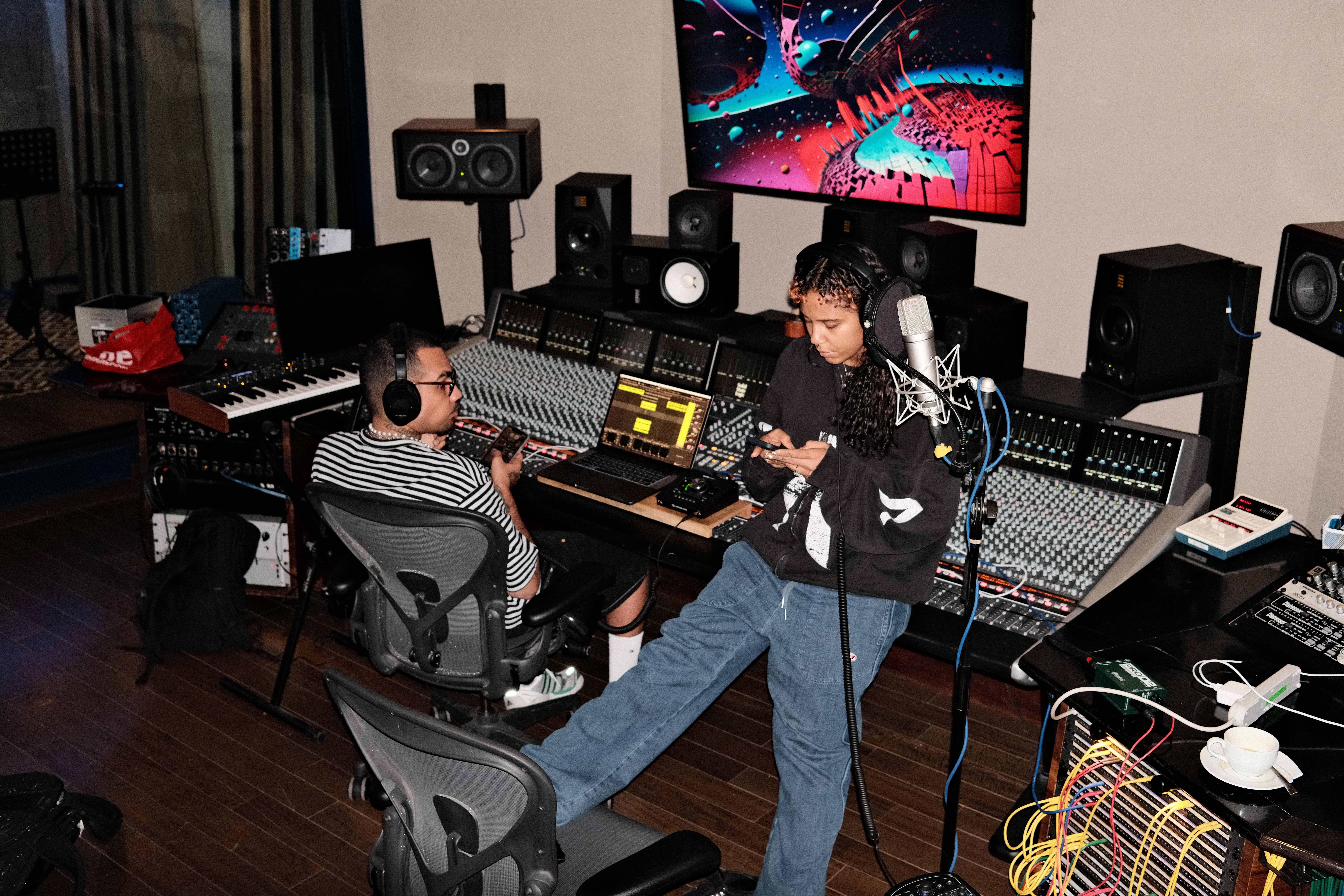
TOKISCHA: But when I think about it, it’s a very huge thing. I don’t have to change my essence. I love trying new things. I’ve done house music, I’ve done trap. I will definitely make music in English because it’s part of what I do.
RUSSELL: You mentioned Madonna, and I know people have asked you at length about what influence she’s had on you, but I want to spin that question. Throughout your friendship with her, what are ways that you think you’ve influenced her?
TOKISCHA: She is the influence. She’s done it all. Every single time I’m working on a new video and I’m trying to explain what I’m doing, I look for a reference and there’s always a reference of her.
RUSSELL: A blueprint. Have you taught her any Dominican slang?
TOKISCHA: Of course. In “Hung Up on Tokischa”, she said, “Tokischa, ¿que lo qué? Yo quiero un culo nuevo.”
RUSSELL: I remember.
TOKISCHA: I love her. Recently, I talked to her because I was opening for FKA twigs on her tour. I took the job because I’m dropping my album and I wanted to be in a space of creativity and artistry. FKA twigs has been in the game for so long and I’m really happy that she’s finally getting her flowers. She invited me to open for her, but I don’t like opening. I’ve never liked it.
RUSSELL: Really?
TOKISCHA: No, I tried to do it once with Kali Uchis, but when I got there the things that I needed were not there. On the first show, I wasn’t ready because she took all the time to do the soundcheck. They’re opening the doors, the fans are coming in. I was like, “What is going on? I need to do my soundcheck. No, I’m out of here. I’m not doing this shit.”
RUSSELL: It can be limiting.
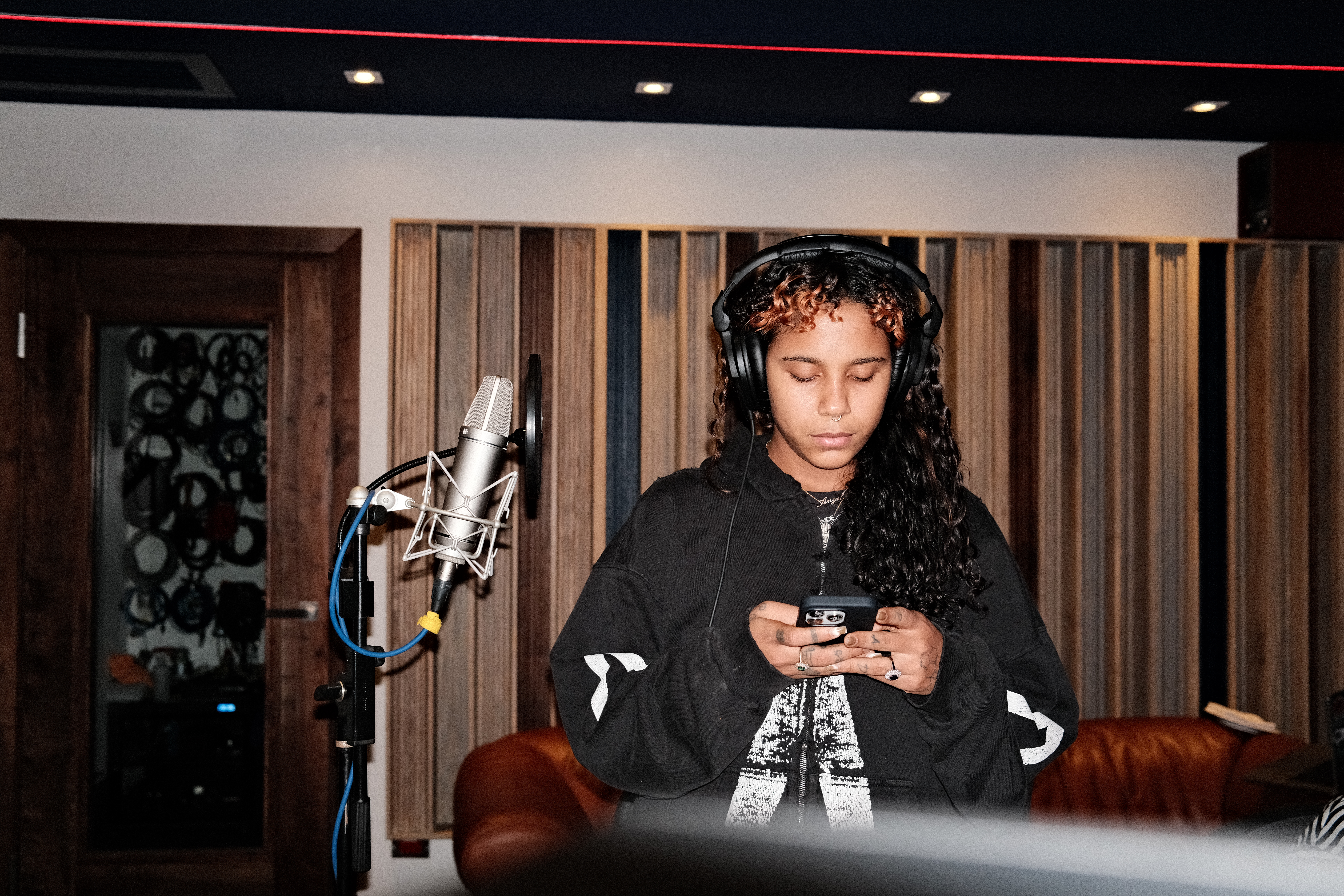
TOKISCHA: It was. When twigs invited me, I was like, “I have trauma from opening for people.” But it’s twigs!
RUSSELL: So how did you open?
TOKISCHA: I walk out with my hands tied to the back because it’s part of the aesthetic of the album. Then I have this wedding gown and this mirror where I take my clothes off because I’m shedding. For my second show, I was going to shave my head because it’s the beginning of a new era. MSG New York is the perfect place to do that. Her audience is loyal and is going to understand. So I went and her team didn’t want me to do it.
RUSSELL: They didn’t want you to shave your head?
TOKISCHA: No. I don’t know why, but I was like, “I don’t care. I’m still going to do it and y’all are not going to limit my message.” I literally just have 30 minutes on stage. What do you mean I can’t shave my head?
RUSSELL: You did it anyway?
TOKISCHA: Yeah. And then I said, “All right, I guess I’m not going to be on the tour anymore if y’all don’t want me to do it.”
RUSSELL: When you came offstage, what was their reaction?
TOKISCHA: I don’t know what the reaction was. I didn’t care. When I have people around me that do not trust my vision, I’ve learned to just move on. For example, when I was planning the rollout for the album, I was like, “Wait, I should do something with La Mas Doll.” When I started recording MUXAXA, I texted her, “Yo, where you at?” And she was like, “Wherever you tell me.”
RUSSELL: How’d that go?
TOKISCHA: She came, loved the song, recorded everything, and it was perfect. So when I told my ex-manager, “I want to drop this song as soon as possible.” She was like, “I don’t think you should. You want to do this very dramatic album and this doesn’t make sense.” And she tried to block that from happening. That’s when I realized I can’t have this woman with me.
RUSSELL: You’re cut.
TOKISCHA: When you’re an artist, there’s a certain feeling that you have when you’re making a song that tells you it’s going to be lit. And that’s something that nobody else can understand but the person that’s in the studio making it with you. She didn’t get that. That’s what happened with the show too.
RUSSELL: Sometimes with management, they’re very focused on keeping you consistent but they don’t realize that your loyal fans will follow you wherever you go. I’m so excited for the different sounds that you experiment with on this album. I wanted to start with the album cover which looks like a painting. What was the inspiration behind it?
TOKISCHA: The idea for this cover came from this [desire] to represent innocence because, at the beginning of the story, I was innocent. I left my dad’s house when I got my first paycheck and went to the street to live with a man. He was a drug addict, and I tried ecstasy with him for the first time. So I wanted to represent this innocence with the white dress. I started wearing white last year when I started showing the new era. Also there’s some innocence in a wedding dress because you’re supposed to be a virgin. And then in spirituality, there’s this saying of uncovering the veil. It’s something that’s hiding the truth. When you take off the veil, you see the reality of things. I took so many photos, but the one screaming was the realest one. When I was making the music, I kept this melancholy because I wanted to really transmit that in the pictures and videos. It’s a very sad concept and it was a very sad time for me.
RUSSELL: Your album is called Amor & Droga. Are you addicted to love?
TOKISCHA: Yes. I was so in love with my first official boyfriend. It was the first time I slept with a man. I was addicted to sleeping with a man and doing whatever he was doing. I was 19, and I tried the drugs because that’s what he was doing. It was fun, but it’s not good.
RUSSELL: Well, yeah. [Laughs]
TOKISCHA: The scream in the picture is because I went through a lot. During my childhood, my family was so aggressive. And then I leave the house, I go into the streets, and I move in with a drug addict. I become a drug addict myself. I lose my job, I don’t have a career. I didn’t have anything. I used to not even have a peso to buy food. Sometimes I would just smoke a cigarette all day so I didn’t get hungry.
RUSSELL: When you come out on the other side of this relationship, what is the main thing that you learned?
TOKISCHA: Well, while still being in the relationship, I started learning about spirituality. I remember discovering meditation and, after I discovered how to be at peace, I tried to have that as much as I could. But I was very involved in the bad habits, so it took me a few years to actually put into practice what I learned. In 2020, when I decided to go sober, that’s when I really started to grow.
RUSSELL: Do you think that this album acts as a warning against Dominican men? Porque ya tú sabes que they can be on some bullshit. [Laughs]
TOKISCHA: Yes, absolutely. Not just Dominican men in a relationship, but Dominican men as a father figure, sobre todo. Listen, I’m going to tell you something. There is no decent Dominican dad in my environment. The only decent dad that I’ve got to know is my boyfriend’s dad, and he’s Nigerian. So in the album, I also talk about my traumas with the men in my family because it’s something that influenced me. I used to think I was like my dad, like I was un tíguere [an Alpha male].
RUSSELL: I mean, Dominican men are notorious for having a double life. They’ll be with their kids here and then they’ll fly back to another family. It’s crazy.
TOKISCHA: I have seven siblings from my dad’s side. He’s 60, and I have a five-year-old little brother that I don’t even know. I don’t want to be close to my dad because I forgive him every single time. I go back and I take care of him, but then he always does something that I don’t want to be a part of.
RUSSELL: It comes back to protecting your peace again.
TOKISCHA: And there’s something that is very manipulative about Dominican men or Dominicans in general. They become Christians.
RUSSELL: They’ll be like, “You need to change how you’re living.” It’s like, I remember a month ago, you were out having a bunch of baby mamas.
TOKISCHA: My dad is like, “I’m going to church. I’m good.” And then somebody sends me a video of him drinking. I’m like, bitch.
RUSSELL: “Pero mi amor, ¿qué pasó con la Biblia?”
TOKISCHA: I haven’t talked to my dad in almost three years. And I don’t want to talk to him because it’s always something crazy that makes me feel bad.
RUSSELL: Luckily, I’m Dominican on my mother’s side. I would rather have a Dominican mom than a Dominican dad. I don’t think I could take it.
TOKISCHA: Nobody needs that in their life.
RUSSELL: Where is the best place that everyone should party in DR?
TOKISCHA: I would rather go to any barrio and just go to a teteo [party]. If you go to Santo Domingo and you want to have a good time, don’t go to the clubs. Go to the hood and find whoever has a kitipo [boombox] in the street. That’s the party.
RUSSELL: Where are the queers?
TOKISCHA: Well, the queers are either in El Parque Duarte or any of the clubs in La Zona Colonial.
RUSSELL: I’ll get a Dominican girlfriend. That’s on the bucket list.
TOKISCHA: It’s the man that’s the problem. But wait, a Dominican lesbian is a little… [Laughs]
RUSSELL: Wait, I’m scared. Maybe I shouldn’t do that.
