

In the past few years, classic novels have risen from the ashes—or dusty bookshelves—becoming popular material for film studios, authors, and yes, readers, to revisit with gusto. It all began with Jane Austen, ever the bellwether. Last year marked the legendary novelist’s 250th birthday, unleashing a swarm of festivals, parades, and a rise in book sales. Next came Wuthering Heights—the hotly debated film adaptation starring Margot Robbie and Jacob Elordi sent droves to bookshops, increasing sales of the novel by over 100 percent before the premiere. Netflix’s Frankenstein (also starring Elordi) adaptation boosted sales by 180 percent the week after release. More book-to-screen works are on the way: Netflix has a Pride and Prejudice remake up its sleeve, along with an East of Eden series starring Florence Pugh; The Odyssey will hit theaters this summer.
But movie adaptations are merely one limb of the tree. Retellings are everywhere in contemporary literature, from King Lear to David Copperfield. On TikTok, #classicliterature has over 80,000 posts and has spawned plenty of accounts devoted to unpacking hefty texts, pushing classic novels out of academic corners and into mass consumption.
With this attention comes the spiky topic of classification: What qualifies as a classic, and who gets to decide? The old canon has been long due for a refresh, and the cruise ship of change is finally righting its course: once-overlooked books by marginalized authors are receiving their roses. Take, for example, Doubleday’s new Outsider Editions imprint. Due out mid July, the publisher will release its first batch of essays, novels, short stories, and memoirs from underrepresented authors who probably weren’t discussed in your English class.
Regardless of how known a title may be, some readers may bristle at the thought of diving into a classic (surely a holdover from weekends scaling mountains of assigned reading.) But with the pressure off, these titles can provide unique entry into themes and concepts still very much alive across art forms. Not to mention, it’s usually best to read the book before seeing the movie.
For the classically curious, we enlisted 14 authors to share their favorite titles—both well-known and unfamiliar—with guidance on how to approach the old chestnuts.
“I reread Moby Dick every year—the eccentricity of Melville’s language surprises me each time I step back into it,” says Kaveh Akbar, author of Martyr!. “He’s laugh-out-loud funny. Nowadays I’ll try out different recorded versions, letting the language wash over me like song.”
“I’m in a poetry group where my role is to ask, ‘Is the poet maybe kidding?’ In this case: YES HE IS! If you read just for the fun of it, Melville is a hoot and a half,” says 2018 Pulitzer-Prize Winner for Fiction, Andrew Sean Greer, author of Less and forthcoming novel, Villa Cocoa. “Enjoy it and skip whatever blubber-boiling you like. But do challenge yourself to ask, ‘Is he kidding?’ Then all of it will be pure fun.”
Best for: Readers who devoured A Marriage At Sea, The Wager or The Old Man and the Sea.
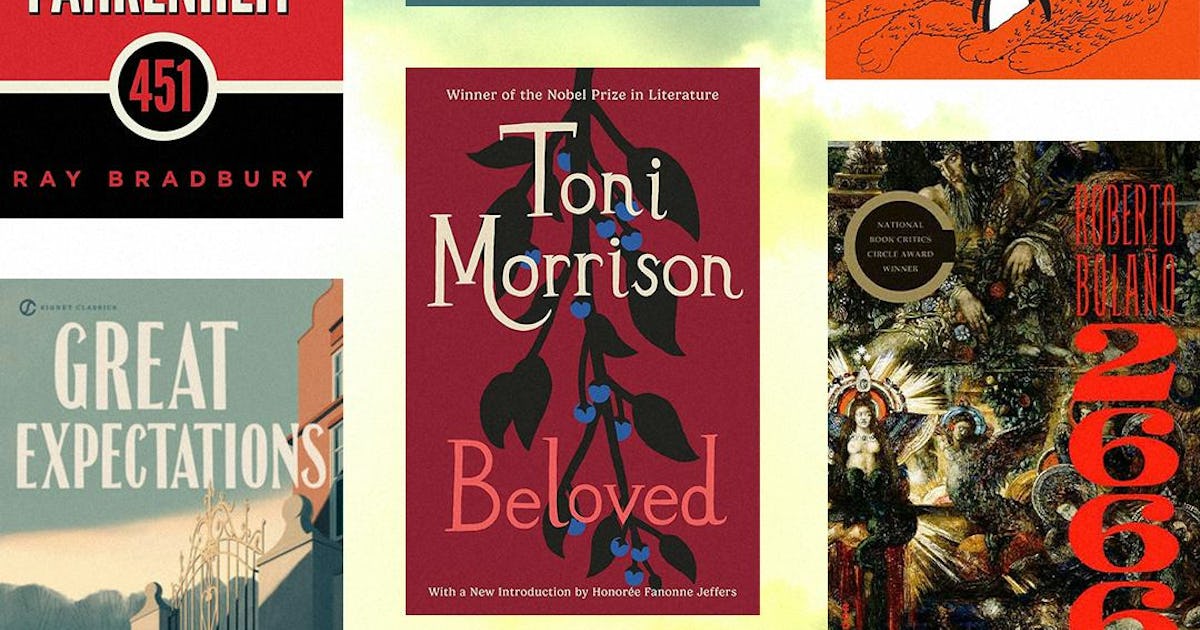
“Great Expectations has everything: Family, ambition, escaped convicts, bullies, class differences, a vengeful bride left at the altar who weaponizes a young woman to take her revenge on men, secrets kept and revealed, and a (sort of) happy ending. Oh, and a murder or two,” says Francine Prose, author of many novels including the forthcoming, Five Weeks in the Country. “The best way into the book is to read it aloud. The complex sentences and 19th-century diction soon begin to seem as familiar as everyday speech.”
“Maybe its ubiquity as a ‘classic’ is one reason why actually reading the text is such a revelatory experience—it’s a far weirder and more pleasurable book than its presence on countless syllabi would suggest,” says Julie Buntin, author of Marlena and forthcoming novel, Famous Men. “Pick it up and be open to it—within a few chapters, the sentences unspool easily, sweeping you up.”
Best for: Those who will do just about anything to inhabit the world of The Goldfinch (including watching the movie), or feel it’s high time to read the real thing after bingeing the 1998 film adaptation.
“It’s just great,” says Kiley Reid, author of novels, Such a Fun Age and Come and Get It. “And it has the best opening chapter I can remember reading, with a character that you never see again. There’s action and fires and running from the law, and yet, it reads slow and delirious, like a middle-of-the-night fever dream.”
Best for: Those staunchly against the unlawful firing of librarians. Also, readers of I Will Bear Witness: A Diary of the Nazi Years 1933-1941 by Victor Klemperer or A Clockwork Orange by Anthony Burgess.
“Almost everyone feels that they should read it; hardly anyone actually has. I’m speaking as a skeptic who held out until about 15 years ago,” says 1999 Pulitzer Prize Winner for Fiction, Michael Cunningham, author of The Hours, and the forthcoming memoir, Unsayable: My Life in Writing. “In Search of Lost Time isn’t difficult—Ulysses is difficult. Proust’s book is just long. In Search of Lost Time, all seven volumes of it, is probably the most thorough, incisive account of what it’s like to live on the planet earth. It contains the highs, the lows, and the middles. Read it with at least one friend—there are some Arctic stretches, and you’ll need encouragement to keep going.”
Greer suggests “Swann in Love, the second part of volume one in Proust’s In Search of Lost Time. Read 10 pages a night and let it wash over you. There is always something to make you gasp: with beauty, with insight, with heartache. It will do what all great fiction aspires to: it will change you.”
Best for: Those who finished the My Struggle series, took zero breaks while attending a showing of Oppenheimer or plan to watch the Masters Golf Tournament in its entirety.
Beloved by Toni Morrison
“Beloved by Toni Morrison is not only a deeply felt and vividly rendered story, it’s also a testament to what’s possible in fiction,” says Angela Flournoy, author of The Turner House and The Wilderness. “Morrison breaks so many ‘rules’ in this novel, but it all works. First-time readers shouldn’t be intimidated by Beloved—it’s a book that puts memory at the center of the narrative, and holding onto that fact will help you appreciate its beauty.”
Best for: Fans of Lincoln in the Bardo, those who consider Jesmyn Ward a living legend (she is) or were early acolytes of Sinners.
“While it was published in 1993, and calling it a classic makes me feel old, I still think Octavia Butler’s Parable of the Sower should be considered a classic,” says Paige Lewis, poet and author of forthcoming novel, Canon. “In this dystopian novel, set in the then-future of 2024, teenager Lauren Olamina struggles to survive in an America that’s collapsing because of a fascist government, corrupt police, climate change, and resource scarcity-related violence. Something my students like to point out is the difference between the young characters in the book and the older characters. The older people in Lauren’s community sit around hoping for the world to go back to ‘the good old days,’ while it is clear to 15-year-old Lauren that this sort of passivity is detrimental.”
Best for: Those who have reread The Road several times, read (and now are watching) The Testaments, and are eager for the return of The Last of Us.
“The Buddha in the Attic follows a group of Japanese ‘picture brides’ as they come to America in the 1900s, marry men they’ve never met, and settle into their new lives,” says Katie Yee, author of Maggie; Or, A Man and Woman Walk Into a Bar. “You should read it because it’s been banned in several school districts. You should read it because it’ll surprise you, with its humor in quiet moments. You could read it because it’s short: only 144 pages. Ultimately, though, you should read it because the ending will shock you. It’s one of those rare, perfect novels that marries form and content; the pain at the heart of these characters is felt even in its structure, in the bones of the book.”
Best for: Those who count The Kitchen God’s Wife among their favorite titles, ravaged Small Boat in a single sitting or who stump for Preparation for the Next Life to receive the attention it deserves.
“This is quite possibly my favorite novel of all time, and I dare anyone to read the opening paragraph and resist the urge to read it in a single sitting,” says Kevin Wilson, author of several short story collections and novels including Now is Not the Time to Panic, Nothing to See Here and most recently, Run for the Hills. “Merricat Blackwood lives with her sister and uncle in Blackwood Manor, in isolation from the rest of the town ever since their family died by poisoning. In such a short span of time, I was blown away by how much of our secret desires—which we hold so deeply inside ourselves—could rush to the surface.”
Best for: Readers seeking out O.G. weird-girl lit, watched Wednesday with absolute delight or still carry a torch for season one of Euphoria.
“I recently picked up my dad’s old paperback of Another Country, which I first read in college, and realized just how much it formed me as a writer,” says Rob Franklin, author of Great Black Hope. “Its vision of bohemian 1950s New York is uncompromising—kinetic, haunting, with teeth. I’ve heard the book dismissed as relentlessly bleak, but what I love about it—and what I think it gets so right—is its portrayal of how intimate relationships across identity lines are so often pressure-tested by larger systems. We see characters like Ida (a Black woman) and Vivaldo (a white man) who are bonded by grief but also speaking across an unbridgeable distance (side note: it also has this HBO Max Industry thing going on, where every character is randomly bisexual, which I adore). Read it to pick apart the craft. Watch the way the sentences move. Ask yourself: ‘Which questions does Baldwin attempt to answer about love, sex, politics, and history? And what do these reveal about the author, the tensions in his own life he may have been trying to resolve?’”
Best for: Folks who religiously watch Industry, couldn’t get enough of Palaver (or Memorial) by Bryan Washington, or long for old New York.
“This is a novel many encounter in adolescence that is often misread—or miscategorized—as an ode to the impact of a beloved teacher. It is not that,” Buntin says. “Miss Brodie’s intrusive command of her ‘set’ of girls is a portrait of fascism writ small: a tart, bracing evocation of the lure—and danger—of a charismatic leader with dangerous ideals. Spark is bolder than most contemporary writers by miles. In a breathless twist of a single sentence, we sometimes learn a character’s entire fate. My recommendation for how to approach it is this: Look twice. Nothing by Muriel Spark is exactly what it seems.”.
Best for: Those who have made The Virgin Suicides their entire personality or are searching for something like Election meets Never Let Me Go.
“I remember reading this in college and finding it sexy, but exotic,” says Xochitl Gonzalez, author of Olga Dies Dreaming, Anita de Monte Laughs Last and forthcoming, Last Night in Brooklyn. “The government, and the weight of government in the lives of these protagonists, seemed to me utterly foreign (at least, in the turbo-charged optimism of mid ’90s America). It is a book of living passionately in private. This is considered a ‘book of ideas,’ but ones that feel relatable in the current American moment, where so much is swirling around that feels beyond our control. What we can do, no matter what, Kundera reminds us, is to feel the lightness of being alive.”
Best for: Longtime fans of Bel Canto, The God of Small Things or Love in the Time of Cholera.
Sula by Toni Morrison
“This novel should be read by everyone, multiple times,” says Deesha Philya, author of short story collection, The Secret Lives of Church Ladies and forthcoming novel, The True Confessions of First Lady Freeman. “Set in the 1920s in a Black hilltop community called The Bottom, which overlooks a fictional white Ohio town, Sula should first be read for its portrayals of friendship between young girls, of the chaos of love and death, of mothers as mysteries (and murderers), and of daughters as dreamers. It should be read again to behold the novel’s singular Black women characters, some who live by their own rules and others who suffocate beneath the rules they believe propriety demands. Finally, it should be read a third time, at a minimum, to savor Morrison’s incomparable prose and feats of language, for exquisite lines such as, ‘Like any artist without an art form, she became dangerous.’”
Best for: Those who felt The Heaven & Earth Grocery Store alter them on a molecular level, or gobbled up Kin and subsequently listened to every podcast episode on which Tayari Jones has appeared.
“The main attraction of this monumental novel is Eliot’s ability to show the deep complexity of every human being,” says Charlotte Wood, author of The Natural Way of Things and Stone Yard Devotional, among others. “Her masterly control of the great sweep of the narrative is staggering—she zooms in to focus on the tiniest personal detail, then out to the broadest possible examination of British society and politics, then back again to the intimate. I do recommend some assistance if, like me, you’re daunted by the magnitude of the story and its reputation. Enter the Secret Life of Books podcast, with its brilliant Middlemarch Book Club. Also: commit! I had an iron rule of 20 pages a day, no matter what.”
Best for: Readers with a lengthy trip ahead or have read Infinite Jest without gloating.
2666 by Roberto Bolaño
“This should be a classic—and maybe already is,” Prose says. “One of the most deeply strange and original novels I know, 2666 seems at first like one thing and then keeps changing into something else. The first chapter is a wry comedy about a love triangle involving three academics. But the book is about to get stranger and darker. A magazine reporter goes to Mexico to write an essay about boxing and plunges into the terrifying realities of the U.S.-Mexico border, where thousands of women have been murdered. There’s a huge cast: an herbalist and seer, a detective, a young man who goes to work for the narcos, a writer who may or may not have vanished. By the end, we understand that Bolaño has done nothing less than examine the politics of the border, the depths and complexities of human nature, and the nature of evil.”
Best for: Fans of Narcos, So Far So God by Ana Castillo and True Detective.
