

In 2018, Saudi Arabia removed its religious ban on cinema and revealed its intentions to transform itself from an oil-based economy into an entertainment powerhouse. The goal was to use the country’s wealth to not only invest in media companies, but to lure studios to the kingdom through a combination of tax incentives and state-of-the art facilities, while developing its own national film business. Eight years later, however, Saudi Arabia’s moviemaking ambitions have yet to materialize, stunted by regional turmoil and a failure to recognize what audiences want.
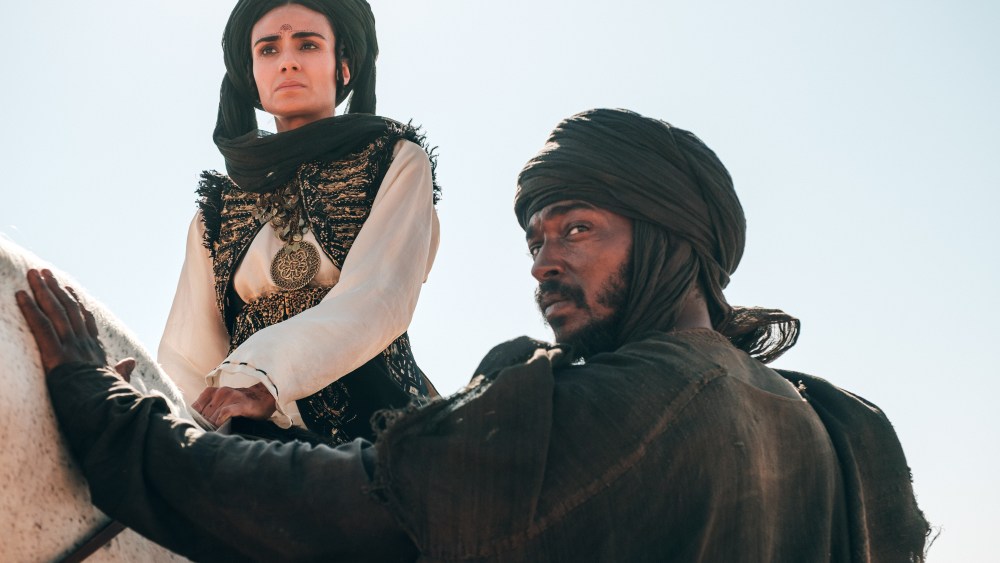
This year, the kingdom suffered an international embarrassment after “Desert Warrior,” an $150 million tentpole starring Anthony Mackie and touted by broadcaster MBC – that bankrolled it – as Saudi’s ticket to break out on the movie world map, flopped spectacularly. “Desert Warrior” recently wound up grossing a mere $700,000 in the U.S. and across the Arab world during the two weeks following its April 23 release. This disaster serves as a cautionary tale and comes as the kingdom is facing further uncertainty caused by the war in Iran, a conflict that has spilled over to other countries in the region.
The oil rich nation with a population of more than 35 million – roughly 60% of which is under 30 – has made strides since the April 2018 release of “Black Panther” broke its 35-year film famine as part of a drive by Crown Prince Mohammed bin Salman to transform Saudi society. But the kingdom is experiencing ups and downs in its attempts to become a global movie player.
At Cannes this year Saudi Arabia does not have any movies, unlike two years ago when it scored its first official selection slot with Tawfik Alzaidi’s “Norah,” an arthouse drama about artistic expression during the repression of the 1990’s that didn’t get much traction.
Hollywood, meanwhile, is beginning to move past the backlash caused by the grisly murder of U.S.-based journalist Jamal Khashoggi at the Turkish Embassy in 2018, which was attributed by U.S. intelligence officials to Saudi agents acting on orders of Crown Prince Mohammed bin Salman. The Saudi government denies involvement of its top leadership.
Despite the furor, Saudi money has continued to find its way in Hollywood through multiple splashy deals. To name one, Electronic Arts, the maker of video games like “Madden NFL,” “Battlefield,” and “The Sims” in October was acquired by an investor group led by Saudi Arabia’s sovereign PIF wealth fund in a massive deal valued at $55 billion. PIF is currently among the backers of a $24 billion financing package supporting Paramount Skydance’s acquisition of Warner Bros. Discovery with a 15.1% equity stake worth roughly $10 billion, according to Paramount’s FCC filing.
According to Saudi film industry trailblazer Rasha AlEmam, who served as line producer on “Desert Warrior,” the Paramount-Warner Bros. deal “will position Saudi as a stakeholder in [Hollywood] content creation and distribution.” AlEmam, who is CEO of Saudi Arabia’s Yellow Camel Studios and is in Cannes to lure international productions, is confident that, thanks to the deal, U.S. studios will now be “less reluctant” to come shoot movies in Saudi. “It can help bridge the gap,” she says.
“The Saudi film industry is on a learning curve,” says Egypt-based film analyst Alaa Karkouti and distributor, who runs the Arab Cinema Center at Cannes. “But there are signs pointing in the right direction,” Karkouti adds, noting that “They are starting to realize that it’s not about spending crazy money.”
Indeed, the “Desert Warrrior” debacle raises a bigger question about capital allocation in the Saudi market. The kingdom’s upcoming slate includes other examples of its free-spending ways, starting with Belgian and Moroccan directorial duo Adil El Arbi and Bilall Fallah’s upcoming action thriller “7 Dogs,” which shot in the desert outside of Riyadh earlier this year on an official budget of $40 million that is believed to have ballooned to $70 million. Its current claim to fame is that “7 Dogs” clinched the Guinness World record for the “largest film stunt explosion in the history of cinema” beating previous record holders “No Time To Die” (2021) and “Spectre” (2015). It’s unclear if all those pyrotechnics will help “7 Dogs,” which releases regionally on May 27, become a box office success on the level of those two films.
“There is clearly ambition, which is positive, but the current model is high risk and not necessarily aligned with how sustainable industries are typically built, particularly at a time when there are already signs of pressure on rebates and overall liquidity in the system,” said an Arab industry expert.
“The intention to build an industry is there,” noted Egyptian producer Mohamed Hefzy who in 2024 branched out into Saudi by setting up a Riyadh outpost for his Film Clinic shingle. “Sometimes you need a little time for things to happen,” he adds, noting that “The more money you throw at a talent pool that is not seasoned, the more likely you are to get films that could have been great, but are not.”
During Saudi Arabia’s Red Sea fest last December, a sprawling new state-of-the-art film facility called PlayMaker Studios just outside Riyadh was announced as the hub for another pricey Saudi-financed English-language epic, “Unbroken Sword,” directed by Alik Sakharov, who has helmed several episodes of “The Sopranos” and “Game of Thrones.”
“Unbroken Sword” which is being executive produced by British producer Richard Sharkey, whose credits include “House of the Dragon,” and “The Lord of the Rings” franchises, aspires to be the big breakout title Saudi has so far failed to deliver. But it’s actually much smaller, fresher films, reflecting contemporary life in Saudi that have been making an international splash. The films that have worked are more aligned with the 2023 satirical thriller “Mandoob,” the story of a man named Fahad who becomes a booze runner after being fired from his menial job and plunges into the depths of Riyadh’s underworld. Besides breaking box office records in Saudi Arabia – where it outperformed Hollywood releases like Timothée Chalamet’s “Wonka” – “Mandoob” made a splash at the Toronto film festival where “it caught the eye of a lot of American executives,” says Hefzy.
Or take the smart Saudi caper “Alzarfa: Escape from Hanhounia Hell” about three friends, who end up behind bars after a failed heist attempt. They subsequently wind up acting in a movie bankrolled by the eccentric Saudi tycoon they had tried to rob and in a setting where they have a chance to retrieve their stashed heist treasure. “Alzarfa” last year did better at the box office in Saudi than “F1: The Movie.”
“These are movies that push boundaries made by local people who actually love representing the culture and a new voice,” said Alaa Faden, CEO of Saudi’s Telfaz11 Studios.
Faden thinks that these type of idiosyncratic movies are what can help Saudi Arabia’s nascent film industry mature into a global player.
“The world hasn’t seen something from Saudi yet that is totally different from what they might expect,” he argues. “But it’s here, and it’s coming from this culture. We just need a little time to find the right format so that it can reach everybody. But it will come.”
