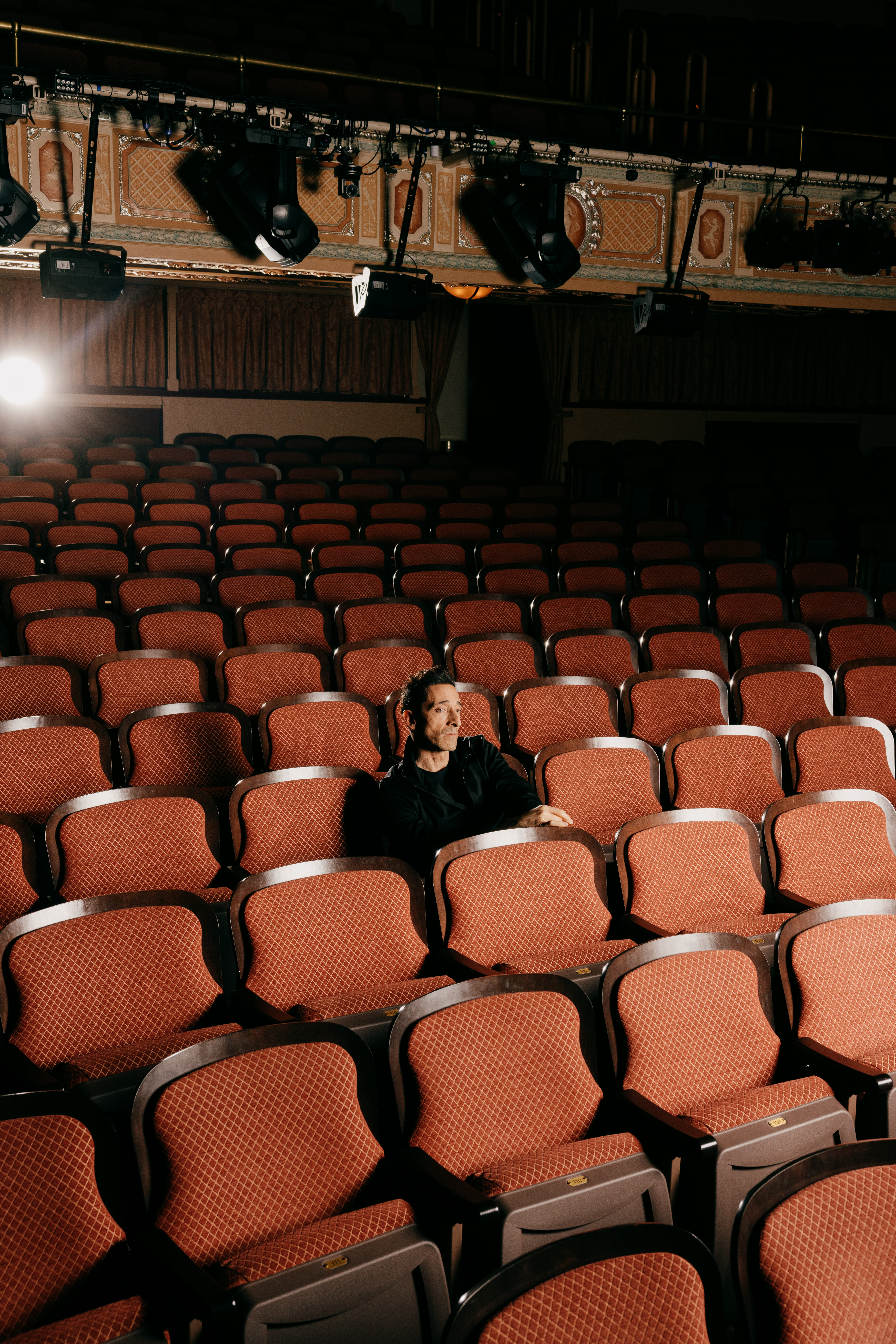

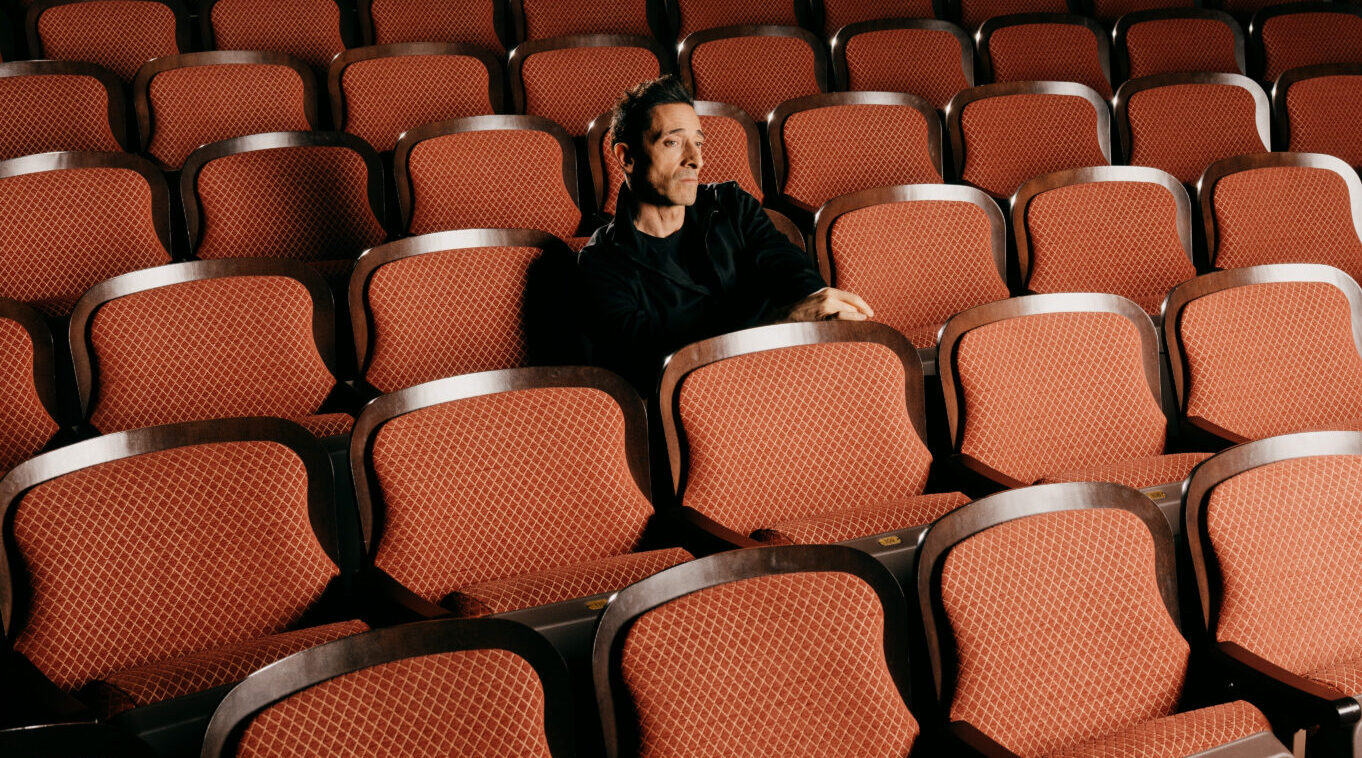
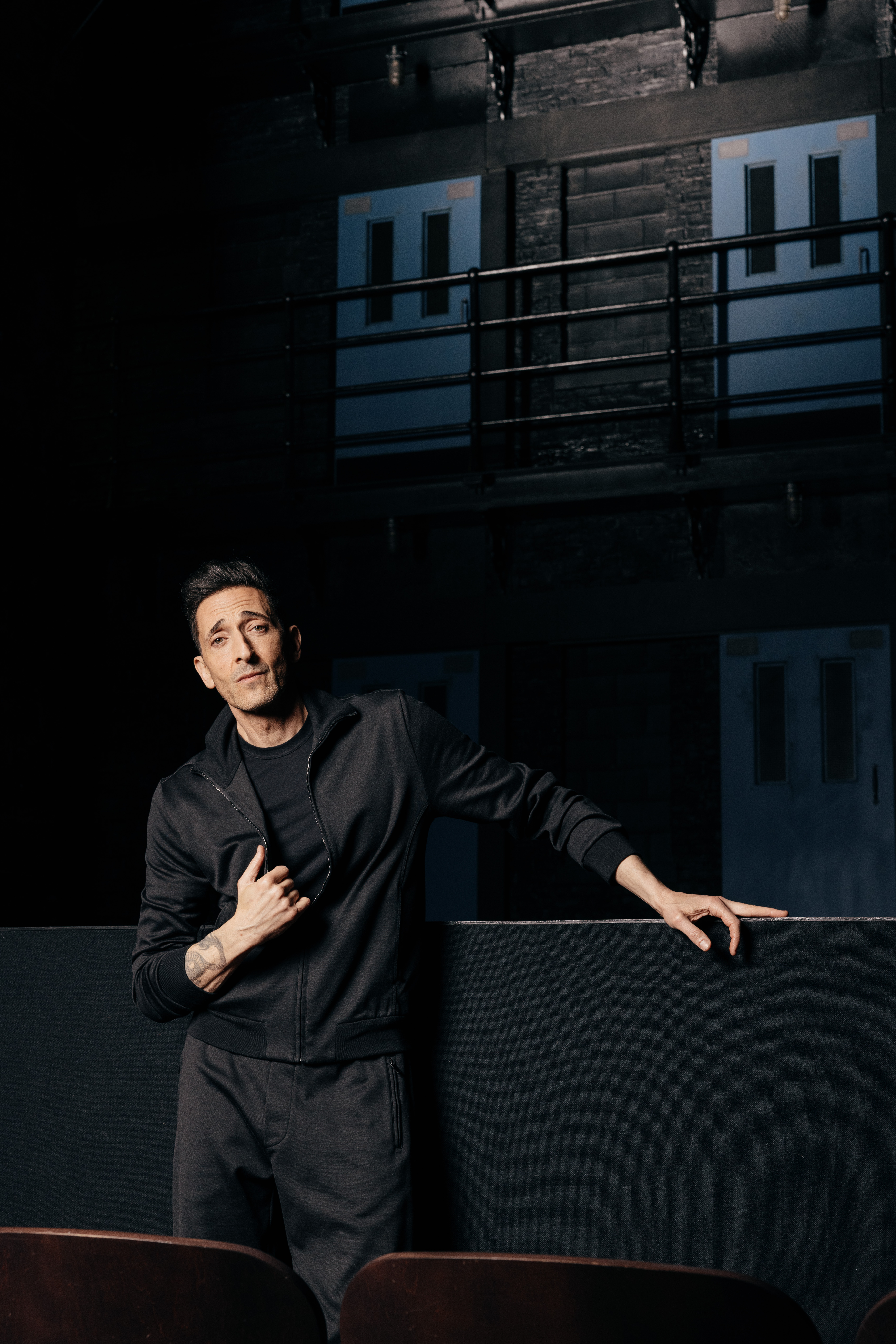
For his Broadway debut in Fear of 13, Adrien Brody has been holed up alone in a hotel room for the better part of five months. That’s what the role demands of him, or rather, what he demands of himself. “It is lonesome, of course,” he says. “But I’m playing a man who has lived far deeper in that isolation. What I experience is only scratching the surface.” That man is Nick Yarris, the real-life inmate who spent 22 years on Pennsylvania’s death row for a murder he didn’t commit. After a celebrated run on London’s West End, Lindsey Ferrentino’s play made its way to Broadway last month. Nick, as he exists on stage, is gregarious, funny, and vivacious, resisting the obvious tragedy that infuses so much of his daily life. He blasts through books, compulsively writes, and falls in love and marries a prison justice advocate over the course of nine years, all while staring down the barrel of a death sentence. It’s a complex role carrying a remarkable amount of weight, something Brody has famously never shied away from. This is, after all, a man who once starved himself, sold his car, and disconnected his phone to play Szpilman in The Pianist. Five months in a Midtown hotel room, he’d likely be the first to admit, pales in comparison. Last week, we sat down with the actor to talk about what Broadway asks of him that screen acting never has, his undying love of brooches, and his life as a visual artist.
———
FRIDAY, 4 PM, APRIL 8, 2026 NEW YORK
———
SANDSTROM: I saw Fear of 13 last week. It was such a pleasure to hear Nick speak. What has his response been to the show?
BRODY: Nick has shared with me that it’s alleviated some ongoing suffering, of course, but just having his story come alive in this, and be shared, and for me to carry it and to help represent that and the hardships that he’s faced, and that it’s turned into art. He’s a wonderful person. He’s spent many years building his intellect and escaping all that hardship through stories and reading thousands of books and it’s remarkable. It’s a sad, harrowing world that these men and women have endured. And Nick’s story is just one of many, unfortunately.
SANDSTROM: I want to go back to the beginning a little bit, and I want to ask what made this the right project for your Broadway debut?
BRODY: That’s a really lovely question. I’ve always admired the men and women who are brave enough to act on the stage night after night, eight shows a week. It’s a very different lift for an actor in comparison to film work. I’d spent a lifetime working and understanding and building a greater understanding of my work within the film space, so I was always a little reluctant to take the stage. But I was so moved by this material when I read Lindsay’s script. There’s a lot of nuance, a lot of layers, and a lot of opportunity to really craft something quite special, that for me has provided a lot of growth. It also feels like a worthy use of my energy and emotional space, which it sure takes up a lot of. It pushed me beyond my own boundaries really and made me yearn to tell the story and be brave enough to step into relatively unchartered territory for me. I mean, I hadn’t done a play since I was a boy. I’m really enjoying it, but it is quite the task.
SANDSTROM: On that note, I’m wondering what your pre-show routine is and has theater forced you into new habits?
BRODY: I was just joking with the bellman. He said, “Did you survive those two shows yesterday and the day before?” And I said, “Yeah, but my voice is on its way out.” But I basically have to hole up here on my own, away from family and away from my loved ones in order to do this work. Most of my downtime is trying to decompress and rest up to be ready to work. To be in a space to do the work properly, and be prepared, requires isolation.
SANDSTROM: Is that both physical and emotional isolation?
BRODY: Yeah. It’s an emotional thing, and a mental thing as well because there really isn’t space to be physically and emotionally present for everything that you would typically need to be available for. It comes and goes in an actor’s life when you have certain roles that require a great deal of commitment and they’re all consuming, especially through rehearsals, tech, previews. Those were 11 hours a day, six days a week. So really there was no time to really decompress and to ingest all that material and own it by the time you’re up and running and then get a real routine going. I have changed a lot of personal habits, and removed a lot of pleasurable things. I know how easy it is to get distracted from your own stories, and your own life, and your own responsibilities. Some of those unfortunately have to fall by the wayside when you’re working. One thing or the other is sacrificed.
SANDSTROM: Nick is a really fun and really complex character. What characteristics of his did you like the most?
BRODY: Nick really is quite gregarious and a wonderful storyteller, in the sense that he’s lived so many lives, and he’s quite eloquent in the way that he expresses himself. He has a sense of humor and is tough. He doesn’t convey hardness, but he sure does possess a hardness and a tenacity. He’s joked with me, because he unfortunately had a terrible accident relatively recently, since we did the play in London, where he got run over by a car.
SANDSTROM: Oh, wow.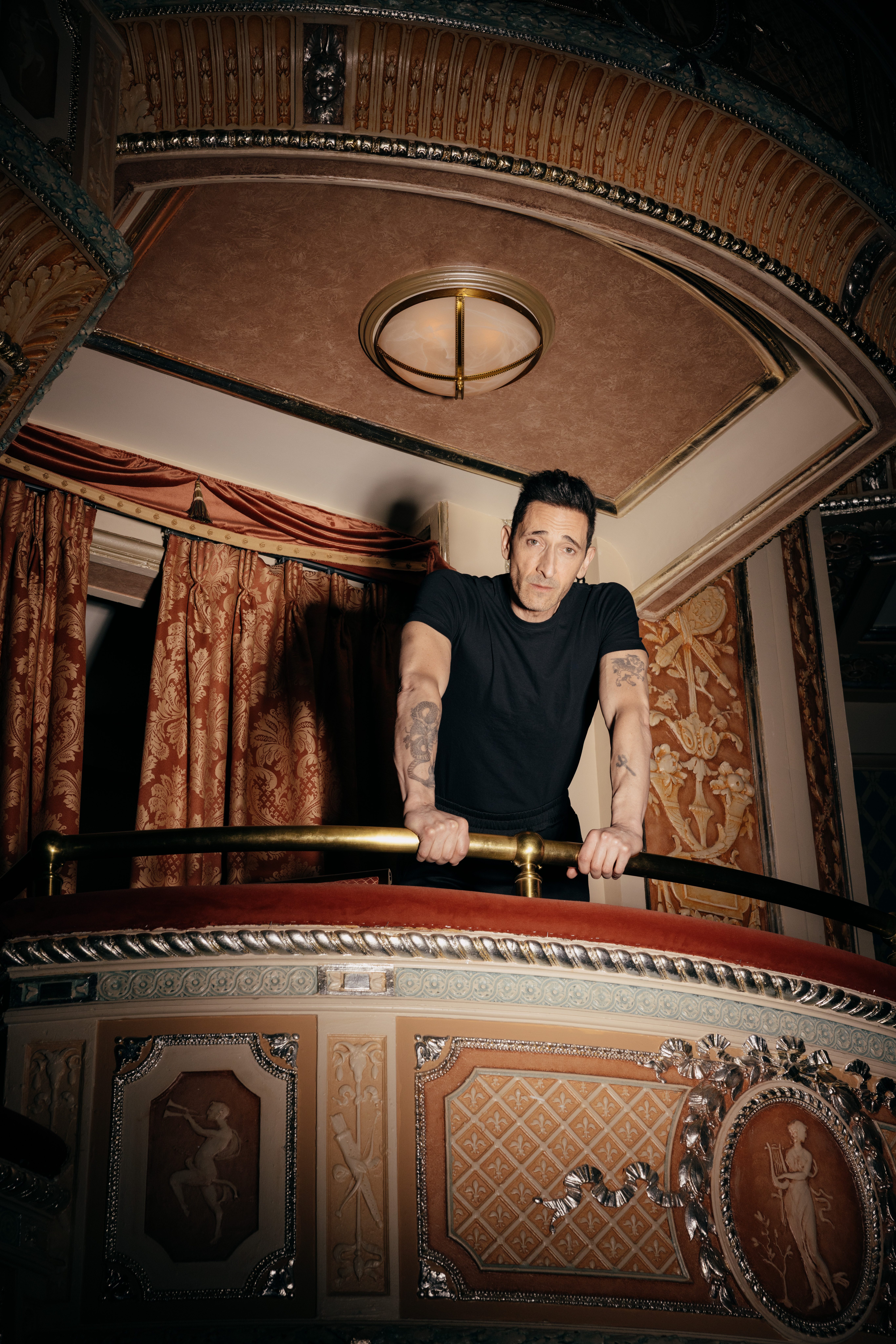
BRODY: He had broken bones and had reconstructive surgery. He joked with me and said he’s hard to kill. That’s someone who knows where he is at and lived through so much. Another quality beyond all of that is he’s quite empathetic. He’s very sensitive to others, and he understands the preciousness of time in life in a way that I think most people cannot when you’re deprived of so much and robbed of so much of your freedoms, and then are granted them again. Rather than being bitter about those losses, he’s very with you, and very genuinely present, and concerned, and thinking about things. Those are all really wonderful qualities that most people should aspire to improve upon. He has them in spades.
SANDSTROM: You’re now performing this in New York where you’re from. Does telling Nick’s story here feel different than it did in London given the realities of the US prison system?
BRODY: Yes, very much so. I think it’s something that we as Americans are quite intimate with. Not just how much incarceration is a part of our consciousness, but the US is quite unique to other Western prison systems. We have the death penalty, and the UK currently does not. We have all sorts of complex ways in which you can end up on the death penalty in this country. As a New Yorker, telling the story in New York is special to me. And doing Broadway as an actor, there’s many layers to it that feel very important, both personally and creatively, and to provide a light and some kind of awareness of the circumstances that are existing all around us that many of us are not keyed into.
SANDSTROM: Have you had any unexpected or memorable audience reactions so far?
BRODY: It’s interesting because you’re very present with an audience, and every night feels different. There are these waves of energy between you and them, even in silence, which can mean they’re completely with you. People find different things amusing. In London, nobody ever laughed when Beau Mullen, the attorney, visits Nick in prison and says he’s going to try to prove there’s no evidence and that it will take another year. Here, the reaction feels more overtly comedic. In London, there were more audible gasps, a sense of incredulity, but not laughter. Now it gets a real laugh almost every night, which is unusual. It feels a bit odd. I don’t think it’s very funny, but maybe that’s not for me to decide. What I love is that unpredictability, the aliveness of sharing something with an audience. Each performance becomes its own thing, and I may never do it the same way again.
SANDSTROM: Do you think that’s something you’ll miss when you go back to screen acting? If you go back.
BRODY: Yeah, if I make it past this run. Who knows. But yeah, it’s been surprising how much it’s moved me and how exciting it’s felt.
SANDSTROM: Is there a single line or moment that gets you every time emotionally?
BRODY: There are numerous moments. Toward the end, when he recognizes that everything still goes on, there’s this sense that despite it all, there’s so much beauty in being alive. It’s the gift of that, alongside the loss, this immense gratitude and clarity, like cleaning the lens and finally seeing what we take for granted every day. The simple things, being able to buy a cup of coffee or kissing a dog, or going for a bike ride, those really move me. I’ve had similar realizations in other roles too, moments that made me aware of how much I took for granted as a young man, freedoms we assume are guaranteed but aren’t.
And then there’s the scene where Nick speaks to the judge in his letter, when he talks about how small the distance is between having a life and having one taken from you. So many people make a fatal mistake when they’re young, often in a moment of blindness or carelessness, and it changes everything for them and for others. They have to live with that, whether they’re punished or not. Those moments can intersect a life so suddenly and so early, and they’re devastating. Some people are spared, and recognizing that, understanding it, acknowledging how easily any of us could have been in the wrong place at the wrong time, that feels profound to me. If anything resonates, it’s that reminder to live with respect for others and for the life we’re fortunate to have.
SANDSTROM: What thought do you want people to leave with after seeing the play?
BRODY: I sure hope that they felt that it was a meaningful experience. I always want to do more than to entertain someone. I hope that the feeling is similar to what attracted me to taking on the responsibility of doing the work.
SANDSTROM: It sounds like whilst this has been such a collaborative experience, it’s been a little bit of a lonely emotional experience for you. Is that right?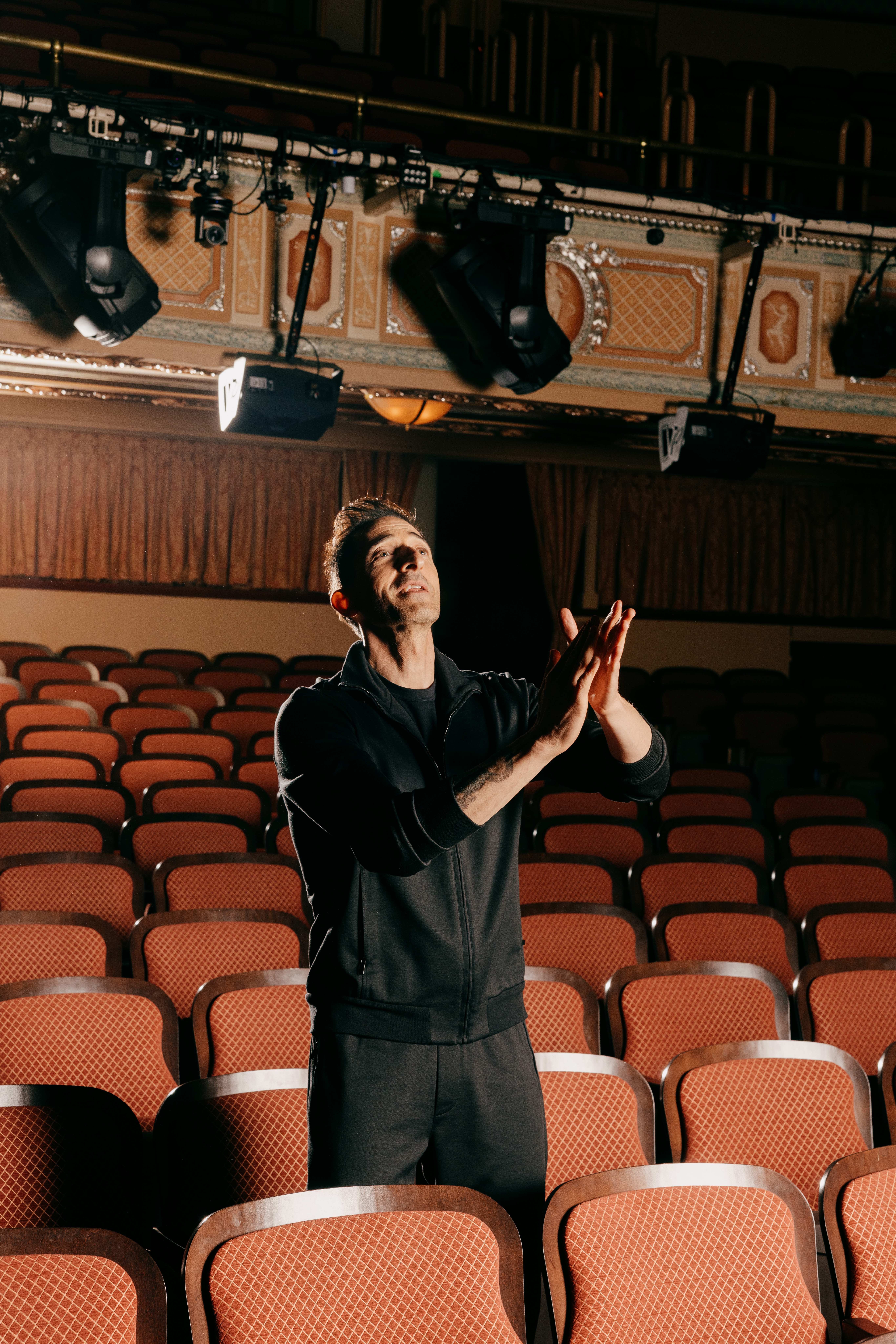
BRODY: I’m not worried about loneliness, but yes. It’s very solitary. I love my cast, I love working with Tessa, and I value those relationships, but the work itself is internal. We each do that work on our own and then bring it together. And it doesn’t just come from the responsibility of these four or five months, it comes from the life I’ve lived up to this point, from accessing those experiences and honoring the people reflected in Nick’s story and journey. Living alone in a room for nearly half a year, most days of the week, is part of what I give to the work. That is lonesome, of course, but I’m playing a man who has lived far deeper in that isolation. What I experience is only scratching the surface of what he’s endured, the pain and bitterness at the core of it. It’s a strange thing. There is a need to sacrifice certain comforts and freedoms for roles like this. It’s not the first time I’ve done it, and it won’t be the last. I think that sacrifice leads not only to better work but to a greater appreciation of life, to devoting as much of myself as I can for a finite period, and then letting it go and trying to live more joyfully.
SANDSTROM: What other role have you played that you’ve made a sacrifice on a similar scale for?
BRODY: The Pianist was on a much greater scale, and I was at a point in my life where I could do it. I didn’t have a family, though it still wasn’t easy on my personal relationships. I put everything in storage, moved out of my home, sold my car, and disconnected my phone so I was only reachable by voicemail. I stopped listening to the music I love, hip-hop and anything modern, and immersed myself in something else entirely. I learned to play Chopin and went on a starvation diet. It was a complete shift, and when it was over, I had to rebuild my life from scratch. When I came back to New York, it was right after the September 11 attacks and everything had changed. I had spent months immersed in the horrors of war, oppression, smoke, and ruin, and then returned to a city that carried some of that same weight. It was a dark time and a lot to climb out of. But it was important to me to go that far, to fully honor the responsibility of that role.
SANDSTROM: My final question is about your brooches. They’ve become quite a talking point.
BRODY: Have they?
SANDSTROM: Yeah. Do you know about this? I wanted to know if you have a collection and what you love about wearing a brooch.
BRODY: Well, it’s funny because when I started wearing it, far fewer men were wearing brooches. Now I notice that when I show up to an event that quite a few people are wearing one. But before it was not a very common form of men’s jewelry. I find them really beautiful. I think as a man to a formal event, you’re often wearing something black tie that’s relatively conservative, and it’s a very interesting accoutrement to embellish that. There’s artistry and layering in the storytelling of the brooches that are all really interesting. The last one that I just wore at the Met Gala is based on Swan Lake and Princess Odessa, I believe. The Princess is looking into her reflection in the lake and that kind of solitary, longing, lonely moment.
SANDSTROM: Amazing. Thank you.
BRODY: Yeah, my pleasure.