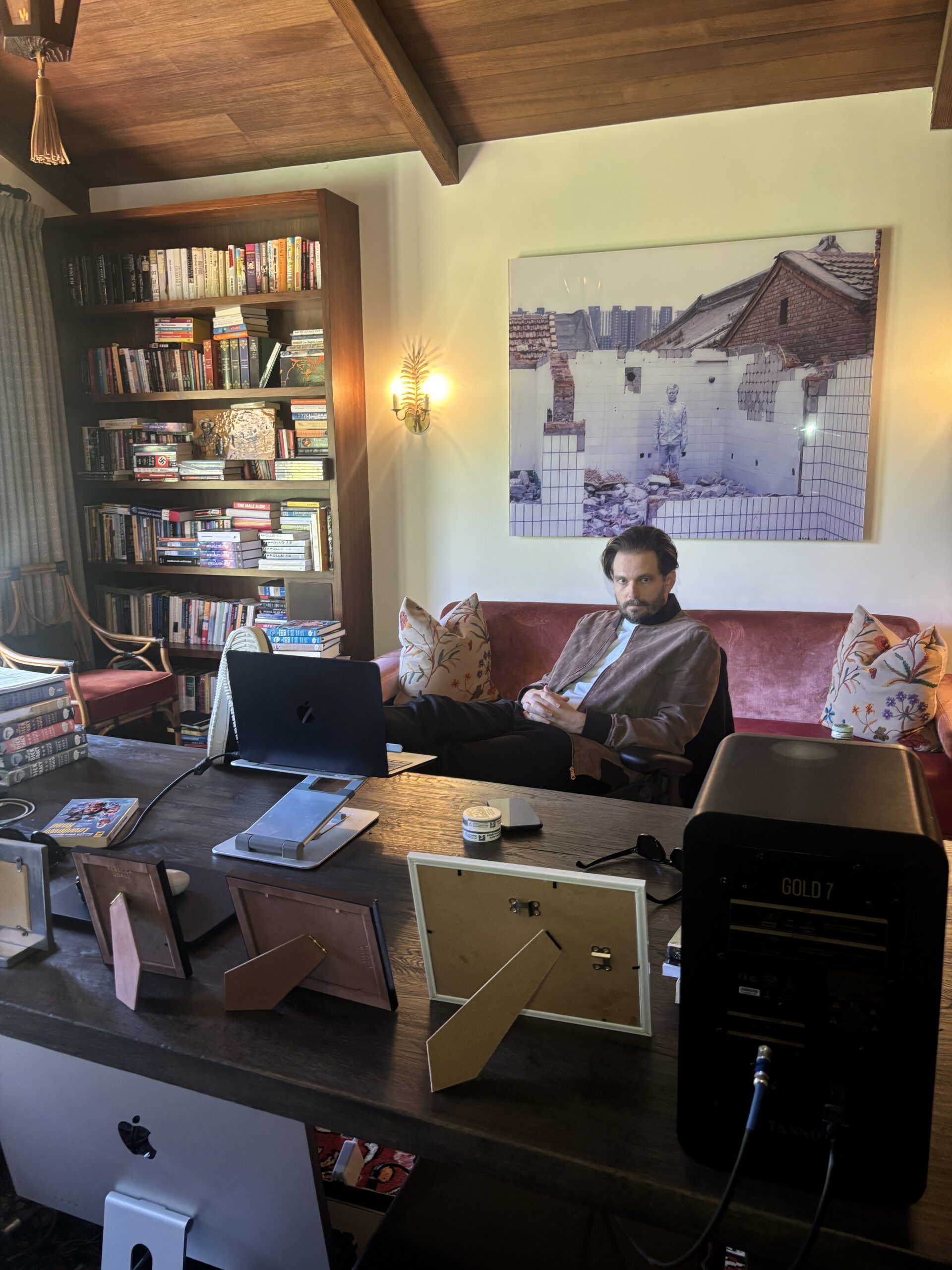

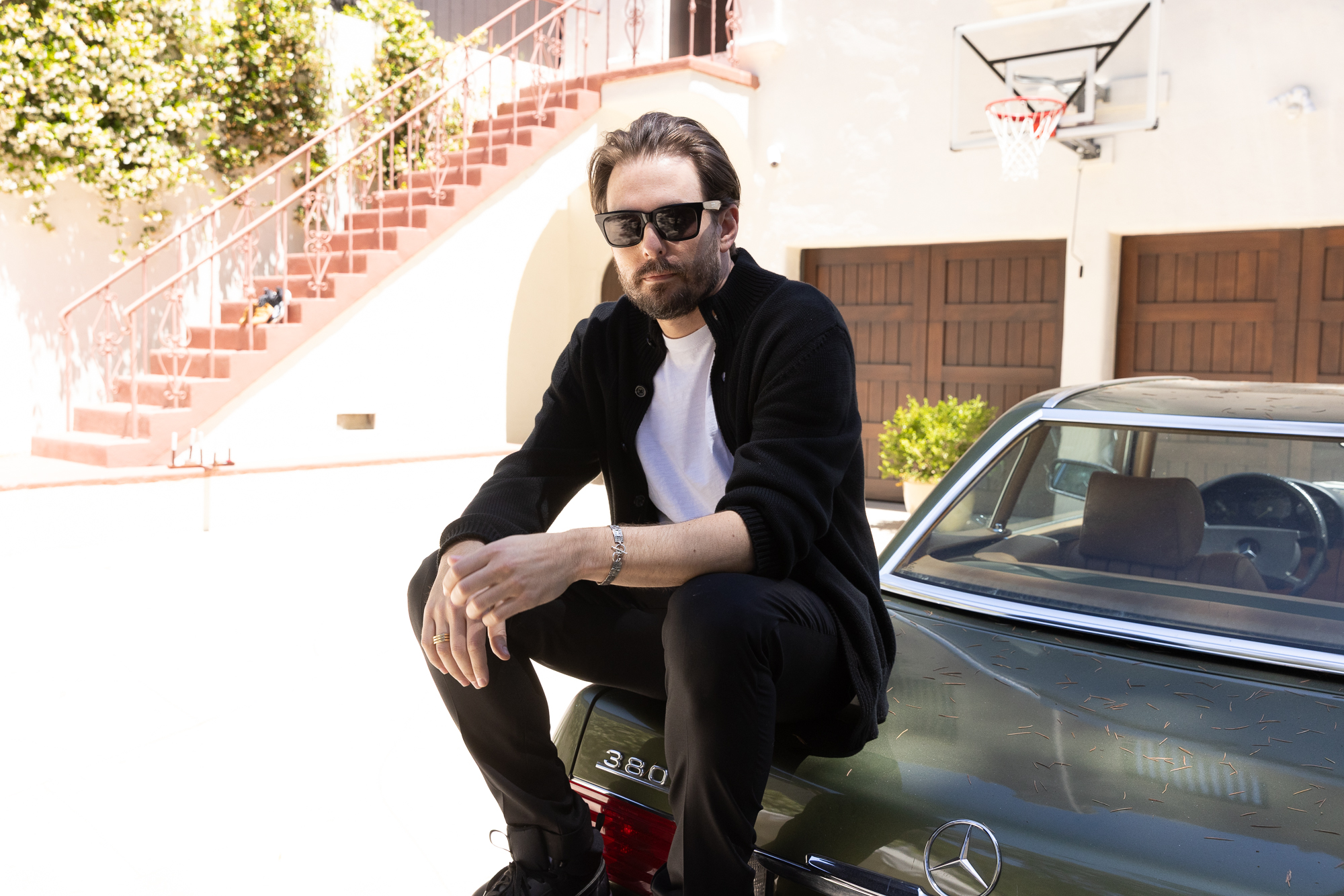
Over three seasons, Euphoria has reshaped what television could be, and minted a new generation of stars along the way. It also made its creator, Sam Levinson, one of the most talked-about showrunners in Hollywood, a filmmaker at heart whose ambition has always outpaced easy consensus. Now, with the series coming to an end after a third season that drops its characters into adulthood like a grenade, Levinson sat down with Bradley Cooper, an admirer who, like Levinson, is a recovering addict and movie nerd, and found they had plenty to talk about.
———
TUESDAY, MAY 26, 5PM, 2026, LA
———
SAM LEVINSON: Hey, how’s it going?
BRADLEY COOPER: Hey, man.
LEVINSON: Thank you so much for doing this. It really means the world to me.
COOPER: No, it means the world to me. Thank you for sending me that finale yesterday. We are allowed to talk about the whole series, right?
LEVINSON: Yeah, we can talk about the whole series.
COOPER: Right. Your choice of dignity for Rue’s death, where she’s turned away from us on the couch. That choice was so beautiful. I felt like you, the storyteller, were taking care of your character for how we were going to experience her death.
LEVINSON: Yeah.
COOPER: And then, without shortchanging the devastation, you then have another character paint it.
LEVINSON: Yeah.
COOPER: I mean, that’s what I got out of it. I was like, “Oh, wow.” It’s beautiful. It’s respectful. It’s caring. The storyteller is caring for this character that the story has been depending on. On that level, it felt so intimate. I felt you allowed me as a viewer to be such a part of your process.
LEVINSON: That means a lot to hear because we’re not a show that’s often known for our restraint. But I feel like that final moment on the couch, it was very important for me to be restrained and see it through Ali’s perspective. It’s like, we know what happened. And then Colman’s expression tells us everything we need to know.
COOPER: But he could have come up on her, and she could have been on her back with her hand down and her mouth open. And you didn’t. You didn’t. I felt so touched as a viewer. And the truth is it doesn’t really even matter because, whether I’m right or not—
LEVINSON: No, you are.
COOPER: The magic of what you’re doing, it makes me feel as if I’m walking in tandem with the storyteller, which is an incredible thing. I mean, bro. Honestly, there’s so many times in the three seasons where I’ve—and I tried to reach out to you, I think maybe a couple years ago—but how much you’ve inspired me as an artist, dude, is just incredible. Even when I was making Maestro and watching what you were doing, it was really pushing me to go farther and be bolder. How can I use cinema to tell the story? Because that’s all I’ve watched you do with your crew these three seasons. Just relentless pursuit. Nothing feels arbitrary. Everything felt focused to me. Everything.
LEVINSON: Wow.
COOPER: Two pieces of advice that have always resonated with me—and I don’t even want to say where they’re from because I’m probably wrong—but it was, you have three chances to get it right: when you write it, when you shoot it, and when you edit it. Which I always love thinking about, I just find that to be invaluable. That’s one thing I want to see if you agree with. And then the other thing is, plot is casting.
LEVINSON: Yes, 100 percent. I agree with both. My dad used to always say that to me. He would say, “Casting the right actors is, like, 90 percent of it.”
COOPER: But it’s the plot. It’s literally the plot. And I was like, what better way to emulate that than this series with these actors. The meta of it all is so bonkers, right?
LEVINSON: No, I mean, it’s been a really wild—
COOPER: It’s all one thing. That’s what’s so incredible.
LEVINSON: I think it was [John] Frankenheimer who said, “Character is plot.” So, maybe it’s casting is plot and plot is character.
COOPER: Your casting though, man. Well, I want to say this, too. I’m an addict and I’ve been sober many years and—
LEVINSON: God bless.
COOPER: Thank you. And I remember seeing Requiem for a Dream before I got sober and it was the only movie I’d ever seen where it made me not want to do drugs after. I remember seeing Rush, and you’re like, “I want to be Jason Patrick. I don’t care if the Allman Brothers are coming after me.”
LEVINSON: I had the same experience with Rush.
COOPER: It’s so interesting. I have a daughter who’s nine years old, so I’m around parents all the time, and I latched on to your show in season one and I’ve just become a disciple of it ever since. But people do say, “Oh, I know my kids, I don’t want… ” You know what I mean? And I’m like, “No, no, no, this is what it’s like. This is not celebrating. This is not sensationalizing. This is it. It’s cinematic, but if you want a warning of the reality of addiction, watch this show with your kids.” That’s what I told so many people. And then for it to end this way was so beautiful, man. It bowls me over how your brain works in conjunction with your heart, to be able to make the thing that I experienced.
LEVINSON: That means a lot because, look, I’m a recovering addict as well and I wanted to show how seductive drugs are. I wanted people to understand the allure of it, but I think we’ve been very truthful about the consequences of it. And when this season—
COOPER: I would even argue, sorry to interrupt, but I would argue when you were pulling me, it was lurid, man. It was honest in the way it was pulling the viewer.
LEVINSON: Yeah, absolutely. But, look, I think it comes back to Angus [Cloud], who played Fezco. When Angus died of a fentanyl overdose, I was so heartbroken by it because he was someone I deeply loved and tried to keep clean for quite a few years. But I thought, this is what 75,000 families are experiencing a year in the United States with fentanyl. And I knew how much audiences loved Rue, and how much they saw the goodness in her despite all the mistakes and all the bullshit she gets into. I thought if I can mirror the devastation that a family can feel with losing a loved one to fentanyl, then it’s worth it.
COOPER: There’s also something when we’ve been blessed enough to try to help addicts in both of our respective lives and understand what happens when they don’t want to get help. There is a death that occurs because there is a distance that happens, at least in my experience. And I felt like that’s what happened in this season. Every time Rue was with people that she’s been with for the other seasons, she’s like a ghost before she died on a couch in the background. And then the whole interaction with the mother character in this season, the phone call in the church where you really wonder, is she even talking to her? Then, at the end you see it, but it’s like, does it even matter? Because she’s already a ghost to these people. That’s what I felt.
LEVINSON: I think that’s a really astute and fascinating observation. And maybe there are aspects of it that are intentional but also unintentional because I think the people who survive, they’re always remembering those moments of when that person was over sitting on my couch, maybe I should have gone closer. Maybe I should have asked more questions. It’s the survivor’s guilt and the regret that overcomes. So I wanted her to feel like she’s on the outside of these people’s lives, but I don’t know if I ever connected it that specifically to this ghostly kind of presence.
COOPER: But don’t you feel like at some point the show just starts telling you what to do?
LEVINSON: A hundred percent. It’s such a fascinating, mysterious process. That’s what I love about filmmaking: every day you go to set, you learn something new. It doesn’t matter how long you’ve been doing it. Do you feel that way?
COOPER: I mean, I think about people that I’ve been lucky enough to interact with and the ones who love it as much as I do—because I fucking love it—and you could just see it. Because I can’t even imagine how much energy it would take if I didn’t love it. It’s just too much. The love of it is the battery pack.
LEVINSON: Oh, yeah.
COOPER: The cast, these people that you found, it’s just remarkable. Even the Nazi crew, I did an episode of Righteous Gemstones and I worked with the gentleman with the long hair who gives himself up in the end. He’s amazing.
LEVINSON: Oh, he’s incredible.
COOPER: And he really did ride that horse, right? Isn’t he an incredible horseman?
LEVINSON: He’s an incredible horseman. Early on in the process, right after I cast him, he was telling me what a great rider he was. I was like, “Can you lasso?” And he was like, “Oh yeah, absolutely.” So I ended up designing that whole sequence knowing that he could really ride.
COOPER: In his onesie.
LEVINSON: Yeah, in his onesie. He wanted to do it naked and I kept saying, “It’s going to distract people if you’re naked.”
COOPER: No, it was perfect.
LEVINSON: I know. It’s also that moment where you go, “Oh shit, Rue is in so much trouble.”
COOPER: And then how about ending in the dollhouse?
LEVINSON: Oh, with Cassie?
COOPER: Wow. After she’s Mother Mary, I mean, it’s whoa. But the dollhouse, man.
LEVINSON: Well, it’s interesting because that character from season one on, all she wanted was to be loved. And the dramatic irony of it is now she is. She’s got everything she wished for, but it’s still not fulfilling her. She’s got a million men out there online telling her she’s beautiful, likes, all of this, but she’s just sitting alone as this little doll in a dollhouse. And I think that shot speaks to this larger theme that we wanted to deal with, which is this frontier myth. That you can go out there, you can make it with a little bit of rugged individualism, you can get rich quick in these new businesses that have cropped up, but ultimately it’s all an illusion. It’s not actually fulfilling. It’s not actually what you desire. That desire is something that can lead you astray.
COOPER: Well, it made her feel like a giant.
LEVINSON: Right.
COOPER: Literally. You showed her as a giant and then she winds up as a small doll.
LEVINSON: Yeah. But she’s such a fearless actor.
COOPER: Oh my, dude, she’s incredible. She’s been incredible the whole series.
LEVINSON: Yeah. What’s interesting is it’s a performance where she’s playing a girl who’s obsessed with performing and you’re able to see both versions of that character. She’s just a fascinating actor to work with because we’ll do a few takes and it’ll be great. And then I just go, “Well, what happens if we go again? What else would you do?”
COOPER: What a great feeling to be able to say that.
LEVINSON: I’m always so enchanted. I love acting. I studied method acting for four years when I was younger. It’s so exciting once you know you got it, then you can just start to play and then you discover even more things. And she’s one that constantly surprises me.
COOPER: The one thing I wanted to talk about in this last season is the character of Alamo. I can’t remember the last time I was so rooting for a character and then, in one fell swoop, you as the storyteller made me think of him as enemy number one. I mean, I rooted for him this entire series. And once you gave me his backstory, I was all in. Then the fact that you take that scene when he’s giving her the Percocet and you understand what he was really doing, the switch that happened to me as the viewer. It was incredible that you were able to do that because, for me, he was my guy.
LEVINSON: Oh, he’s great. That’s what I think—
COOPER: I mean, he was my guy. I’m like, “Kill the Nazis, take it all down.” And then you see those licenses, you’re like, “Oh no.” You’re so disappointed. You want to believe the illusion.
LEVINSON: That’s the thing. I thought if I was out there doing drugs and just looking for a job, this is the kind of guy I would want to work for. He’s such a lively, wild character, and Adewale [Akinnuoye-Agbaje] was brilliant to work with. From the moment he arrived on set, we heard through the makeup team, just refer to him as Alamo. So I said, “Okay, great.” And he’s English. Never once did we hear his English accent. He was just in character the whole time, but not in a way that drives you nuts.
COOPER: Of course.
LEVINSON: In a focused way where there’s no cell phone, there’s no bullshit. You see the gears turning in his head when he’s sitting there thinking about the scene and he starts clicking those rings together, which then becomes this motif that we come back to. Him on Oz playing Adebisi—
COOPER: And wasn’t he in Lost?
LEVINSON: He was also in Lost. But he was the reason I didn’t want to go to prison when I saw him in Oz. I just thought, “I don’t want to get trapped in a cell with that dude.”
COOPER: Wow. I never saw Oz.
LEVINSON: Oh, it’s remarkable. And he brought such humor and pathos to it. He’s got a real sensitivity and vulnerability. I love villains.
COOPER: And I just have to say, Zendaya, I don’t think I’ve come across an actor that’s floored me like that. I mean, it’s like Elizabeth Taylor meets Marlon Brando. And in the movie you made during COVID, she’s so incredible.
LEVINSON: Oh, she’s exceptional. And you root for her. She has this innate likability that allows you as a writer to push the boundaries of what she’s doing, and you still care for her.
COOPER: Oh, yeah. There’s a deep inner light that’s likable, which is really magic.
LEVINSON: Yeah, she’s from another era and has such a great work ethic.
COOPER: Clearly. It seems to me that no one could have gotten away with not having a good work ethic when they work with you.
LEVINSON: Well, that’s kind of true. [Laughs]
COOPER: The level of dedication is clear.
LEVINSON: You’ve got to leave it on the field.
COOPER: Always.
LEVINSON: Well, Bradley—
COOPER: I can’t tell you enough what you’ve given me for years now, and to be able to talk to you about this was a real thrill.
LEVINSON: It means the world to me. I respect you so much as an artist. This was wonderful. Thank you again.
COOPER: Thank you, man.