


Photos courtesy of Naty Cruz & The Media Nanny
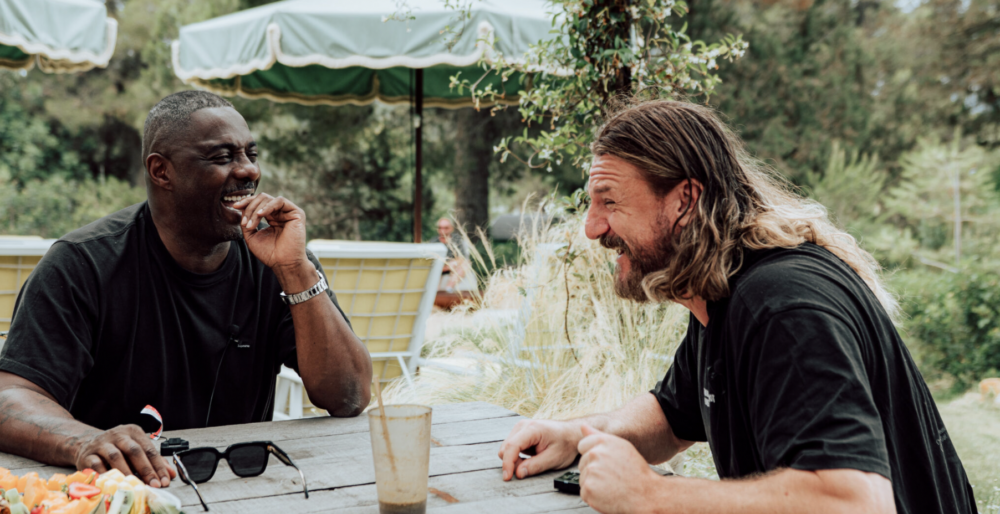
Every Sunday from late May through early October, Pacha Ibiza hands its dance floor over to one man and whichever friend he’s decided to bring with him that week. Solomun +1, now in its twelfth season, is a residency built on the simple idea of just Solomun himself and a single guest, playing for hours to a rapt crowd of dance music devotees. It’s arguably become the defining night on the island. Solomun, born Mladen Solomun in Bosnia, is one of the most consequential DJs of his generation, a four-time DJ Awards winner and the co-founder of Diynamic, the label he’s built into one of house music’s central institutions. He has, almost singlehandedly, turned Sunday nights at Pacha into something close to a pilgrimage for anyone who’s serious about dance music. And yet ask him about any of it, and he’d rather talk about soccer, or movies, or growing up in Hamburg, or the plugin he can’t live without. This season, one of his +1 guests was Idris Elba, the actor and DJ who Solomun sees as a kind of kindred spirit. A few days before their joint sets in Ibiza earlier this summer, the two got together to talk stage names, studio gear, and shared musical touchstones.
THURSDAY 1 PM JUN 18, 2026 IBIZA
‚———
IDRIS ELBA: In the age of social media, people want more and more. “Tell us more, give us more, more access.” But it’s nice that someone is actually good at what they do, but keeps a little bit of mystery around it.
SOLOMUN: In the end, everyone decides for themselves how much mystery they keep. And of course it’s great when you’re good—or even great—at something. Take football: yesterday I watched my Croatia play England, and the way his teammates spoke about their leader Luka Modrić even after the loss, with such respect, that really impressed me.
ELBA: I saw that game yesterday.
SOLOMUN: It was a good game.
ELBA: Hey, I don’t know what to say. I was nervous. I didn’t want to bring it up.
SOLOMUN: But the thing, is I don’t care. You know why?
ELBA: Why?
SOLOMUN: It’s embarrassing enough that you have a German coach. [Laughs]
ELBA: [Laughs] Absolutely fair. Did you play football as a kid?
SOLOMUN: Yes. I was pretty good, I have to say.
ELBA: Striker? Defender? Midfield?
SOLOMUN: I was the 10.
ELBA: Up front.
SOLOMUN: If there’s one talent I had, I could read the game. That was my superpower.
ELBA: Do you think if you were a professional footballer, you would still do music?
SOLOMUN: No. My way was written. I mean, I don’t regret anything.
ELBA: Do you still play football?
SOLOMUN: No, I’m playing tennis now. I’m not so fit anymore. [Laughs] I know you’re just coming from kickboxing, right?
ELBA: Yeah.
SOLOMUN: The attitude of a fighter, you have to stand your man.
ELBA: Yeah, fighting is exactly that. You’re not just fighting the opponent. You have to really fight yourself, your mentality, especially containing anger. You get kicked in the face. That’s no fun, but don’t get angry. The moment you get angry, you lose the fight with yourself and then you lose the fight with him. I started kickboxing when I was 20 and I went to this small gym in East London where I lived.The first day I got there, I got kicked in the nose by this guy. He had really good legs. I got up and I said ” Give me more.” [Laughs]
SOLOMUN: It hurts a lot.
ELBA: Yeah. Music, film—I sort of live in that intersection, right? But the source of creation is the same. The source is the taste. If you pick a song or you pick a scene or you pick a script, the source of why you pick it is the same.
SOLOMUN: Yeah.
ELBA: It’s your taste, it’s your culture.
SOLOMUN: That’s true.
ELBA: When I first started DJing in electronic music, I felt like an imposter because I came from hip-hop, reggae, and sound system culture. When I moved to electronic music I found myself going, “I’m a bit of an imposter,” because I’m emulating. But it turns out the very same source that makes me choose a big reggae set or hip-hop set is the same source I use for electronic house. Then I realized, “It’s the same source I’m using as an actor, the same creative juice.”
SOLOMUN: What’s interesting is the connection between movies and music. Of course, you can learn the craft, the techniques, you can watch movies as much as you can, you can analyze them.This is something I learned because I was so obsessed with movies. I watched a lot of arthouse stuff.
ELBA: Yeah.
SOLOMUN: There was a House of Youth, I was like 14 years old, it was a place where kids can go and hang.
ELBA: Like a youth club.
SOLOMUN: There was also a super small discotheque inside. I started to play around with the vinyls they already had. I was super interested in this and was the only one that spent hours and hours in this room, learning to mix and trying to understand how this all works. And then one of the social workers there saw that I was super in to it, and he was like, “We have a budget of 100 Deutschmark every week, so I’m giving you the responsibility to go buy music for the discotheque.”
ELBA: Get out.
SOLOMUN: Looking back: with this he planted the seed for something you could never expect. He didn’t know what he did. So, fuck! Just because of him, I’m here now. Maybe my life would have been very different, who knows?
ELBA: [Laughs] Oh my god. Do you remember the guy’s name?
SOLOMUN: Unfortunately I can’t remember his name. But because I had a budget every week to go to the record store and buy records, I automatically dove into finding music that I liked and that could also work on the floor, theoretically. I was obsessed with funk, soul, and hip-hop at that time.
ELBA: What was your first DJ name?
SOLOMUN: I was very proud about the name. But looking back now… DJ Play.
ELBA: Play?
SOLOMUN: DJ Play. [Laughs]
ELBA: [Laughs] I love it.
SOLOMUN: Yeah. I told you, it’s good.
ELBA: It’s great. Did you ever put music out as DJ Play?
SOLOMUN: Yes. But how I learned to produce was I met a friend who had a hip-hop label, and he was also living with a lot of people in a house together, a lot of DJs and producers. And there was like a concept kind of label crew community thing.
ELBA: Yeah.
SOLOMUN: I just started to meet him and I asked him if he’s up for producing electronic music. He was like, “Hey, why not? I love how you play.” DJ Play.
ELBA: DJ Play. [Laughs]
SOLOMUN: I was maybe twice a week with him in the studio, learning a lot just by sitting next to him. This lead me to the moment, at 27, where I invested the last money I had for a computer, a cracked Logic with a small mini keyboard. But I was a little too enthusiastic because I forgot to pay rent, so I had zero money for the rest of the month.
ELBA: [Laughs]
SOLOMUN: But this was the turning point of where I just went full on for music. What was your first DJ name?
ELBA: My first one, my mom gave to me. I used to DJ for the family house. One turntable and everybody’s dancing. My mom used to say, “Idrisco.” I was like, “That’s not my name.” She used to put my shirt collars up and go, “Hey, DJ Idrisco.” My second DJ name was Mr. Kipling.
SOLOMUN: Mr. Kipling?
ELBA: It’s a long story. You don’t want to know. So wait, you worked on hip-hop and R&B first before electronic music?
SOLOMUN: I was producing electronic music, but I grew up to—
ELBA: To hip-hop.
SOLOMUN: I’m still a huge ’90s hip-hop fan. For me it was a blessing that I’ve been doing this for so long and got to follow my passion. Energy always follows attention.
ELBA: Energy follows attention.
SOLOMUN: This is the mantra from all our life.
ELBA: I love it. So where did Solomun [come from]?
SOLOMUN: Rewind to DJ Play, I was just getting better and better at producing and how tracks were working. And what was always very inspiring for me was the crossover element that was already cool back in the early breakdance sound.
ELBA: The New York electro sound.
SOLOMUN: Yeah, I always loved the electronic vibe in it. I really loved this ’80s crossover somehow, and especially the ’80s synthesizer vibes. Then everything became supernatural. We started our own party once a month called DIY Electronics in Hamburg. From the jump it was a do-it-yourself thing.
ELBA: Got to start somewhere.

SOLOMUN: And after the first DIY events, we then founded a kind of culture club where you didn’t need a proper license. The whole thing was underground, because we didn’t do any posters, flyers, whatever. Just email, and you have to be a member. But we also had exhibitions, poetry slams, a lot of stuff going on there. So I always had the chance to test my music there when I was DJing, and one of the big distributors from Hamburg passed by and asked me, “Hey, what’s this track?” And I was like, “Yeah, it’s my track.” And he’s like, “It’s not released? Why don’t you create your own label?” I was not ready. It took me two months to finish all the tracks and then we just came to the office in Hamburg, and then we showed them the tracks. I was like, okay, now this is the last chance to change your name. So this was the moment I felt like, okay, now it’s getting serious. This is your own label. We also called our label Diynamic with DIY. Until today, people don’t know why we have DIY in our label name, but it’s simply our roots how we started back then in Hamburg. And then it was this one of these sessions like, “Okay guys, now it’s time to find a new DJ name for me.” We’ve been preparing to smoke a lot of spliffs the whole night. You know how it is to find a name. I mean, it was hours and hours and getting more high. So then it was 6:00 in the morning and we’d been with a bunch of people, super high, and when I was just about to leave one friend said, “Why didn’t you just call it a last name like Solomun.” I was laughing about it. But the next day I woke up like, “You know what? It’s a brilliant idea.” It’s a flow. It’s easy. I mean, I didn’t find any better name at all. Hey, why not? And this is then how my last name became my real artist name.
ELBA: The enigma. And the name sounded like a DJ. It’s almost like a religion. Solomun on Sunday is like a pilgrimage.
SOLOMUN: In the beginning, I was not sure because of Luke Solomon, a true house legend, with Derrick Carter co-founder of the legendary Classic music company. I always had a lot of respect for him, but he was written with S-O-L-O-M-O-N and of course with his surname before. And I was like, “It’s my real last name. What should I do?” I mean, I didn’t find any better names.
ELBA: What does the future look like for you? What are you optimistic about?
SOLOMUN: the only optimistic thing is the peace that we have here now sitting in the nature. If we’re getting out of this nature, it’s not so optimistic anymore.
ELBA: Yeah, it’s true.
SOLOMUN: If you already lived your life a little bit, have experience, knowledge, you see things maybe a little bit more different than before.
ELBA: It is a crazy time. You know what? I’m optimistic about when things are crazy, they get crazier and then they calm down. And in that calm is where you learn and where you reflect. I’m 53 years old. I’ve seen some crazy times and this is one of them. You and I are lucky. We laugh about Solomun church, but when you play one song and everybody feels that same vibration at the same time, that’s magic. It’s the thing that makes me stay awake and stay happy about life, because even as an actor, if I tell a story and people are like, “I loved that performance,” it’s a connection.
SOLOMUN: You can also do action. I see how fit you are in all these stunts you do.
ELBA: You have to stay fit. I’m not fit right now, but I’m going to Australia to make a film with Chris Hemsworth. He does Extraction and I’m in the next one. I’m reading the script, and I’m like, “Oh my fucking god, I’ve got to do what?” [Laughs]
SOLOMUN: But is it fun for you to really motivate yourself that hard for a movie?
ELBA: I’ve done a lot of action. I actually do like fighting. There’s a lot of choreography. It’s like dancing, right? You pick up the move and do it. And obviously for my kickboxing background, I love contact sports. But it’s harder now. I blew my knee out so it doesn’t move the same confidently, but I still love it. I really admire it. The director of Extraction is a guy called Sam Hargrave and he did Extraction I and II. He’s a former stuntman and his work is impeccable. I’m excited to go and learn from this guy. I prefer now to play roles that are a lot more complex, vulnerable. I play a lot of tough guys. Would you ever direct a movie?
SOLOMUN: I would, yeah. I think I’m good at it.
ELBA: So one day you might direct your own music video?
SOLOMUN: When we are finished, I will pitch you something. [Laughs]
ELBA: I’m down. When you’re DJing, you transition in between one song to the other. What is your favorite most used button on the mixer?
SOLOMUN: I like to keep it simple. just the low cut filter for the transition. I love it. And a little bit reverb for the breaks from time to time.
ELBA: What’s your favorite plugin?
SOLOMUN: In the studio, I love all the UAD stuff because I had a lot of analog gear, and it comes closest to that. Since some years I’m working with a studio partner together on all music.
ELBA: Do you start a project on your laptop and then send it to him as files or do you start together in the room?
SOLOMUN: No, we do everything remote. I start a lot in my own studio. And sometimes it works when I get a remix request and I instantly know what it needs. Over the past ten years, we’ve built a deep mutual understanding. It takes a lot of communication, and in the end we always find common ground.
ELBA: I’m a production nerd. My first kit I ever bought was an MPC60. I’ve tried every door. I was on Cubase, I was on Logic. I used Serato Studio.
SOLOMUN: Where do you stick now?
ELBA: Serato Studio, believe it or not. It’s just because I’m good at quickly getting ideas down. I started with Logic back in the day and then I lost my way. My favorite plugin is Sausage Fattener.
SOLOMUN: Sausage—
ELBA: [Laughs] That’s what it’s called. Sausage Fattener.
SOLOMUN: I don’t know Sausage Fattener.
ELBA: It’s from Dada Life. And they do a big reverb, it’s a compressor. It’s like a limiter. And it has this graphic when you turn it up, this sausage starts to smile. [Laughs] I’m telling you, you’re going to love it. I put it on my kicks.
SOLOMUN: The biggest game changer for me is the Transient Designer from UAD. The amount of hours I spent tuning the EQ, getting the kick drum to sit right with the bass and everything, oh my god. And the Transient Designer is just so amazing. What made it so great is that with just a few moves you could change the release and the attack, to finally find the perfect spot for the kick drum.
ELBA: So you’re bass first or kick first? It doesn’t work like that.
SOLOMUN: There are no rules there. Hey, but I have one question. It’s an interesting bridge now because of your show Hijack, but do you know the Brit band Hijack from Brixton?
ELBA: Oh, yeah.
SOLOMUN: This was for me after ’90s hip-hop, a very fresh transition to UK hip-hop. The first concert I watched in Hamburg was Hijack. I was so high on spliff that after the first set, I passed out. I didn’t see the concert.
ELBA: I’ve got a vinyl.
SOLOMUN: Daddy Rich. I know every track.
ELBA: Fucking hell. Wow.
SOLOMUN: The flow, the lyrics. Just powerful. Energetic.
ELBA: And they rapped in an English accent, but also it was hard. Do you like Roots Manuva?
SOLOMUN: Yeah.
ELBA: Witness to Fitness. That whole album, actually. I’ve got this fascination about hip-hop and house. And some of it is good, some of it is terrible. I still haven’t made the best record I could make yet with hip-hop and house that I’m going to one day. Got to figure out how to do it.
SOLOMUN: Let me know. I can send you some instrumentals and then—
ELBA: I’d love to. I demo all the time. Do you remember Mantronix?
SOLOMUN: Of course. Man. The first album also, this was a beautiful transition of electronic music and hip-hop.
ELBA: That’s right. Beautiful.
SOLOMUN: I’m a huge fan.
ELBA: The sonics of those records.
SOLOMUN: Not many people know who Mantronix is.
ELBA: Mantronix was amazing.
SOLOMUN: Yeah.
ELBA: I earned his respect. Yes.
SOLOMUN: You mine or I yours?
ELBA: No, I earned yours.
SOLOMUN: No, no, I yours.
ELBA: I’ve spent a lot of time in Germany, actually. Hijack season 2 was based in Berlin and we went back to film there. I’ve got some interesting memories in that part of the world. I’ve never been to the big techno club, Berghain. I want to go. Have you played it?
SOLOMUN: Yeah, I’ve played there lots of times. Long time ago we also did a label party there with Diynamic. It’s one of a kind club.
ELBA: Did you ever play that type of techno?
SOLOMUN: No, I played at Panorama Bar. There are two rooms there. Panorama Bar is more house.
ELBA: Yeah.
SOLOMUN: And then there’s the main room, there’s [the] more techno stuff.
ELBA: I actually love the sonic of that techno. It’s very, how do you say it? Isolating.
SOLOMUN: Yeah. But it’s pure.
ELBA: It’s pure. It’s untampered. It’s not trying to do anything else but what it does. But I find myself, if I’m listening to that stuff, it’s just like I have to close my eyes. It’s not something I can talk to anybody or socialize with.
SOLOMUN: Also, the mixing has less breaks. Keep it going. You’re constantly entranced.
ELBA: Yeah. It’s a frequency, right?
SOLOMUN: Yeah. I have to say, Ben Klock for me, one of the best techno DJs there from Berghain. Because it is still raw, but always has a little bit of a groovy touch. He is simply doing it great.
ELBA: Brother, I just want to say playing with you was one of the biggest highlights of my DJ career. We did a tiny room in Glastonbury. No one knew this was going to happen.
SOLOMUN: Come on. It was the other way around. I was just like, “I’m going to play with you?”
ELBA: But you should know that it changed the trajectory of my career as a DJ. Just a slightly different layer of respect from other DJs and producers, but it also made me a better DJ and it slightly gave me more confidence to lean into my own sound a little bit.
SOLOMUN: Yeah, you should always. It’s interesting that in this part you’re a little more shy, because in everything else you’re so confident. Maybe it’s because you don’t play every weekend. I know it from myself: when I start playing again after my holiday, I’m always really nervous too.
ELBA: I still feel like an imposter DJing back-to-back with Solomun. But you’re right, there is a confidence issue there. I wanted to say thank you. You influenced my career DJ-wise, my confidence, and I wanted to say thank you. We’re doing an interview. I want to say out loud, publicly.
SOLOMUN: Please, can we have it as a last quote, “I thank you more”?
ELBA: We’re going to out-humble each other, man.

