

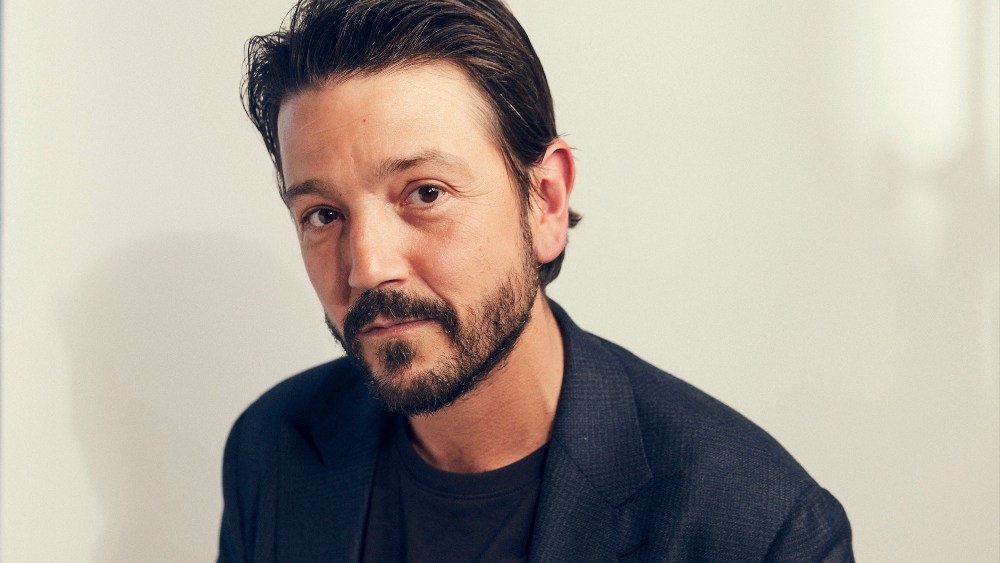
Diego Luna, who is at the San Sebastián Film Festival with his latest directorial project, “Ashes,” spoke about the differences between being on a festival run with an independent film and working on major Hollywood projects like “Andor.” Luna played the titular character in the Disney+ “Star Wars” spinoff, which ended with its second season last year. His work on the show earned him two Golden Globe nominations for best actor.
“When filming a movie, the challenges you face are the same whether it’s a massive production or a smaller one,” he said. “I think what really defines the projects is whether they champion a specific point of view. Then there’s the other kind of cinema, films that lack that vision, that seek only to please, and generally don’t let you be who you want to be. That’s the kind of cinema that gets forgotten very quickly.”
Luna mentioned how he is currently working hard to make sure “Ashes” is seen, and that audiences go to cinemas for the film. “With ‘Star Wars,’ it’s a different story,” he noted. “It’s the other way around. You come home, and something reminds you it’s already there. There is a level of attention, sure, but that becomes affection and a sense of companionship. It’s really lovely, and it spans generations. You encounter it in so many places and from so many angles: affection from people discovering it for the first time, and from others revisiting something that unlocks their childhood memories. It’s an experience I can’t compare to anything else, and it’s unlikely it’ll happen to me again.”

Courtesy of La Corriente del Golfo
“Ashes” premiered at the Cannes Film Festival earlier this year. It is adapted from a novel by Brenda Navarro and follows 21-year-old Lucila (Anna Díaz) and her brother Diego (Sergio Bautista) as they struggle to adjust to life in Madrid. Their mother (Adriana Paz) relocated to the city years ago in search of a better job, a decision that left her kids to grapple with feelings of abandonment and resentment. Speaking at the Variety Lounge last month, Luna emphasized how he made the film to bring forward a different perspective on immigration. “When we talk about migrants, we’re not thinking about what they left behind,” he said.
When an audience member asked Luna whether he believes more films about immigration should be made given the tense rhetoric around the subject worldwide—including Trump’s boost of ICE and Spain’s conflicts around Ceuta—the actor-turned-director said the question could have been asked 10 years ago, and will remain relevant a decade from now.
“It’s a story that keeps happening and will continue to happen unless we truly react,” he said. “The only certainty we have is that more and more people will move. There are multiple reasons for it today: violence, economic mobility, the climate crisis. It’as an endless list, but the fact remains that people will keep moving, and the issue lies on how we receive them. How do we welcome people? I think that’s where the chance for transformation lies, for us to change these encounters that are often so hostile for those who move.”
Luna said that it boils down to “curiosity” and caring about understanding the stories behind immigration. “Stories to which we are generally indifferent,” he noted, before adding that his home country showcases a particularly complicated dichotomy: “We rightly demand so much for Mexican migrants crossing the border to the north, but we are far from being the best version of ourselves when it comes to welcoming migrants from the south, from Central America.”
“It’s natural to sometimes feel uncomfortable with the presence of others, especially with the presence of something new,” he went on. “But I think cinema is a beautiful metaphor for understanding, which is something we need today. Cinema is a space that invites you not to lose a curiosity about people you don’t know. That curiosity, that desire to be closer to someone’s intimacy, allows you to be the best version of yourself. I believe that if you prioritize curiosity, understanding what brought someone here, what their story is, that initial discomfort will transform into generosity, into empathy.”
Asked by a Mexican film student whether budding directors should work in English or remain “faithful” to their Spanish-speaking roots, Luna said making films in Spanish gives native speakers “a very special freedom.” “You don’t have to move to make sure that your stories travel,” he said. “We are here in Spain, and I am a Mexican presenting my film. Pablo Larraín is Chilean, presenting an Argentinian film. You can remain who you are, and your films have the chance of travelling and connecting to audiences. It’s a beautiful freedom because you don’t have to move unless you want to.”
