

If you purchase an independently reviewed product or service through a link on our website, Rolling Stone may receive an affiliate commission.
Shopping for a pair of headphones can lead to a serious case of sticker shock very quickly. While I’m quick to recommend Bowers and Wilkins’ excellent Px8 S2, Sony’s WH-1000XM6, or HiFiman’s Arya Stealth, each of them costs north of $400; B&W is starting to get close to four figures. The good news is that you don’t have to spend nearly that much money to thoroughly enjoy your favorite albums, TV shows, movies, audiobooks, or podcasts when you’re out of your house or don’t want to disturb your housemates.
At a Glance: The Best Headphones Under $200
The best headphones under $200 don’t have the same compromises on features or audio quality that sub-$100 headphones do (though we do have a couple of recommendations you can get for two figures). I focused on headphones that have an MSRP cap of $200, but many are often on sale for far less than their original price through many retailers. It’s no secret that electronics have been getting more expensive lately, but I wanted to make sure that, barring an unexpected price hike, you’ll always be able to get my recommendations for under $200.
How to Choose the Best Headphones
When starting your headphone journey, there are a couple of major factors you’ll need to consider that can help narrow down your search. These were also among the criteria I used when deciding which headphones were worth testing.
Wired or wireless: The biggest choice you’ll want to make is whether you want a pair of wired or wireless (aka Bluetooth) headphones. Wireless headphones are more convenient if you’re planning on using them with a phone and tablet because most of those gadgets no longer have a headphone jack, which means you’ll have to use an adapter (sometimes called a dongle) to make a connection. Wireless headphones can also have active noise cancellation, which makes them a better option for frequent travelers.
Wired headphones, on the other hand, don’t have a built-in battery, can’t get messed up by a rogue software update, and won’t degrade over time (other than physical wear and tear if you don’t treat them well). The 3.5mm audio jack has been a standard connector for decades, so you’ll have no trouble connecting the headphones to a computer. Many wired headphones also come with an adapter that allows you to plug them into an amplifier, DAC (Digital Analog Converter), mixing console, or audio interface when recording music.
Another major difference between wireless and wired headphones is that the latter don’t have a built-in battery, so you never have to worry about keeping them charged. Also, if you listen to high-resolution audio, wired headphones will allow you to enjoy it without any compression. Many of the wireless headphones I’m recommending have a 3.5mm audio jack, which allows you to use them as wired headphones, but some require you to turn them on (thus running down their battery) when using them.
Headphone style: Headphones come in all shapes and sizes, but primarily fall into two styles: over-ear and on-ear.
Over-ear headphones have larger ear cups that completely surround your ears. They provide better passive noise cancellation, which means outside sounds will be muffled thanks to the insulation provided by the ear cups. However, over-ear headphones’ larger size means they’re generally heavier, so they may feel uncomfortable during a long listening session. Headphone makers typically provide ample padding, but you may notice some light neck fatigue or your ears getting sweaty.
On-ear headphones are smaller and lighter than over-ear headphones, and their more diminutive ear cups sit on top of your ears rather than around them. Their main benefit is that their smaller size makes them easier to carry around. However, they provide less passive noise cancellation, or may lack active noise cancellation altogether, which is a standard feature of most over-ear headphones. The good news is that active noise cancellation is such a power-hungry feature that on-ear headphones typically get substantially better battery life despite being smaller.
In audio gear, bigger typically means better because larger drivers can generally deliver louder, higher-quality sound, but I’ve noticed the gap is far smaller with more budget-oriented headphones.
The Best Headphones Under $200
These are the best headphones under $200 I found in my testing:

Editor’s Pick
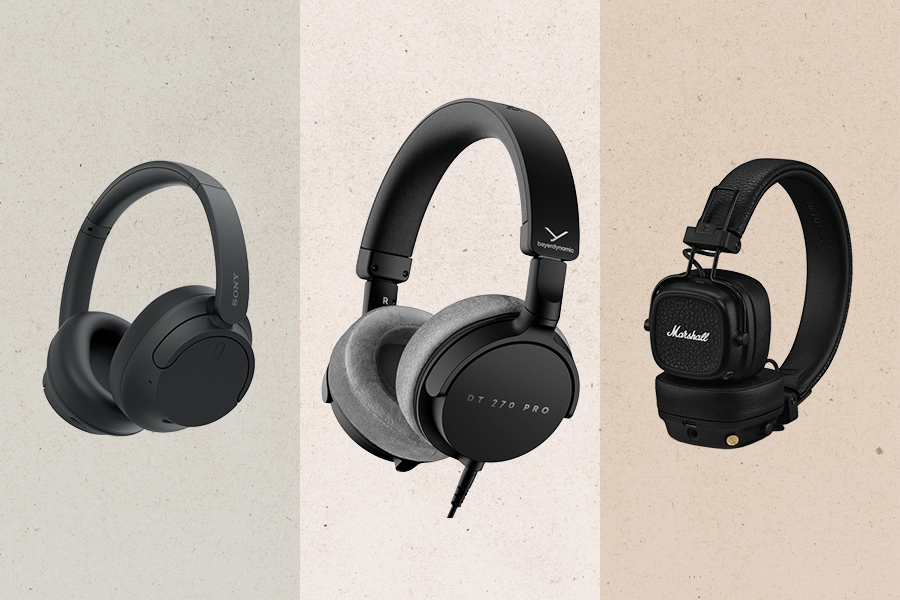
beyerdynamic DT 270 PRO
These wired headphones offer flat EQ for plenty of detail
These Beyerdynamics’ DT 270 Pro headphones sound shockingly better than their price suggests. The wired, over-ear headphones were designed for use in recording studios, so their built-in EQ was relatively flat, which allowed me to hear plenty of detail across instruments, effects, and vocals across the entire sound spectrum. It didn’t matter whether I was focused on the drums on “You’d Be So Nice To Come Home To” off of Art Pepper Meets The Rhythm Section, or the titular bass on “All About That Bass” by Meghan Trainor.
Runner Up
Shure SRH840A
Studio-quality sound without a studio budget
Shure’s SRH840A are another pair of wired, over-ear headphones designed for studio use, and share many qualities with my top pick. Again, there was plenty of detail when listening to the sitar runs on cuts off Ravi Shankar’s The Sounds of India or gospel vocals on Billy Preston’s LP “That’s The Way God Planned It”. The only reason these got edged out by the Beyerdynamics was that their ear cups weren’t quite as comfortable as the velvety-smooth ones on the DT 270 Pro.
Budget Pick
JLab JBuds Lux
Portability and sound quality for under $100
If your budget falls under $100, Jlab’s JBuds Lux are a solid pair of over-ear Bluetooth earbuds. Their bass is a little muddy, which was evident when I listened to “I Can’t Take It” off Badfinger’s album No Dice, but I could still hear the distorted guitar and drums quite well. They offer up to 70 hours of listening time with ANC enabled or around 40 hours if you turn it on, and their performance in my test was respectable. The JBuds Lux are the perfect pair of budget headphones for commuters or students with loud dorm mates.
Best Open-Back
Audio-Technica ATH-R50X
Clear and comfortable
Open-back headphones leak sound, and generally have slightly weaker bass response, but Audio-Technica’s ATH-R50X proves those tradeoffs can be worth making. The wired, over-ear headphones have ultra-soft ear cups, a durable-feeling frame, and large drivers. I never noticed any (unwanted) distortion when cranking up the title track of The Lemondheads’ track “It’s a Shame About Ray” or Belle & Sebastian’s disco-flavored “The Party Line.” However, the sound leakage does mean you won’t be able to use them in an office or otherwise in public if you listen to music at louder volumes.
Best Noise Canceling
Sony WH-CH720N
Sony’s top-tier noise cancellation without the top-tier price tag
Sony makes some of the best noise-canceling headphones available, so it was no surprise its WH-CH720N took the top spot in this category. The Bluetooth over-ear headphones use a custom-designed processor to optimize both audio quality and noise cancellation. They were also surprisingly light in spite of their relatively large ear cup size, which made them comfortable to wear when walking around. I couldn’t detect the individual instruments in songs like The Zombies’ “A Rose For Emily” or The Clash’s “London Calling” as I could on other headphones, but the rock-solid ANC performance more than made up for it.
Best Battery Life
Marshall Major V
Stylish, incredible battery life, and (currently) under $90
If longevity and portability are your must-have headphone features, Marshall’s Major V are your best bet. The on-ear Bluetooth headphones don’t have active noise cancellation, but make up for it with over 100 hours of playtime per charge. I never heard a low battery warning during my testing period, and wouldn’t expect you to charge them more than once a week. Marshall is known for the amps it supplied to bands like ACDC, but the Major V sounded great while I listened to music from any genre, including several tracks off He’s The DJ, I’m The Rapper.
Best On-Ear
JBL Live 670NC
Long battery life and shocking good audio quality for a small package
JBL’s Live 670NC stood out because of their impressive audio quality, 65-hour battery life, and adaptive noise cancellation. They didn’t block as much noise as over-ear headphones, but did allow me to listen to music at lower volumes while reducing distracting background noises, including the sound of typing on keys, walking around, or opening doors. They did deliver some impressive bass when listening to The Style Council’s song “My Ever Changing Moods” and detail the carnival-like keyboard sounds on The Jam’s single “A Town Called Malice”. When folded, the headphones could fit into the pocket of my winter coat.
Best for working out
SHOKZ OpenRun Pro 2
Open ear design for awareness
It’s incredibly important to pay attention to your surroundings when working out in public, which is why I recommend SHOKZ OpenRun Pro 2. The headphones look like a pair of wraparound neck earbuds, but their drivers sit in front of your ears instead of inside. They still get plenty loud, and even have great bass response (this wasn’t true of previous generations I tried, and was evident when listening to Pink Floyd’s track “Money”). The headphones stayed in place even when running or doing jumping jacks, and provided entertainment as I sweated it while still allowing me to clearly hear everything going around me.
Best for customizing sound
Skullcandy Hesh 540
Customizable tuning and stylish build
Listening to music on headphones is subjective: A tuning that sounds right for my ears and music taste might not suit yours. Skullcandy’s Hesh 540 allows you to tune them based on the frequency sensitivity of your ears through a listening test within its app. The before-and-after differences were very impressive, especially when switching between a flat EQ (my typical preference) and the one Skullcandy created for me. Most importantly, it didn’t make parts of songs I listened to, including the demo version of George Harrison’s track “Behind that Locked Door” sound bloated or artificially boosted.
Best Bass
V-Moda M-10
Bass on a budget
V-Moda’s M-10 over-ear headphones were designed for DJs, and that was immediately apparent from the first time I put them on. Their diamond-shaped earcups give the wired headphones a distinctive, club-friendly look. They were designed to be bass-forward, so I started by listening to the title track of John Martyn’s Solid Air and Charlie XCX’s early 2010s banger “I Love It”. Both boomed out of the headphones, and the clarity of their driving bass beats was suitably impressive. Even better, their bass performance didn’t completely drown out other instruments, so I could enjoy every full track.
Best Budget Noise Canceling
Cleer Enduro ANC
If you want a solid-sounding pair of noise-canceling headphones for closer to $100 than $200, Cleer Enduro’s ANC headphones are your best bet. The over-ear headphones felt comfortable during extended listening sessions, greatly reducing the volume of most common noises even when music was off. Those same sounds were almost imperceptible during my listening tests. I found the Cleer Enduro headphones sounded best when listening to acoustic music, from Alanis Morissette’s “Head Over Feet” from her Space Cakes EP to The Byrds’ “You Won’t Have to Cry” off of the Preflyte Sessions compilation. Their 60-hour battery life is another win for frequent travelers
How We Tested & Selected The Best Headphones Under $200
Finding the best headphones in this price range required listening to music from different genres of music and trying to listen for subtle and substantial differences. I also tested how well the wireless headphones were at keeping their connection (all of my recommendations had to pass this test to be included).
I factored in whether the wireless headphones supported multipoint pairing (the ability to stay connected to more than one device at once), and considered their battery life. I also tested the headphones’ active noise cancellation (if available) by determining how loudly I had to listen to music to drown out a loud fan.
