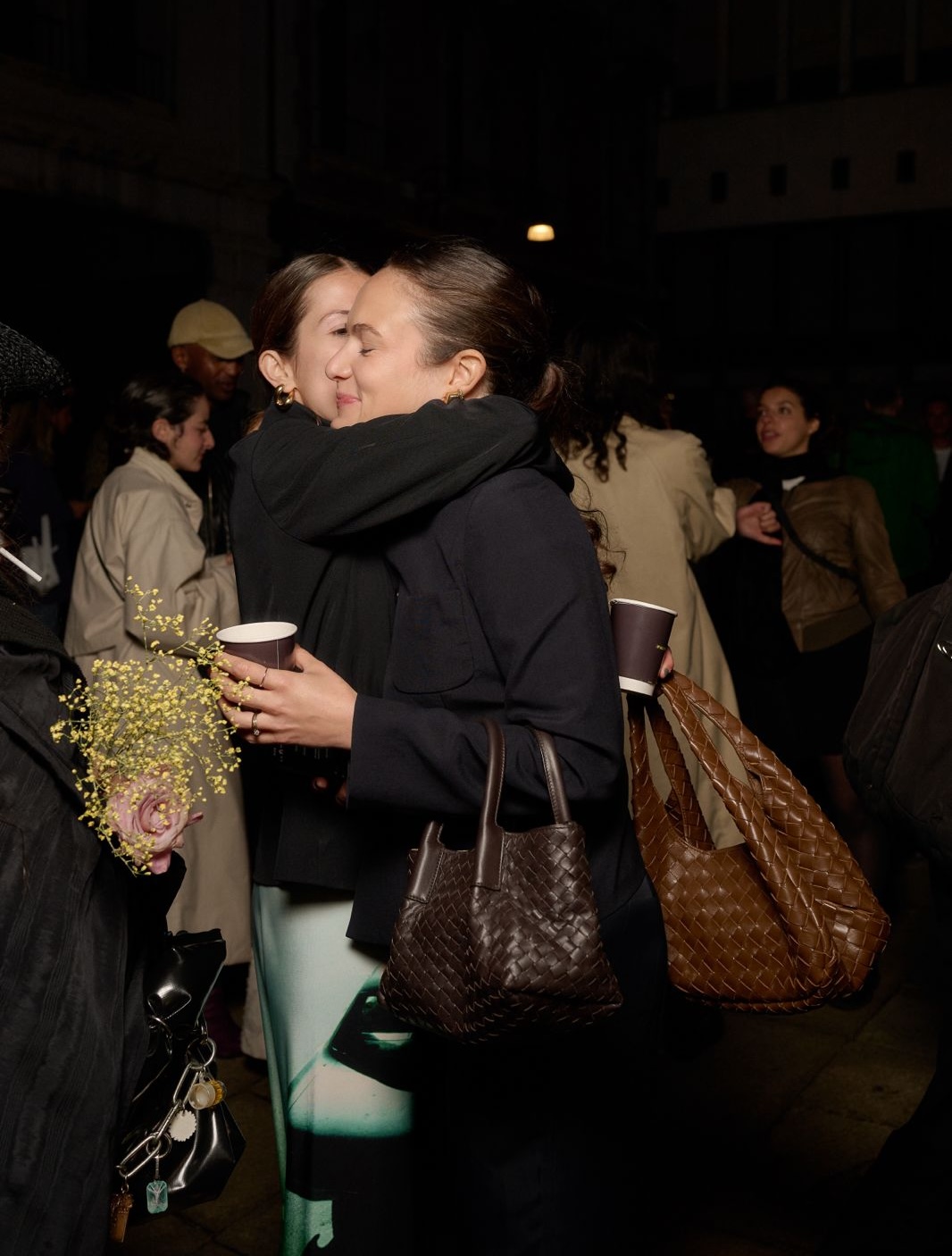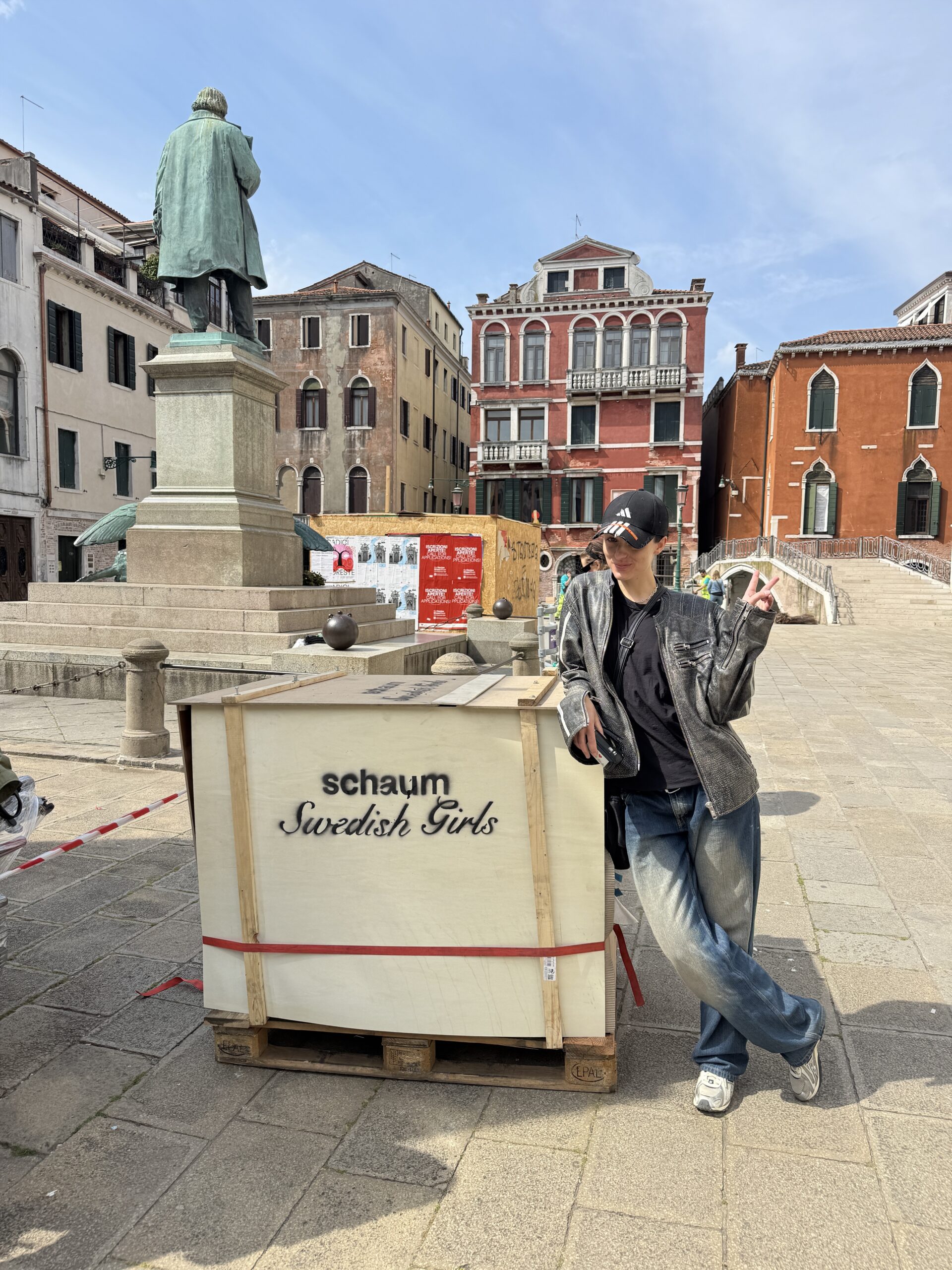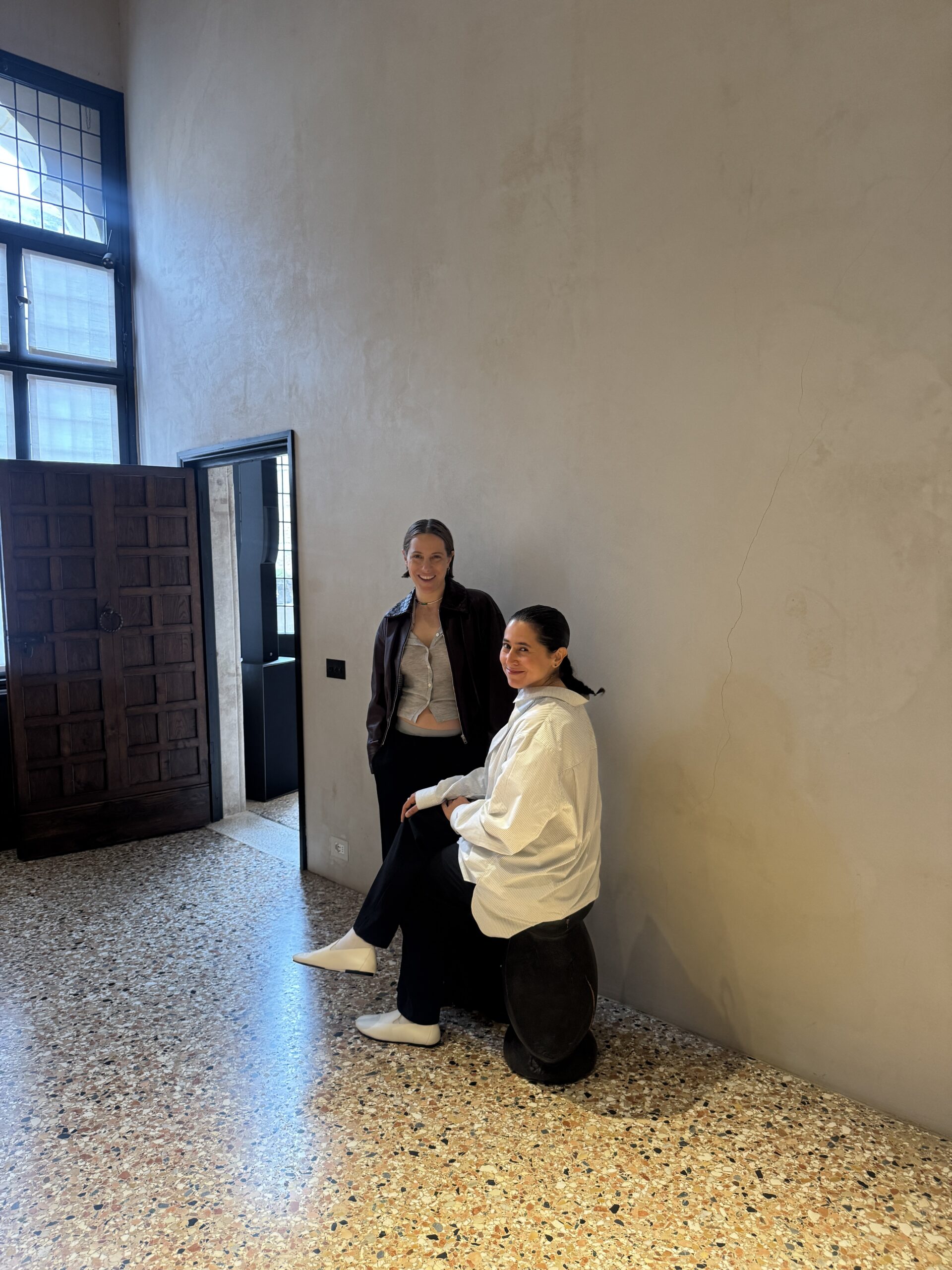

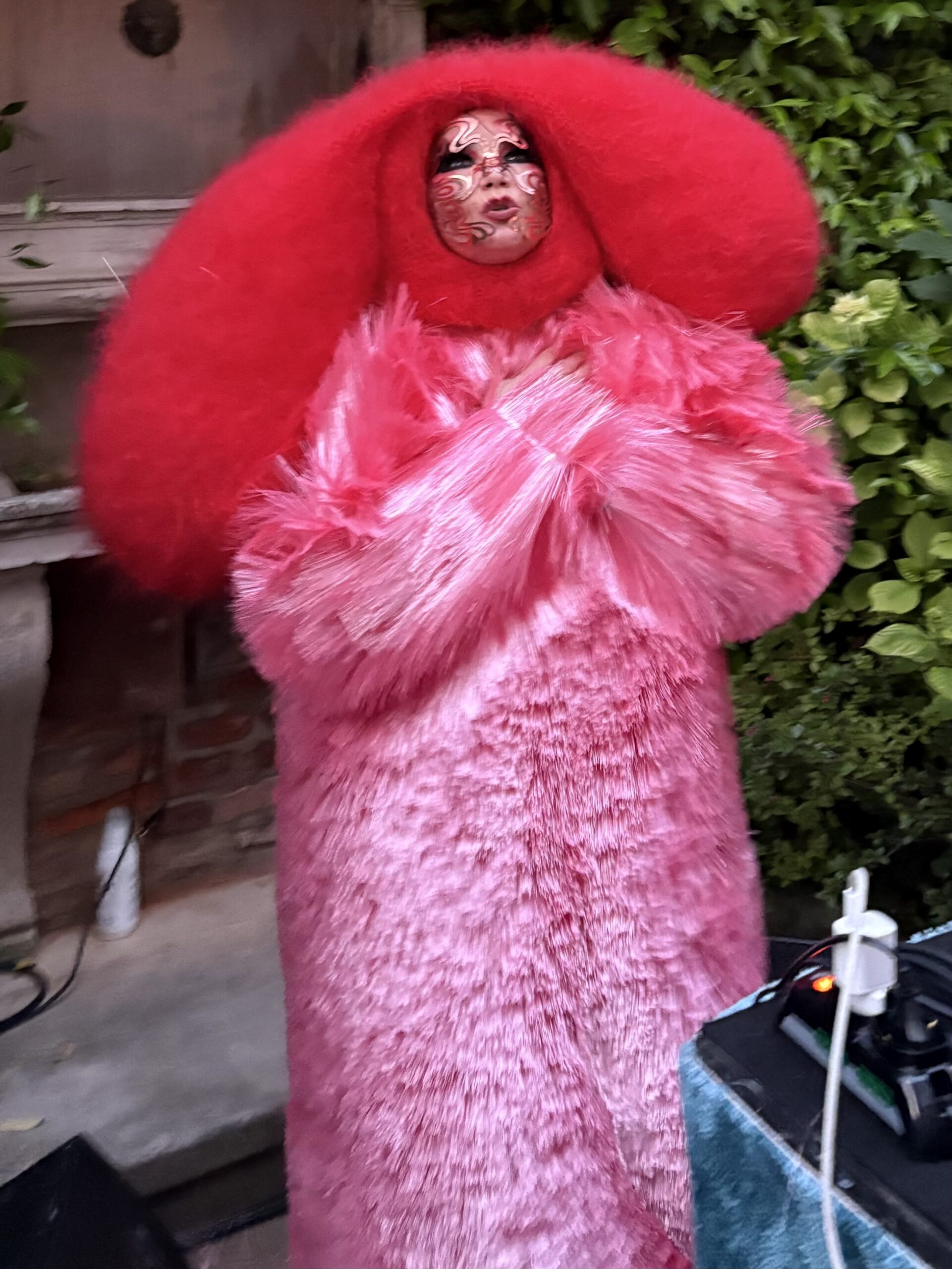
Photos by Mitchell Nugent.
As the Venice Biennale opened its 61st edition this year, another institution woven into the city’s cultural fabric marked a milestone of its own: Bottega Veneta, the Italian luxury house founded in Venice in 1966, began celebrations for its sixtieth birthday. Like its signature Intrecciato leather, the brand’s initiatives threaded through the floating city all week, weaving between palazzos and speed boats, canal-side cocktails and candlelit salons, bringing together artists, curators, collectors, and the fashion flock in a distinctly Venetian rhythm. Under the creative direction of Louise Trotter, Bottega deepened its ties to both its home city and the Biennale through collaborations across Venice, including its co-sponsorship with Hauser & Wirth of Lorna Simpson: Third Person at Punta della Dogana and If All Time is Eternally Present, presented alongside the Pier Luigi Nervi Foundation.
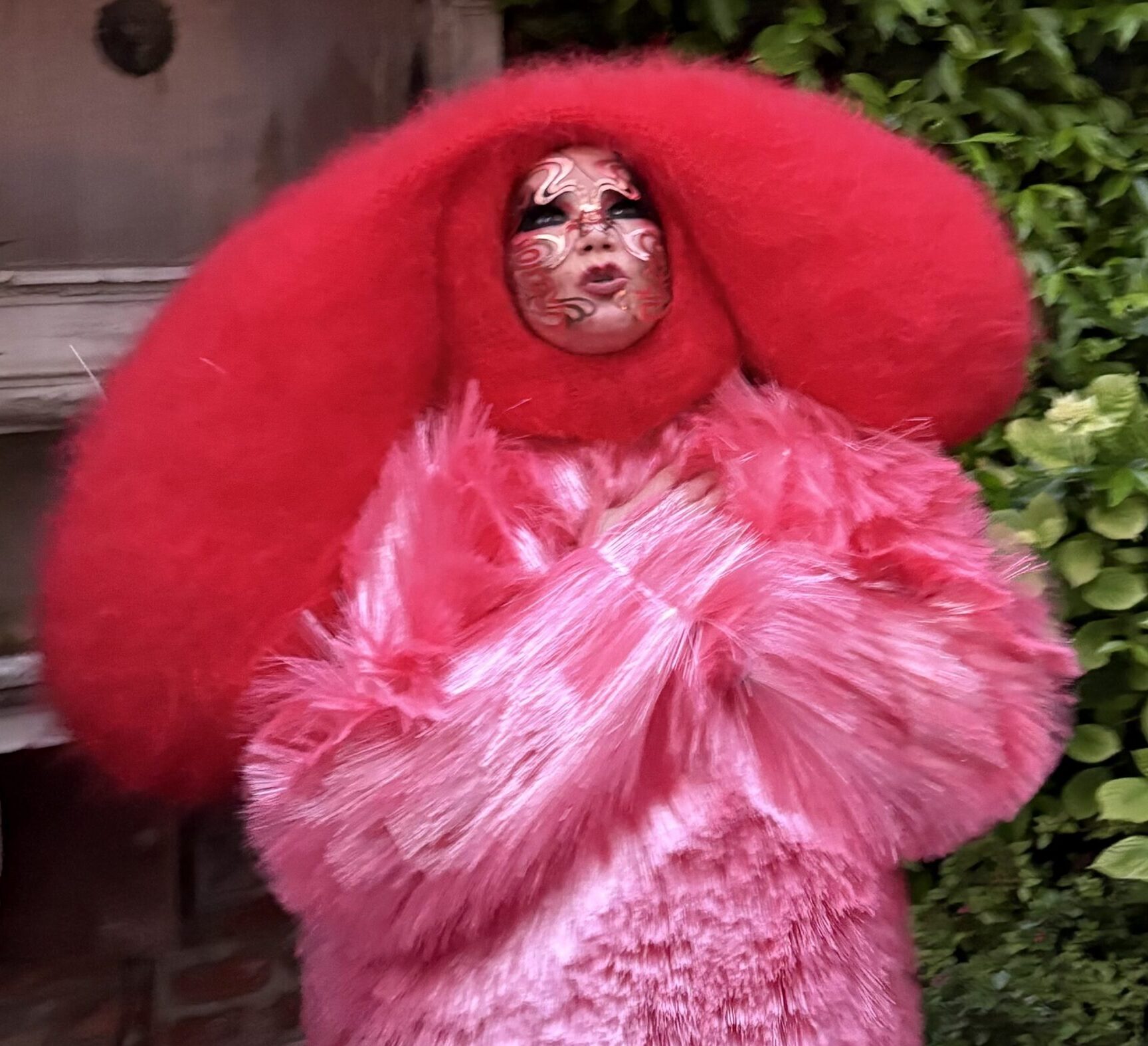
In Venice, where art, fashion, and society merge like the city’s canals, the brand’s presence during the Biennale felt like a floating house party across the lagoon. One evening, guests spilled into Campo Manin for the exhibition’s opening cocktail, the square transforming into a quasi drive-in movie theater as moving-image works curated by Marta Barina and Chiara Carrera flickered across the city’s crumbling architecture. Another night ended at Harry’s Dolci, where torch-burnt marshmallow cake arrived beside melting scoops of vanilla-bean ice cream as bellinis clinked and Trotter toasted to Lorna Simpson. By week’s end, Björk appeared in Look 80 from Bottega’s Winter 2026 collection, DJing somewhere between peacock, apparition, and performance art. To close the week, we spoke with artists from If All Time is Eternally Present about Venice after dark, public performance, and projecting work onto the walls of the city that famously refuses to sink.
———
WEDNESDAY, 12:16 PM, MAY 6, 2026 VENICE
———
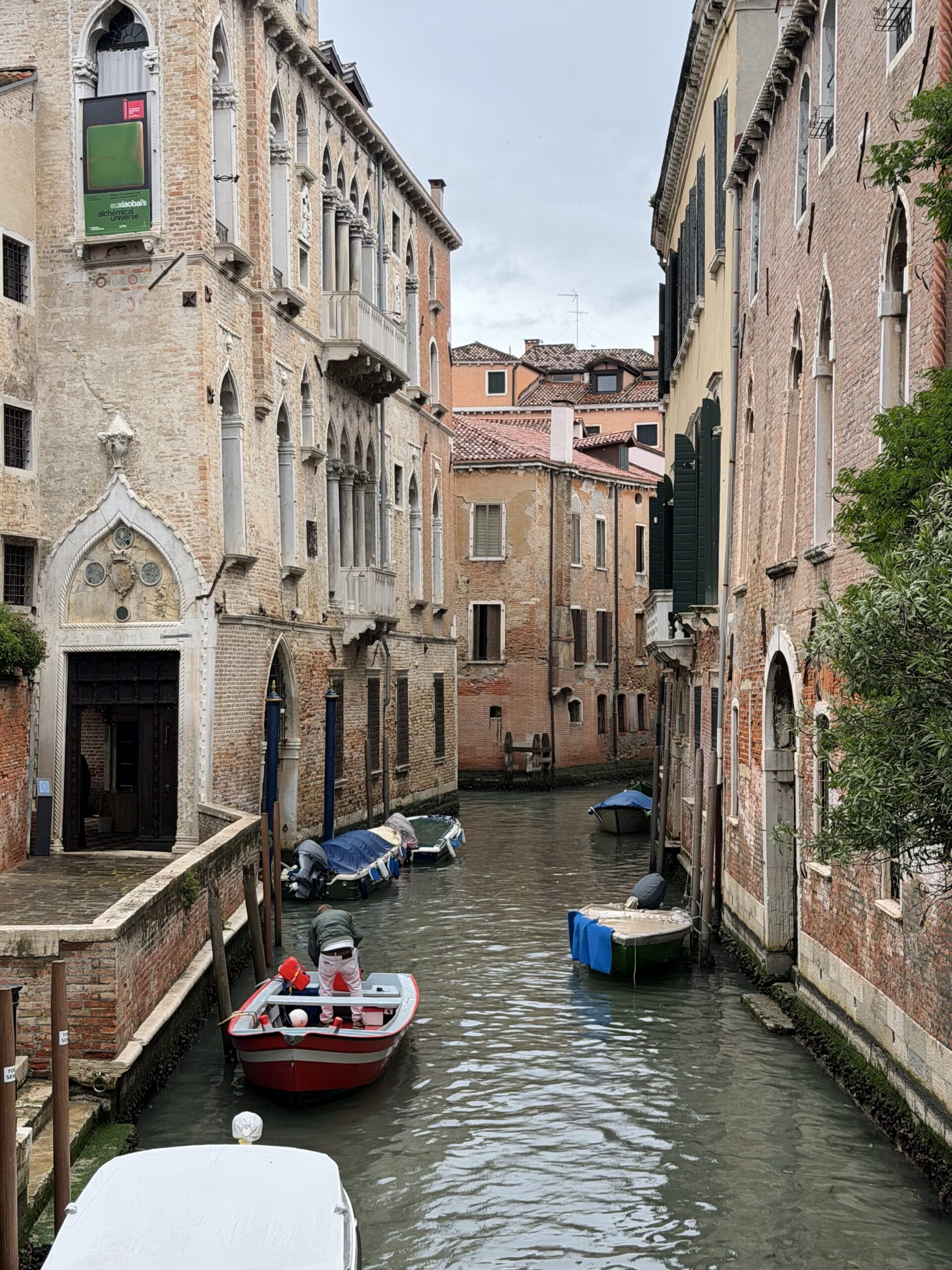
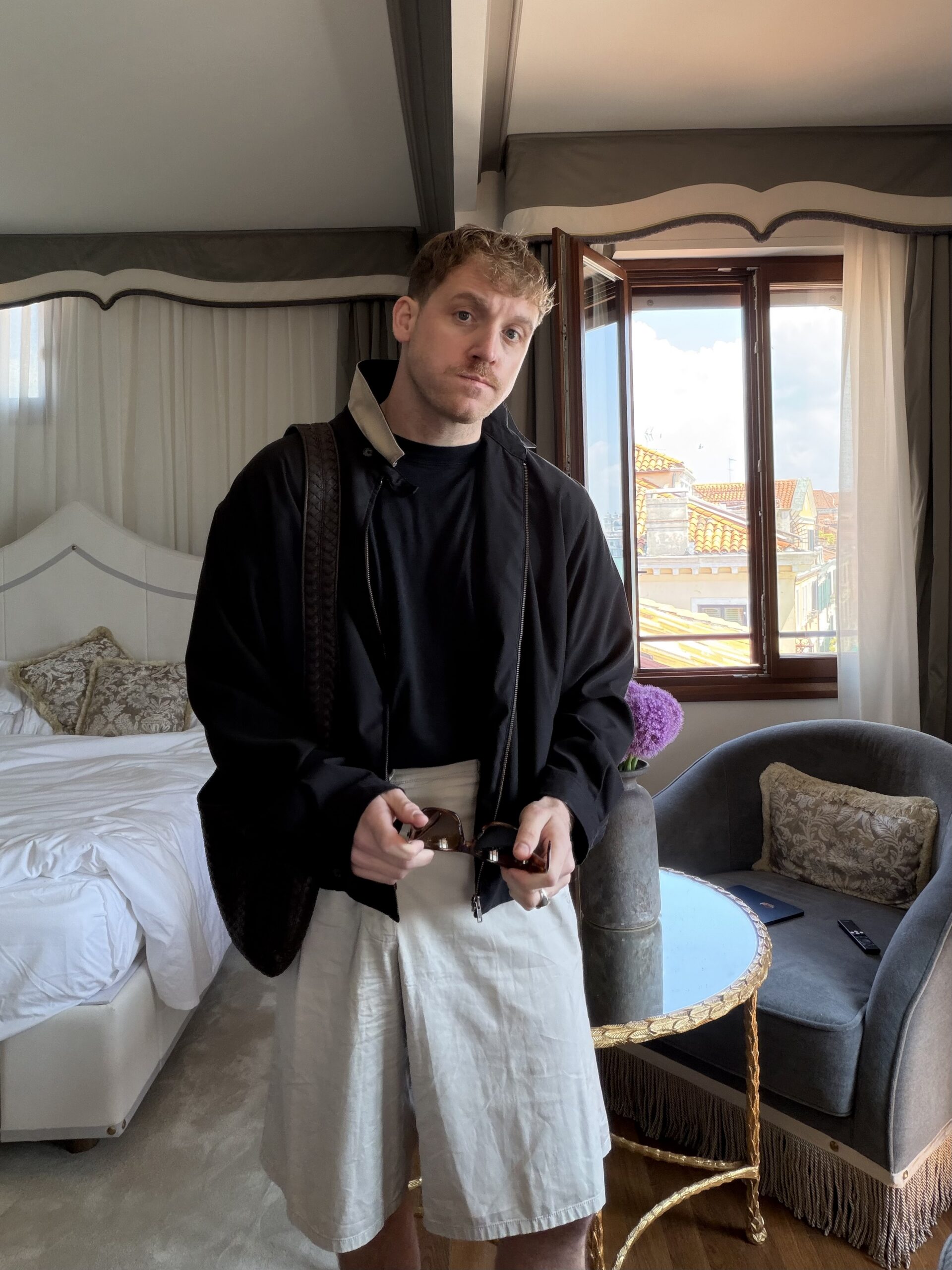

MITCHELL NUGENT: What changes when an image is projected onto a city instead of inside a room?
ORIAN BARKI: The viewer bumps into the image on the street, the image is there, and they can choose whether to continue watching or not. Public art means that more people will be exposed to the piece—people who didn’t know about it or didn’t plan to see it. So if you watched it, it feels like a discovery; if you liked it, it feels romantic, like meeting someone you like in the street or a random bar. Unplanned.
KANDIS WILLIAMS: What I like about projecting onto the building and its facade is that the images—especially moving images—take on the feeling of a skin or a veil.
TAI SHANI: The film, the narrative, the image—they all become layers that float upon the facade of the building itself, with its various histories and temporalities, which also sits within the specificity of Venice, so particular in its construction history, past, and future, and its theatricality. It creates this really interesting temporal and affective archaeological striation, adding layers of resonance and dissonance to the film itself. They become a dialogue somehow.

NUGENT: When the projection ends and the façade goes dark again, what do you hope stays in the city?
WILLIAMS: I hope what stays are more intentional means of displaying contemporary living artists to the public here, and a sense of urgency in providing public spaces where the beauty, longevity, and hoarded colonial and commercial power of this city can emerge with open social and political dialogue on what’s been happening behind its closed doors, vaults, offices, and trading floors.
SHANI: An eeriness, a sense of how all our fears of the supernatural are manifest in the fascism engulfing the world. That one needs to be an active participant in the production of hope.
NUGENT: Do you think people become more honest after midnight?
SHANI: Possibly. I’m a night dweller and find that sometimes, for a few tiny glimmering moments, one can feel the rigidity and oppressive systems that govern our lives fade away, and one can live mysteriously melancholy in a world turned away from the sun.

NUGENT: If someone watched you for four uninterrupted minutes, what would they learn?
BARKI: That I talk to myself.
BENNANI: That she talks to herself.
SHANI: That we need to live as though we can make paradise, and if we work on it hard enough, it is just on the horizon.
NUGENT: The Biennale turns the city into a stage. Do you feel more like a performer or an intruder?
BARKI: I feel like an observer.
BENNANI: I feel like a tourist.
SHANI: Always a performer. I have depersonalisation syndrome, so the struggle is real.