

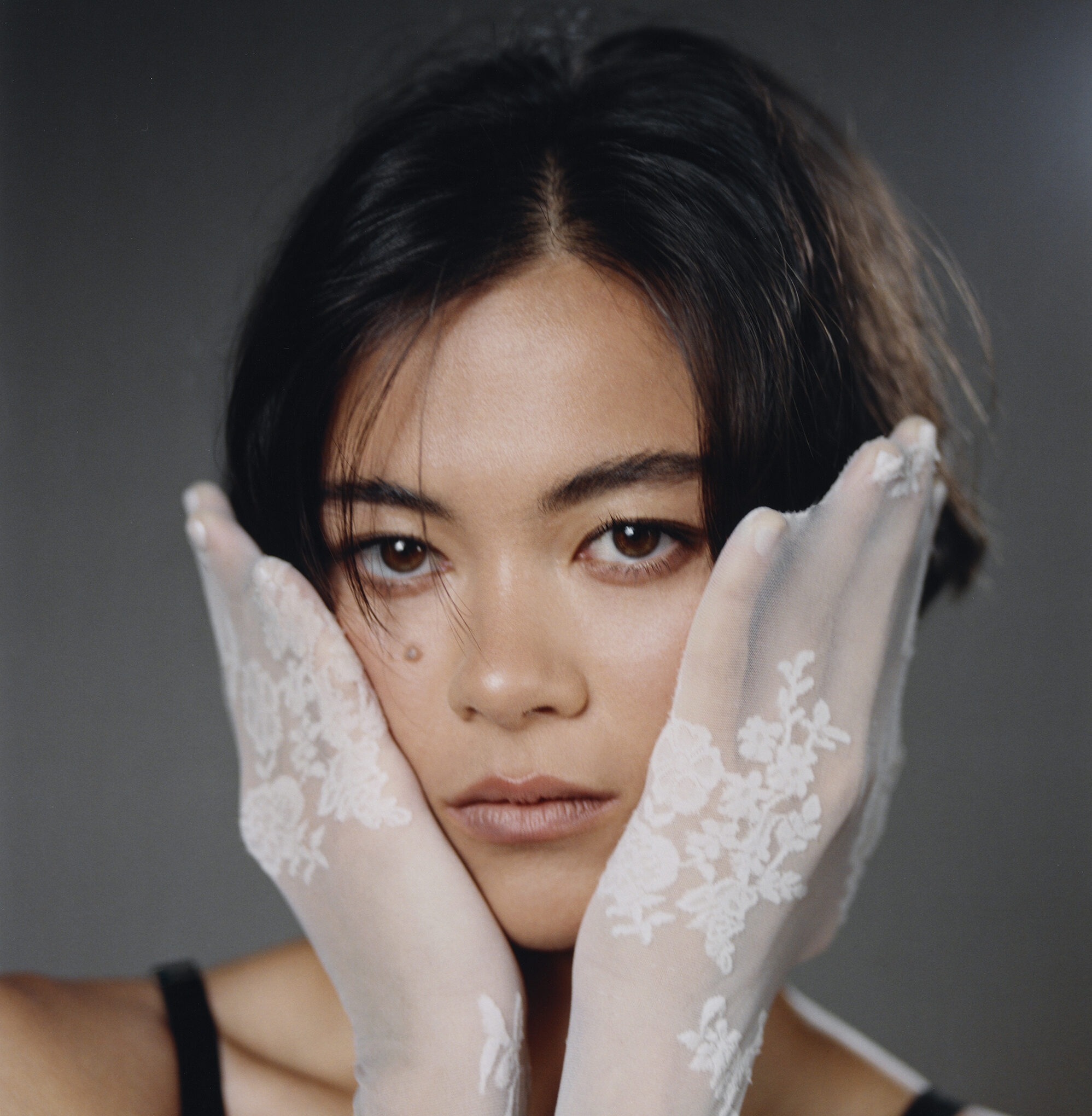
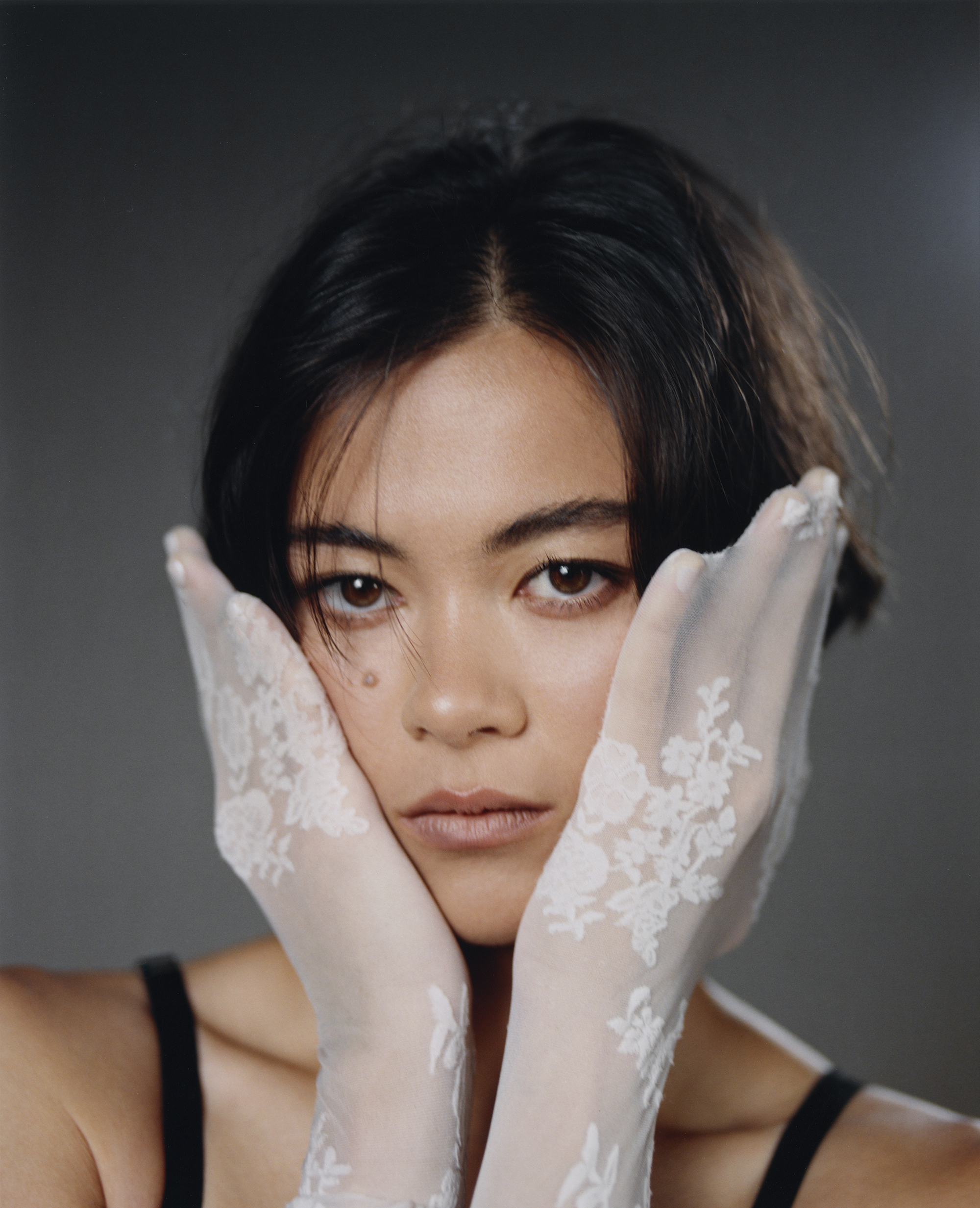
Lukita wears Tights Valentino Garavani.
Lukita Maxwell dropped out of Pratt two months in because Hollywood came calling. After flirting with acting in her home state of Utah, the New York transplant left school for a role on the HBO Max teen drama Generation and never looked back. Now she has a day job on the Apple TV+ comedy Shrinking, alongside Harrison Ford and Jason Segel. She’s also starring in Backrooms, the A24 horror film directed by 20-year-old Kane Parsons, whose found-footage YouTube series about an endless maze of fluorescent-lit office corridors has racked up over 190 million views. To talk about what that experience did to her, her costar and friend Finn Bennett flew out to L.A. and showed up at her house.
———
WEDNESDAY 3PM, MAY 6, 2026, LA
———
FINN BENNETT: Fucking hell! Lukita Maxwell.
LUKITA MAXWELL: Finn Bennett.
BENNETT: I’ve come all the way out to L.A. just to interview you.
MAXWELL: In my house.
BENNETT: Had you seen Backrooms [the YouTube series] when you auditioned for the film?
MAXWELL: I watched the first two episodes of the series and decided I understood the character enough to know she wouldn’t know more, so I decided to cap my knowledge on the “Backrooms.”
BENNETT: When a project has original source material, whether it’s a remake or an adaptation, do you like to be as well-informed as possible?
MAXWELL: Typically I like the whole picture, but I haven’t done a project based on source material before, and this was a unique piece of IP. I like the research process of being an actor. I like to have as much stuff as possible to sink my teeth into and wrap my head around. Thinking about it now, maybe I would’ve done it differently, but I have an academic brain.
BENNETT: Did you have an impression of what you thought the film would look like, and did that differ from what we actually shot?
MAXWELL: After reading the script for the first time, and especially after meeting with Kane [Parsons], I knew it would be visually singular and totally original. Then after meeting Jeremy Cox, our DP, and seeing his vision, I got really excited.
BENNETT: They built 30,000 square feet of Backrooms.
MAXWELL: Thirty thousand square feet? I didn’t even know that.
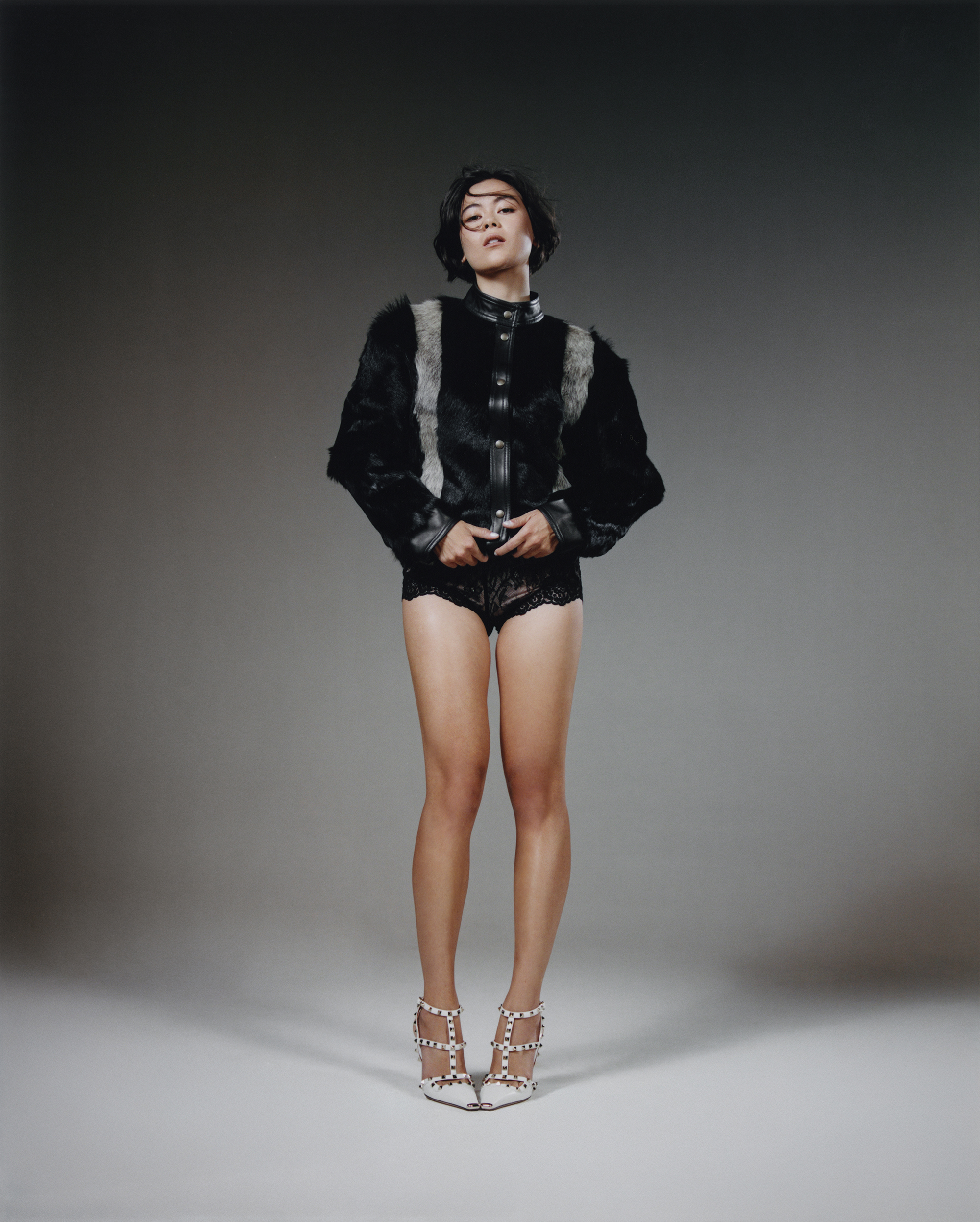
Jacket and Shorts Valentino. Rockstud Kidskin Pumps 100mm Valentino Garavani.
BENNETT: Yeah, it’s a lot of feet. What was it like spending time in a set like that, and how different has it been to your other studio shoots?
MAXWELL: My first day in the Backrooms was right after I met you. I remember walking into the space and immediately it was a vacuum. It felt like the perfect runway for a lot of scary shit to go down.
BENNETT: Shooting studio stuff is always so odd. We shot this in summer and had a lot of daylight, but starting at 6:00 a.m. means it’s dark when you go in and it’s dark when you come out. Plus being in a space that’s so liminal and mind-numbingly boring creates something very interesting with the people around you.
MAXWELL: I hadn’t even thought about that. Already any studio lot is a liminal space; all these variables, like lighting or mood or temperature, are controllable. That things can change at any given moment feels like the essence of the Backrooms.
BENNETT: Liminal space inside liminal space.
MAXWELL: Meta.
BENNETT: How was it working with Kane?
MAXWELL: Kane was wonderful. I was nervous, but all my nerves subsided in the first five minutes of our phone call. I felt like I could ask him anything.
BENNETT: I’d agree with that.
MAXWELL: He’s young but he’s very meticulous. He’s spent years and years on world-building.
BENNETT: He really had an answer for everything.
MAXWELL: He had an answer for every aesthetic question, every production question, every narrative question. He had intention with the story itself, but also how the story was being told and how he wanted to share it with audiences.
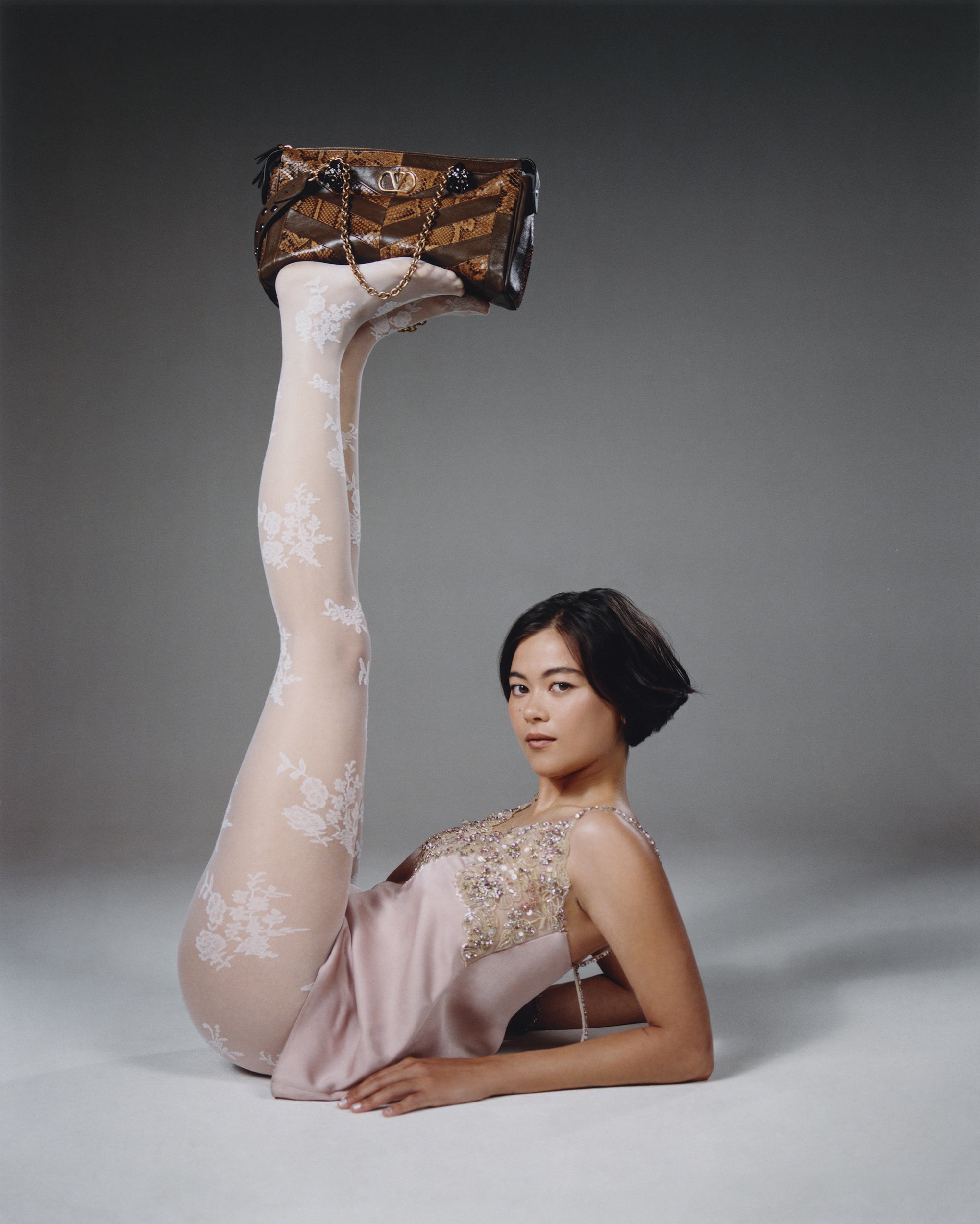
Top Valentino. Panthea Medium Shoulder Bag in Python and Nappa with Chevron Motif and Tights Valentino Garavani.
BENNETT: I think he’ll go far.
MAXWELL: I hope he goes far.
BENNETT: The Backrooms as a concept taps into this very specific anxiety about slipping through reality into somewhere mundane and inescapable. Does that metaphor mean anything to you?
MAXWELL: I haven’t thought about this film in that way. I wonder if that’ll change when I see the movie.
BENNETT: Here’s how Kane explained generative law: If somebody had never seen a dog before and you told them everything about a dog and then they tried to draw one, they still wouldn’t get it right. Does that open doors for a conversation about AI?
MAXWELL: Finn, you’re such a good interviewer.
BENNETT: Thanks, man. Maybe I found my calling. Do you want to answer questions like what’s your favorite snack?
MAXWELL: I love leaving a movie theater feeling like I’ve been transported somewhere else. To me the scariest films are more psychological—they make you turn inward and question your sense of reality. You leave the theater unsure of the reality you’re stepping back into.
BENNETT: It opens doors of conversation. I really liked the research. It’s very specifically set in the Bay Area in the 1990s, in corporate office buildings in these mundane spaces. Revisiting it, it does feel like a problem, like all the issues of AI further infiltrating the industry we work in. It almost felt like what it would’ve been like to discover AI very early on.
MAXWELL: Whoa.
BENNETT: Yeah.
MAXWELL: And it’s this elusive, uncharted, undiscovered world that’s deeply intriguing and unsettling.
BENNETT: Yeah, something like San Jose and all the Silicon Valley guys would’ve been into in the ’90s, exploring the limits of things without feeling as though they should be left alone.
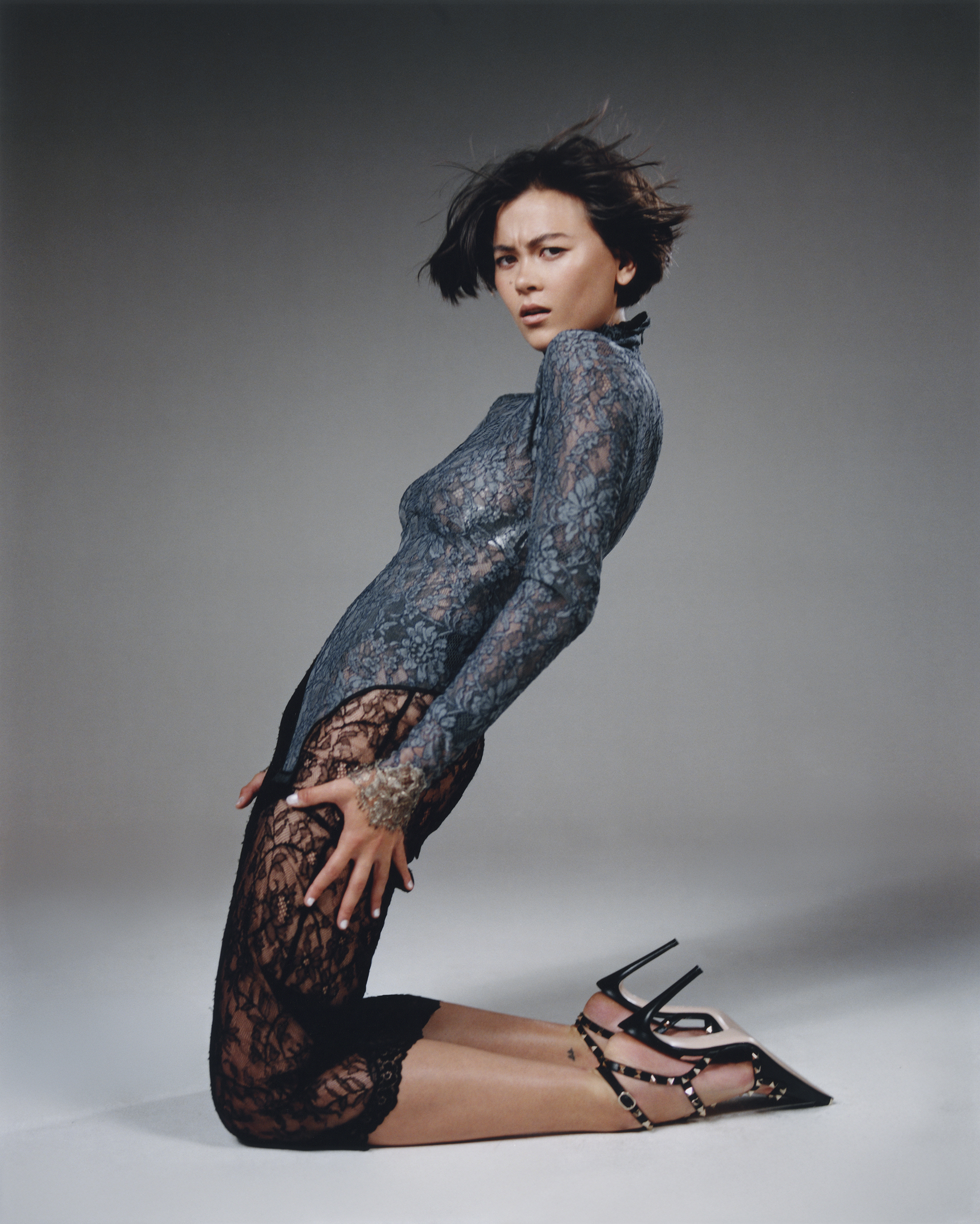
Bodysuit and Skirt Valentino. Rockstud Kidskin Pumps 100mm Valentino Garavani.
MAXWELL: Northern California, where it’s set, had a space-race attitude towards the unknown and finding new technology. But I have to say it didn’t feel technological to me.
BENNETT: Really?
MAXWELL: No, not really.
BENNETT: I took it as a metaphor for those guys, with Clark [Ejiofor’s character] being this sort of loser who’s catapulted into this very exciting story.
MAXWELL: To me, the Backrooms felt like a metaphor for an altered state of mind, and also for the different lenses you use to walk through life. When you encounter a new one, you start to see things you haven’t noticed before. I saw it as more abstract.
BENNETT: Is this the first time you’ve done horror?
MAXWELL: No.
BENNETT: What’s the first time?
MAXWELL: I was in a movie about AI.
BENNETT: Oh, no way!
MAXWELL: Yeah, where the AI takes over. Don’t put me in the AI horror niche.
BENNETT: I don’t know, man. You might be working quite a lot.
MAXWELL: But I do like working in horror.
BENNETT: Do you find it challenging?
MAXWELL: I find it intimidating, but when I get to set, it’s the same process. We take it day by day. What baseline feeling are we trying to get across, scene to scene?
BENNETT: Do you think there’s a pressure in horror films to be more genuinely reactive than other genres? With horror, there’s an added pressure of responding to a stimulus in front of you and trying to make somebody else feel terror.
MAXWELL: I got a great piece of advice from Jason Segel before I came and shot Backrooms, which was, “Outline all the emotions your character is going to be experiencing. Watch yourself in the mirror going through 10 different versions of each emotion on your face and keep adding to it.”
BENNETT: Like turning a dial?
MAXWELL: Yeah. So many flavors of emotion play visually in horror. It’s funny to be saying all this, because ultimately all our scenes where we are at our wits’ end—sheer terror moments—are shot through a camcorder.
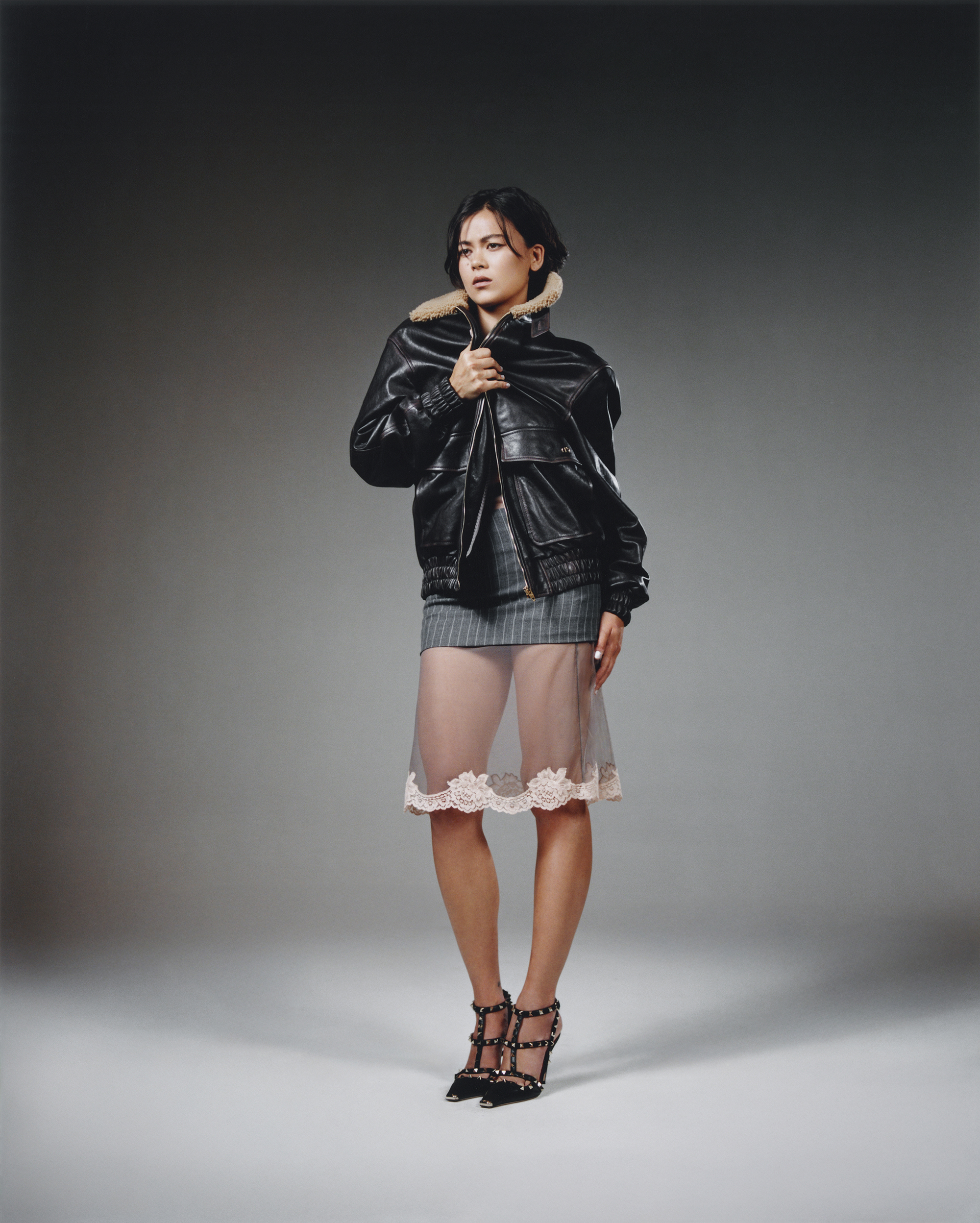
Jacket and Skirts Valentino. Rockstud Kidskin Pumps 100mm Valentino Garavani.
BENNETT: But I think it really works. Camcorders and found footage really play to the strengths of the genre. You’re slightly less aware. One of the biggest struggles in any genre, but particularly horror, is being so aware of what your face is doing. I think there’s breathing room with a camcorder.
MAXWELL: The camcorder emphasizes one of the strongest elements of horror, which is the unknown.
BENNETT: You were studying architecture at Pratt when you got cast in Generation. Do you ever think about what you would’ve been like if you had stayed? Where your life would’ve taken you?
MAXWELL: I would have graduated, been an architect, and built the Backrooms.
BENNETT: Did you drop out of Pratt before you booked Generation?
MAXWELL: I’d been auditioning unsuccessfully in high school and sending out tapes, but then I got into Pratt. I was very excited to be in New York; it felt like my ticket out of Utah. I got a scholarship and I’ve always been interested in architecture. I literally looked at the course list and I was like, “This sounds sick. I’ll go for this.”
BENNETT: This was like a dropdown list?
MAXWELL: Literally, a dropdown list. I dropped out because one of the last auditions I sent out was for Generation. I got a callback and then I booked it two months into school. It felt like the biggest crossroads of my life. It was, “Do I stay in New York, the city I’ve become obsessed with? Do I set myself up to be in front of a computer on CAD for the rest of my life? Or do I get to follow this dream?”
BENNETT: That’s huge.
MAXWELL: And I was alone in this new city. I had made some friends, but I didn’t have my family there. I felt like I was calling my mom every 30 minutes in a panic. Ultimately, it was an opportunity I couldn’t live with saying no to. The project encapsulated everything I wanted to do as a first big role. The character felt close to me in some parts, but also like she would be very difficult to play. I would have to push myself, and that was very exciting.
BENNETT: Huge decision to make.
MAXWELL: Yeah. I had to drop out of school and beg for all my money back.
BENNETT: And did you get it?
MAXWELL: I did get my money back, because the sweet, sweet admissions lady was a theater kid.
BENNETT: No fucking way. That’s so cute.
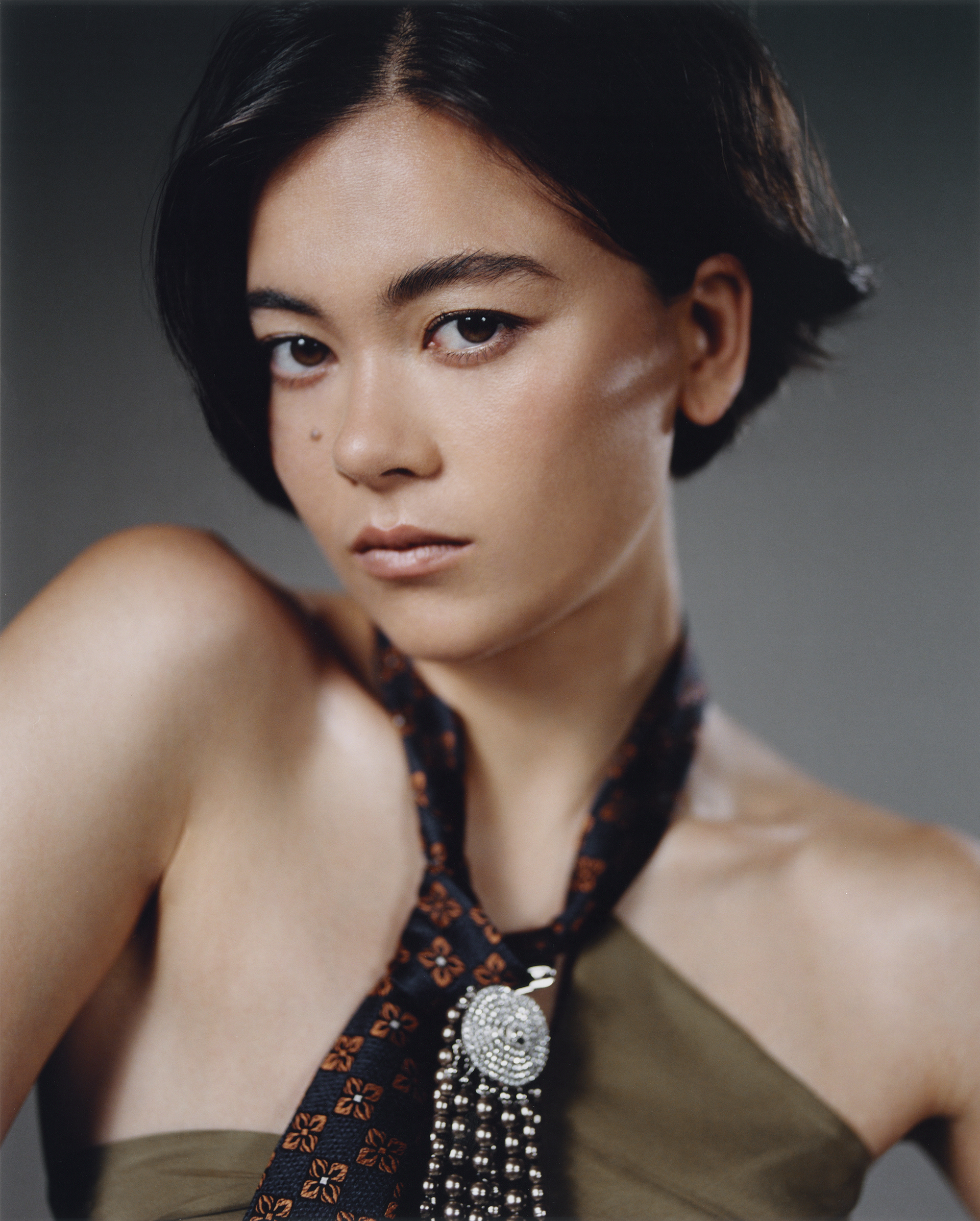
Shirt (worn as top) Valentino. Tie and Brooch Valentino Garavani.
MAXWELL: I should give her a call and thank her.
BENNETT: You’ve had to do scenes with huge names: Harrison Ford, Jason Segel, Chiwetel Ejiofor. What have you learned from them?
MAXWELL: I’ve been very lucky to work with really strong number ones on the call sheet who truly look out for the whole cast. I’m going to speak on Jason, specifically. He’s a shoulder to lean on for every single person on set. The way he carries himself is something I hope to always carry with me. With Harrison, I’ve been inspired by his relationship with the camera. He always pulls up to set very aware of the scene, having done so much more work than you would expect Harrison Ford to do. His script is covered in notes, but his relationship with the camera is one of a movie star. You can see how he—
BENNETT: Works it.
MAXWELL: How he’s thinking about what it’s going to look like while he’s filming it, and it doesn’t affect his performance in any way.
BENNETT: You’ve already got a busy career, but inevitably there are times where you’re not working. I’ve always known you as someone with a ton of hobbies and interests, but do you struggle to stay inspired when you’re out of work?
MAXWELL: I am not struggling—how do I want to say this?
BENNETT: “I am not struggling.”
MAXWELL: I’m working on directing my first short film, in between all the Shrinking press and gearing up to do Backrooms press. That’s been taking every moment of my time in a really soul-fulfilling way.
BENNETT: It’s an amazing feeling when it fills your whole life, because we’ve all been day players, or not that involved in the story. You can feel like it’s a bit of a gig economy. When it really fills your time, when you really have to invest in it, that’s awesome.
MAXWELL: I love having way too much on my plate. But when it’s done, it’s crickets. It’s horrible.
BENNETT: Do you find that horrible, though? Because you do so much other stuff. Do you actually get that pit in your stomach?
MAXWELL: Yeah, and then that pit opens the door to self-doubt and “I’m never going to get a job again.” I need to keep the ball rolling. But I’m happy we’re friends and that this film brought us together.
BENNETT: We’ll be friends forever. This will be a testament to our friendship.
MAXWELL: To our friendship.
BENNETT: I think that’s all the questions I have.
———
Hair: Junya Nakashima using Oribe at Streeters.
Makeup: Soo Park using Saie Beauty at The Wall Group.
Nails: Mamie Onishi using OPI at See Management.
Lighting Direction: Vasilios Smaragdas.
Photography Assistant: Laura Pomocka.
Fashion Assistant: Nancy Hong.
Production Direction: Alexandra Weiss.
Photography Production: Georgia Ford.
Prints: Tomasz Orlowski.
Social Media Assistant: Sophia Giulietti.
