

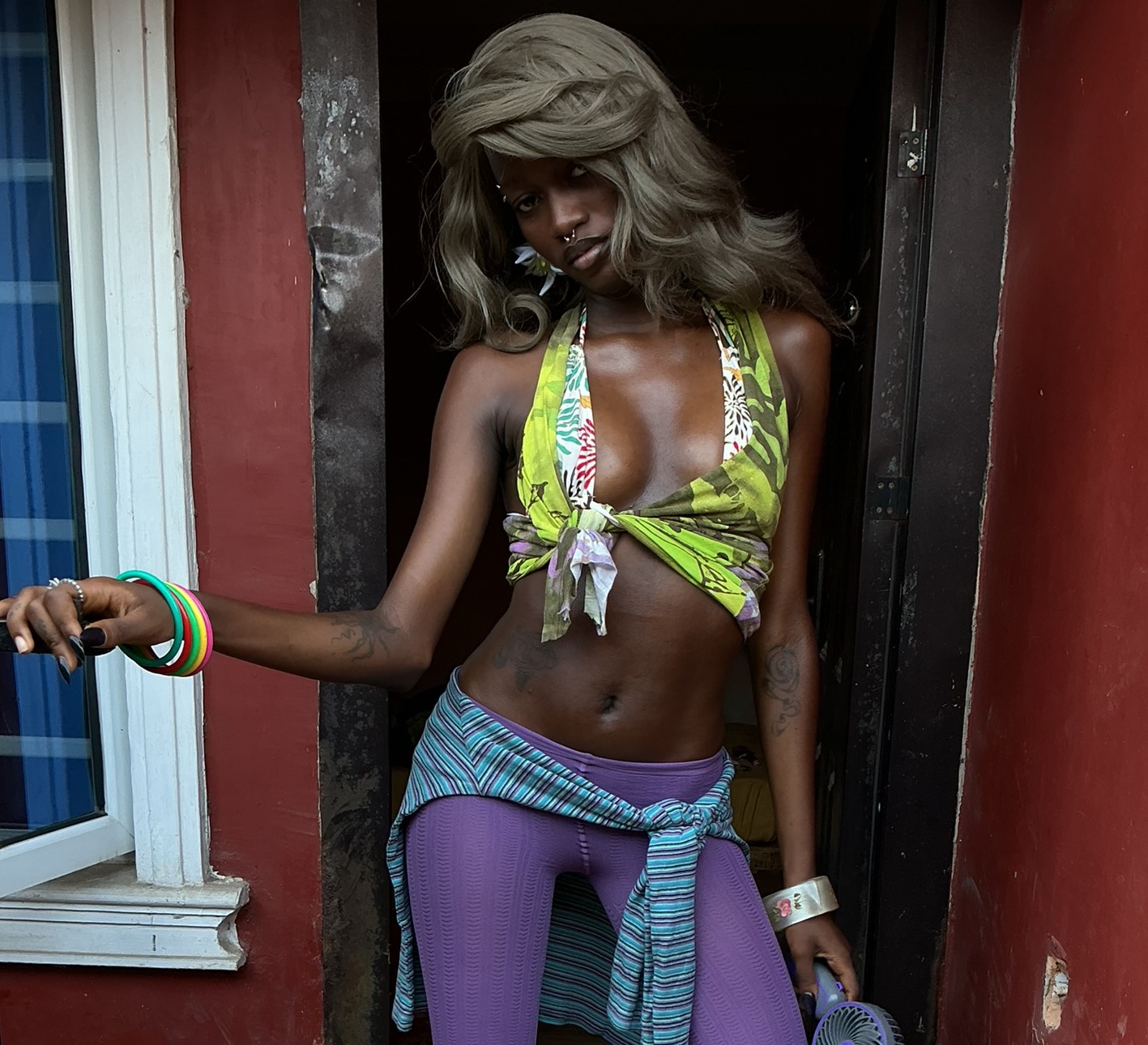

Photo courtesy of Odey Ikpa.
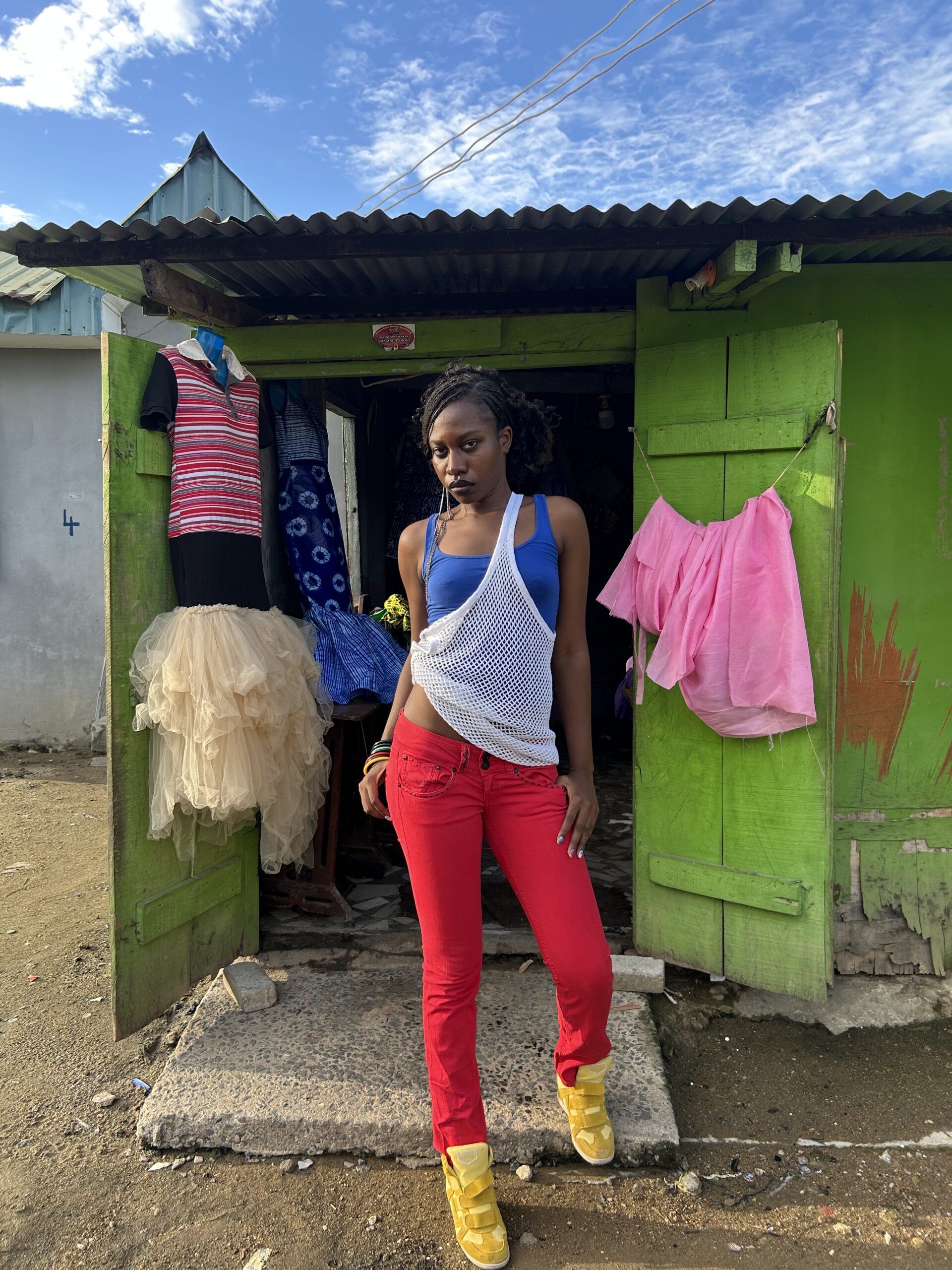
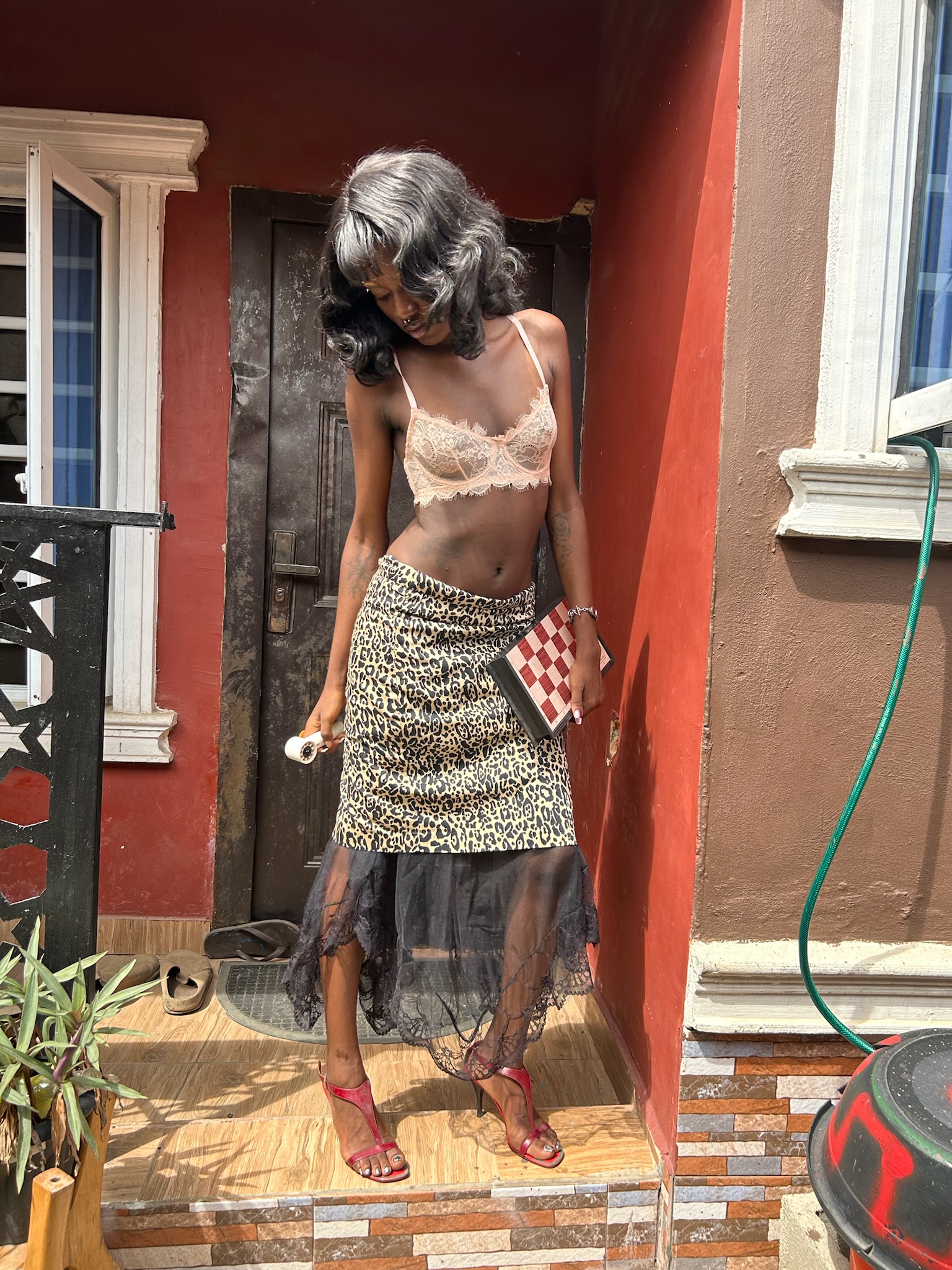
Rachel Ojuromi and Debby Fasingha are fluent in the international language of fashion. The Lagos-based best friends and business partners have spent the last couple years manifesting their big break in the industry, Fasingha as a designer and stylist and Rachel as her insanely charismatic model and muse. And over the past month, all of that planning, plotting, and faking it until they make it has finally paid off in a major way, taking the pair from two relative unknowns in Nigeria to now global viral sensations in the street style scene. Both credit their overnight social media success to their immaculate vibes that radiate through the screen, but also years spent studying the biggest designers and runway shows of the past on YouTube, and using that knowledge to inform their work. I hopped on a transcontinental Zoom call with Ojuromi and Fasingha to chat about Martin Margiela, modeling in Paris, and turning the streets of Lagos into their personal catwalk.
———
TUESDAY 12:24PM, MAY 12, 2026, NYC
———
EMILY KIRKPATRICK: Hello, how’s it going?
RACHEL OJUROMI: Very good. How are you?
KIRKPATRICK: Good, good. Are you both together?
OJUROMI: Yeah, we’re both here.
DEBBY FASINGHA: Yeah.
KIRKPATRICK: You guys are based in Nigeria, right?
OJUROMI: Yes.
KIRKPATRICK: What is the fashion scene like there?
FASINGHA: It’s fashionable, I guess. It’s a lot of streetwear, and I think the higher fashion is just a lot of older people that we don’t really speak to.
OJUROMI: There’s streetwear that’s for young people, and there’s high fashion that’s for older people, but there’s no in between.
KIRKPATRICK: Gotcha.
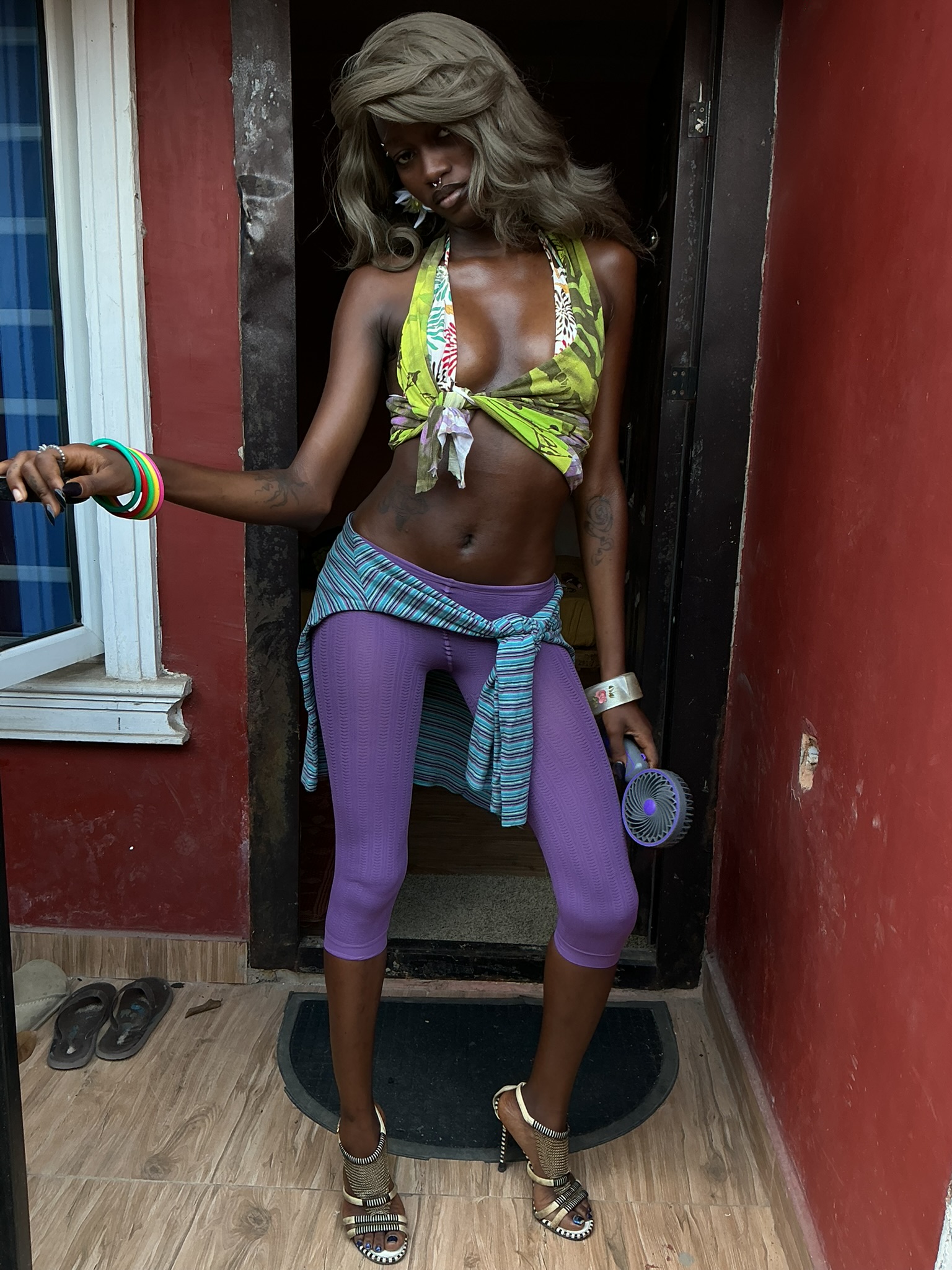
All photos courtesy of Debby Fashinga and Rachel Ojuromi.
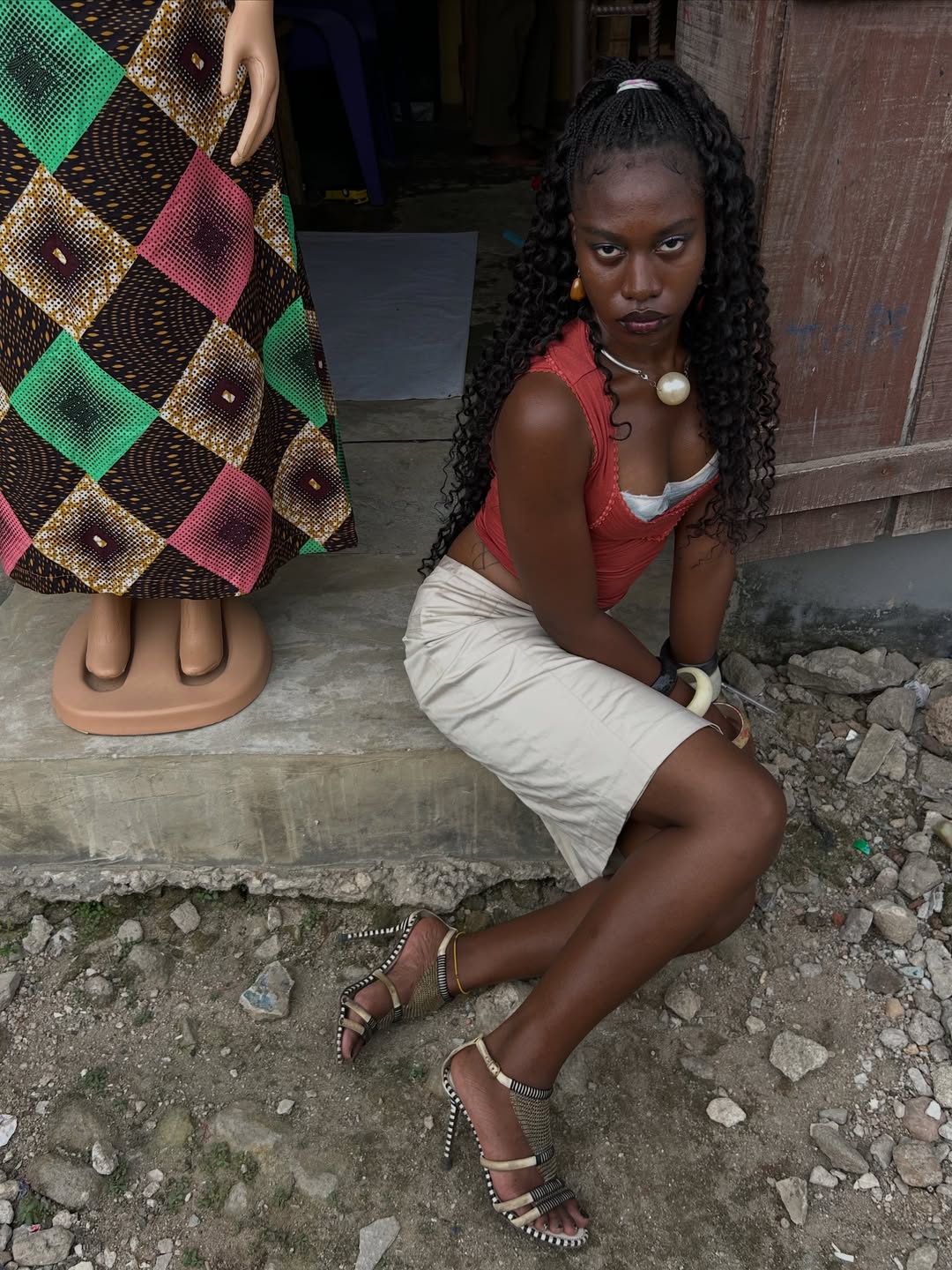
OJUROMI: I’m not streetwear and I like high fashion, but they don’t make clothes that young people want to wear. They’re good clothes though.
FASINGHA: Yeah, really good clothes.
OJUROMI: Great craftsmanship.
FASINGHA: Just not for young people.
KIRKPATRICK: Right. Where do you feel like you guys fit within the world of fashion?
FASINGHA: In between, I think. We basically just want to cater to everyone, so there’s something for everybody. It’s like you could connect to it if you’re 70 years old, you could connect to it if you’re five, I hope. You look at the thing and you’re like, “Wow, this is really, really cool. I’ve never seen this before. And I just want to be a part of it in some way, somehow.”
OJUROMI: I think that’s the thing. We’re the cool people for all ages. If you’re cool, you get it. You see it. You’re like, “That’s for me.”
KIRKPATRICK: People are responding to the vibe. So, you’re a designer, Debby. Is that what you do full-time?
FASINGHA: I’m a designer. That’s my job. And a stylist, I style too.
KIRKPATRICK: I mean, it’s beautiful. You do amazing work.
FASINGHA: Thank you.
KIRKPATRICK: Are you making most of the stuff Rachel’s wearing?
FASINGHA: 40%. The rest of it is thrifted.
KIRKPATRICK: Who inspires your styling and design work?
FASINGHA: I think it’s just a lot of experimenting, to be honest. It took a bit of time to get here because I started styling in 2024. I’ve just been playing around and finding my own style. I like to play with a lot of colors and patterns and texture. But in terms of designing, I think one of my greatest influences is [Martin] Margiela. He was sort of my introduction to high fashion, because when I finished uni in 2022 and I was jobless and at home, all I could do was be on my phone and I was like, “Oh, what better way to utilize my time than to learn something?” So I just drowned myself in a lot of YouTube videos. Bliss Foster, he has this playlist of his breakdown of all the Margiela runways from when Margiela was still at the house. I was mind-blown, like, “Whoa, I didn’t know fashion was deep.” So that was what pushed me to go a bit harder, like, yes, I want to be a designer. That was really, really inspiring.
KIRKPATRICK: One of the all-time greats. I feel like the way you use hosiery is very Margiela-esque. How would you describe your aesthetic?
FASINGHA: Fun. [Laughs] I think that’s one word to describe it. Because yes, there’s a story and it’s deep and stuff, but it’s still just fun. When I’m doing the thing, I’m having a lot of fun. Colors are fun. Textures are fun. Everything is fun. If it’s not fun, then I don’t want to do it.
KIRKPATRICK: How did you guys get started working together?
FASINGHA: Do you want to tell the story? [Laughs]
OJUROMI: Everyone’s obsessed with me.
FASINGHA: I’ll tell the story. [Laughs] I mean, I wouldn’t go as far as saying obsessed. It was just like, “Whoa, she’s really, really cool,” because Rachel used to make YouTube videos. That’s how I found Rachel. I used to watch her YouTube. But she was deep too. The videos were so good. I think they’re still up on her page.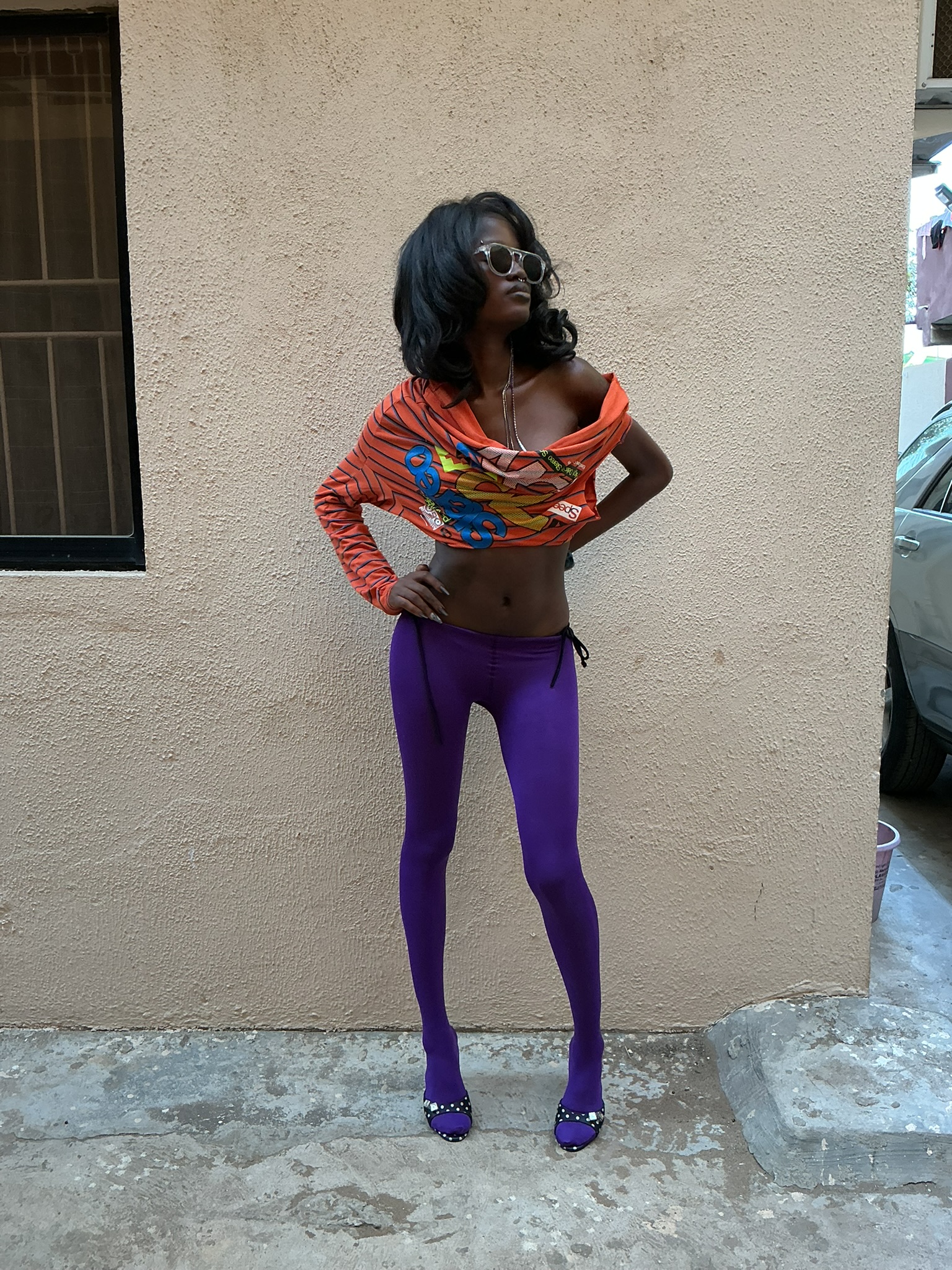
KIRKPATRICK: Cool.
FASINGHA: I moved to Lagos in 2023 because I grew up all my life somewhere else in Nigeria called Harcourt. And when I finished uni, I knew that I had to move if I wanted to chase my big dream. So I moved and I was looking to find creative friends. Rachel had posted that she was screening a film and I was like, “Oh, hey, I want to come.” I went and I had a really, really good time. I told her, “Oh yeah, if you’re ever trying to hang out, just let me know.” She was obsessed with me too.
OJUROMI: Co-obsession. [Laughs] We hung out and we hit it off. Then I started my platform, The Process Africa, and I wanted to interview her. But it was just me doing it, so I couldn’t talk to everybody. So she texted and was like, “Oh, if you need help running it, I’d like to help.” And then we went to a work thing together, and she worked really hard. She was doing everything. I was like, “Ah, fresh.”
FASINGHA: She likes to work.
OJUROMI: She likes to work, I like to work. We can work a lot.
KIRKPATRICK: Totally.
OJUROMI: And then we just kept working. And then, I don’t know how she became my best friend. She’s just all over me. [Laughs]
FASINGHA: I’m just really nice.
OJUROMI: Yeah, because people are strange, but Debby’s normal. She’s a normal-thinking person. She has sense.
KIRKPATRICK: I think both normal and hardworking is a tough combo to find.
OJUROMI: A whole package.
KIRKPATRICK: When did you decide to start doing the type of social media content you guys are doing together now?
OJUROMI: We started a month ago.
KIRKPATRICK: Wow.
OJUROMI: In March.
KIRKPATRICK: Okay. Crazy.
OJUROMI: Yeah. Everybody always goes, “Wow.”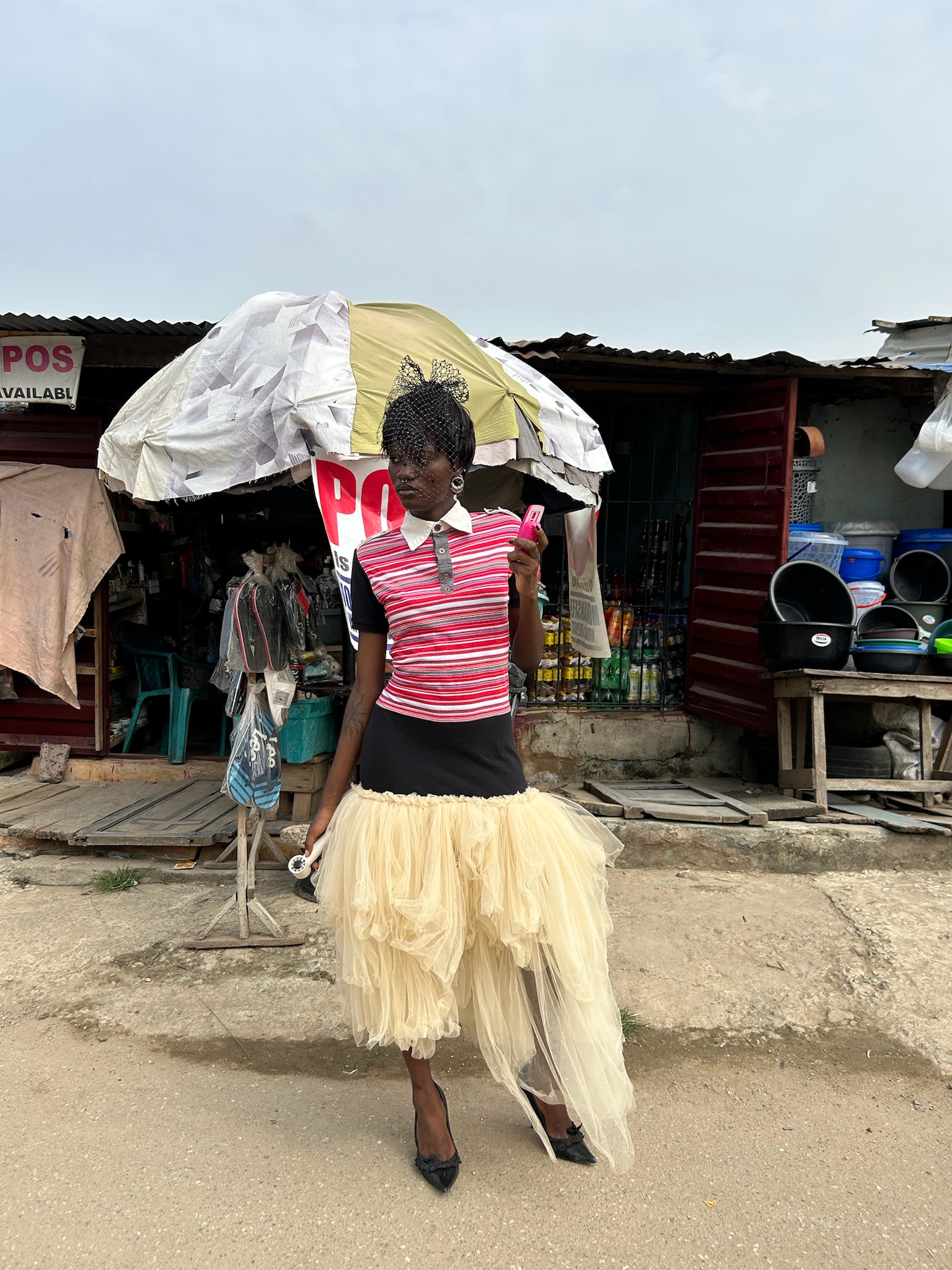
FASINGHA: It’s a bit of creative direction and styling, which we already had been doing. We’re basically just translating that into video format.
OJUROMI: Yeah. Because it’s just hanging out. We just have silly ideas. We’re really funny. [Laughs]
FASINGHA: So now it’s just like, “Oh, let’s show the world the silly ideas that we have,” and the world loves it.
OJUROMI: I can’t believe I didn’t think of this earlier.
KIRKPATRICK: You were working too hard. You didn’t realize.
FASINGHA: Yeah. I think it’s also Rachel making that transition into wanting to be a model. Because before when we would do all the creative direction and styling, we would always sort of—
OJUROMI: Do it on someone else.
FASINGHA: Yeah. We’d have to look for models and be like, “Oh, hey, come do this thing with us.” But now, it’s like, let’s put all the clothes on Rachel, and then we shoot.
OJUROMI: Now we never have to outsource. That’s cool because it was always stressful having to convince someone that this is actually a good idea.
FASINGHA: Yeah. Like, “Please do it.”
OJUROMI: “I’m begging you to trust me that I’m a genius.”

KIRKPATRICK: Now you just get to be the genius. Do you do other modeling work as well, or is this your main thing?
OJUROMI: For now, I’m just doing the videos. Hopefully it can grow. It’s just been a month. So, being patient.
FASINGHA: Yeah. It would be nice to see what it could look like in a year from now.
KIRKPATRICK: Why do you think this content is taking off the way it is?
FASINGHA: It’s really fresh. It’s very new. I think people are just fascinated by the fact that there’s these two girls in Lagos, Nigeria who could be this cool. They’ve never seen this before.
OJUROMI: The videos are not just walking, there’s activity. So you’re watching it like, “How is this even happening?”
FASINGHA: “How did you even think to do this?”
OJUROMI: Right. So it’s cool, it’s funny, and the styling is great. I’m also really likable. I’m actually a nice person.
KIRKPATRICK: That’s important.
OJUROMI: People see it and they’re like, “Girl, I like her.”
FASINGHA: “She’s nice. She looks nice.”
KIRKPATRICK: I feel like both your energies come through the screen. And I think fashion can be very siloed, so it also takes people outside of themselves like, right, fashion is a global thing. Everybody’s a part of this conversation.
FASINGHA: Exactly. It does cross continents.
OJUROMI: People see it and they’re like, “That’s so me.” They can see themselves in that, which breaks their brain.
FASINGHA: Also, we get a lot of comments saying, “Oh, this is so this coded, or that coded.”
OJUROMI: And we’re like, “We know.”
FASINGHA: So I think that’s also really interesting for people to see. They’re like, “Wait, how can you do this there? What’s happening?”
KIRKPATRICK: It’s funny because, like you said, you studied Margiela. You do know the references.
FASINGHA: Yeah. I spent a year plus just watching shows.
KIRKPATRICK: You’re like, “This isn’t born out of nothing.” But you put your own twist on it, you give it your own flavor.
FASINGHA: Twist, yes.
OJUROMI: Yeah, obviously. Because you’re doing it with the resources that you have, with the knowledge that you have. Some people can go to a library and pick up books, we only have the internet.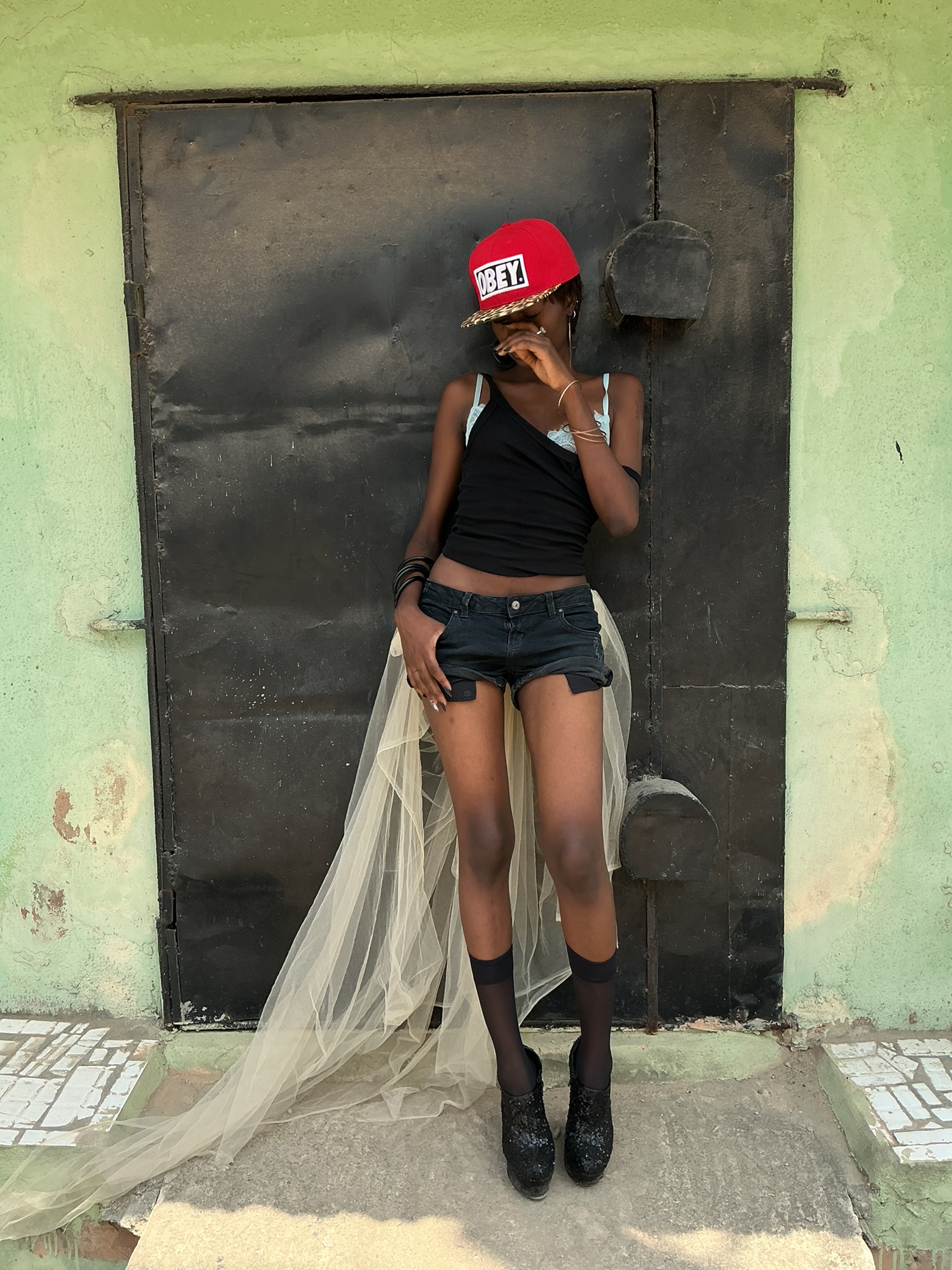
FASINGHA: Yeah, we only have YouTube.
OJUROMI: So, it’s really cool because I remember watching Bliss Foster break down the Prada 1996 show and I was like, “This is the greatest thing ever. Nothing has ever been greater than this.” And then I got some Prada slippers for roughly $5.
KIRKPATRICK: Wow, nice.
OJUROMI: Vintage Prada. The sole fell off.
FASINGHA: She wore them every single day. It would fall off, she would put it back together. She would wear it again.
OJUROMI: Because of how limited what we can get is, we appreciate it more. So it’s like you can feel the love and the care it takes to put out such videos, because shooting the videos is hard. It’s actually difficult. [Laughs]
FASINGHA: It’s actually really hard. They look easy, but it’s hard.
OJUROMI: But it’s really fun. When we come up with a good idea, it’s like, “Oh, my god!”
FASINGHA: It’s never really pre-planned or anything. We just dress up, and we go outside, and we see what could happen. So, it’s very natural as well. We go outside and then some people just come up and want to be in the video—
OJUROMI: And they help.
 FASINGHA: Lots of people just come up and they’re just like, “Oh, my god.”
OJUROMI: “What’s your TikTok?”
KIRKPATRICK: Just curious.
FASINGHA: They’re so fascinated by it.
OJUROMI: They call me Ms. Paris.
KIRKPATRICK: I like that.
FASINGHA: It’s just really, really fun.
OJUROMI: It’s really special. Because one thing is—god’s willing—if this goes to plan and I actually end up in Paris, those people that call me Ms. Paris will literally be like, “That’s our kid.” It’s like family. It’s really stressful.
KIRKPATRICK: I need Ms. Paris in Paris, for sure. Do people get what you’re doing on social media, like your parents?
FASINGHA: My mom is on TikTok and Instagram, so she sees my content. Before we even started posting the video, she was telling me, “Oh, my god, you’re always reposting people. Do your own.” I’m like, “Girl, okay, you clocked me. I’ll do my own.” [Laughs] So yeah, my mom is really supportive. She’s been supportive. She’s a big influence on me loving fashion.
OJUROMI: My mom is so fresh. Actually crazy. She’s so fresh.
FASINGHA: My mom would love your glasses.
OJUROMI: They’re so fab.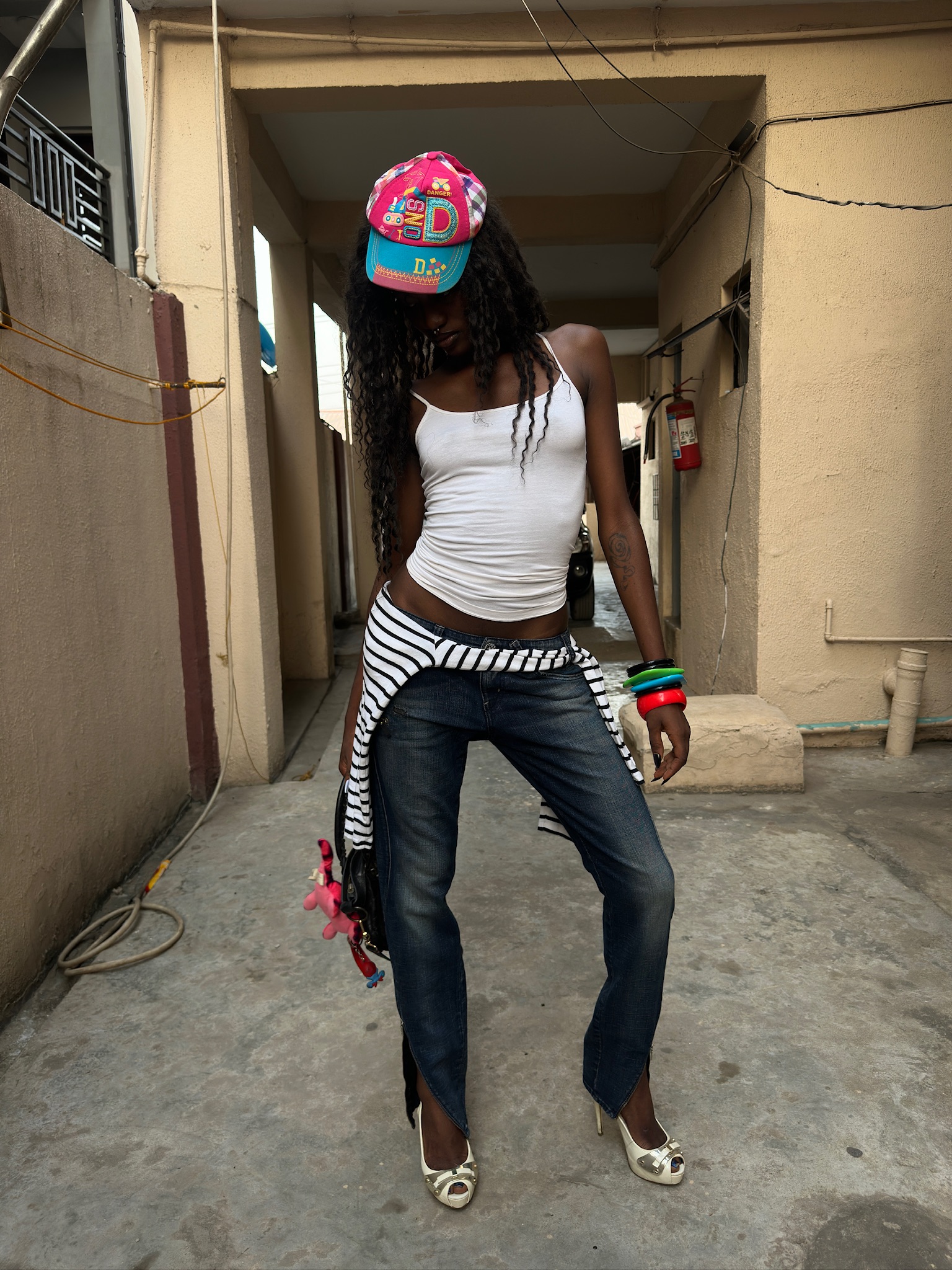
KIRKPATRICK: Thank you. I love that your moms are supportive of you and get it because I feel like social media is not an obvious thing.
OJUROMI: I can’t explain it to my mom. I’m not going to lie. Somebody did a video in Russian and she’s like, “What are they talking about?” She’s kind of confused, but she’s also happy because since I was a kid, I’ve been saying, “Oh, I’m going to take over the world. I’m going to be a star,” blah, blah, blah. So now she’s like, “Okay, it seems like this might happen.”
FASINGHA: It’s happening. It’s the same thing with my mom too. When I moved to Lagos, I had to convince my parents to let me come here because I don’t have any family here.
KIRKPATRICK: Scary.
FASINGHA: We just couldn’t go back.
OJUROMI: We’re just trying to make our dreams come true!
FASINGHA: Exactly. [Laughs]
OJUROMI: Anyway, we’re booked. [Laughs]
KIRKPATRICK: You have to be your own hype man.
OJUROMI: Manifesting, bro.
KIRKPATRICK: You’re manifesting.
OJUROMI: We manifested for two years. We’re still manifesting.
KIRKPATRICK: Have any big brands reached out to you guys?
OJUROMI: Oh, yeah. People send a lot of texts.
FASINGHA: Yeah. A couple brands have reached out. They sent us some stuff, so that’s kind of cool.
OJUROMI: We’re waiting for them. They don’t want to tap into the cool kids.
KIRKPATRICK: Yeah. I feel like brands are always nervous to take a risk.
OJUROMI: We’re being patient. If you’re patient, it happens. We waited for a really long time. We can wait for a bit longer. [Laughs] Patience, manifesting.
KIRKPATRICK: Do you guys have any goals with your social media? You said you want to model in Paris, but is there anything else you hope to achieve?
OJUROMI: We have to go everywhere. We just want to go and be cool kids worldwide. Genuinely, there are a lot of kids like us in Africa. African kids need to know that this is possible. So it’s really about that. If one person does it, then everybody’s like, “Okay, we can go. Let’s all go.” I need everybody to know that they can go.
FASINGHA: There’s so many kids like us dreaming and we know what it takes to even try to break out because it’s not easy, especially where we come from. Resources are limited.
OJUROMI: We’re pulling clothes together. We go to that market and we sift through a lot of clothes that are sent from the west.
FASINGHA: It challenges us a bit more because we have to think of new ways to even use one thing like, “Oh, how can we use this five times?”
OJUROMI: Because obviously you can’t buy the whole market. Are we rich?
KIRKPATRICK: Not yet.

OJUROMI: We’re not rich.
FASINGHA: Exactly. Not yet, but soon.
OJUROMI: Manifest.
FASINGHA: We’re using what we have in a really good way.
OJUROMI: And I’m glad that people appreciate it because it’s really beautiful. You can do it from anywhere.
KIRKPATRICK: Yeah, you guys show that if you have the vision, if you have the aesthetic, you can make it happen.
FASINGHA: Just start.
OJUROMI: We just walk out the door.
FASINGHA: If you have a phone and you have some clothes, just shoot.
OJUROMI: Just have a good idea and go. It doesn’t have to be fashion, you just have to have a good idea.
FASINGHA: It doesn’t have to be perfect, just do it.
OJUROMI: But if you don’t start doing anything, you will never know.
KIRKPATRICK: So, what’s next?
OJUROMI: More.
KIRKPATRICK: More.

Photo courtesy of Odey Ikpa.
OJUROMI: We’re just two girls with big ideas.
FASINGHA: Yeah.
OJUROMI: And the bigger the budget, the bigger the ideas.
KIRKPATRICK: Perfect. We just need to get you the budget now.
OJUROMI: Yeah, we need the budget!
FASINGHA: It’s coming.
OJUROMI: I am really excited.
KIRKPATRICK: Well, thank you guys.
OJUROMI: No, but your glasses are so cool.
KIRKPATRICK: [Laughs] Thank you so much.
OJUROMI: Give me them so I can wear them in my video. [Laughs]
KIRKPATRICK: I wish. If I could, I would. Come to New York and I’ll give them to you.
OJUROMI: Okay, Emily, we’re coming.
FASINGHA: We’ll be there.
