

All photos courtesy of Jessica DeFino.
I used to be a Kardashian sister. In fact, I used to be all five of them. In the summer of 2015, I assumed the identities of Kourtney, Kim, Khloé, Kendall, and Kylie as the newly-hired editor of the family’s short-lived official apps. I created their content, parroted their speech patterns, and textualized their valley-speak vocal fry. I learned how to contour, bought a Kylie Lip Kit—no freebies for fake sisters!—and dissolved into a digital simulation of the Calabasas-bred billionaires. Hey, at least I got paid for it. That’s more than most people can say.
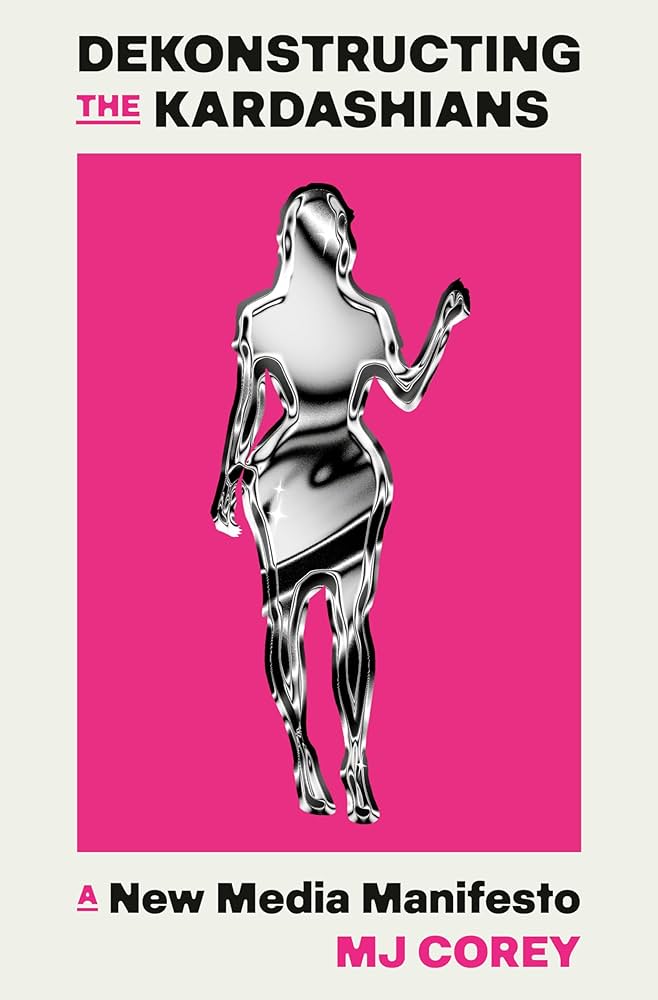
More than a decade later, it seems the whole world has been similarly reconstructed in the Kardashians’ image. Suddenly, we’re all contoured micro reality stars documenting ourselves in direct-to-camera confessionals. In the recently released, exhaustively researched book Dekonstructing the Kardashians: A New Media Manifesto, writer and psychotherapist MJ Corey — known to tens of thousands as @kardashian_kolloquium — argues that the family functions as a psychoanalytic mirror for society. Using postmodern theorists like Baudrillard, Boorstin, and McLuhan, she asks: Why are they like this? Why are we like this? And what does our enmeshment say about media and meaning in the Internet age?
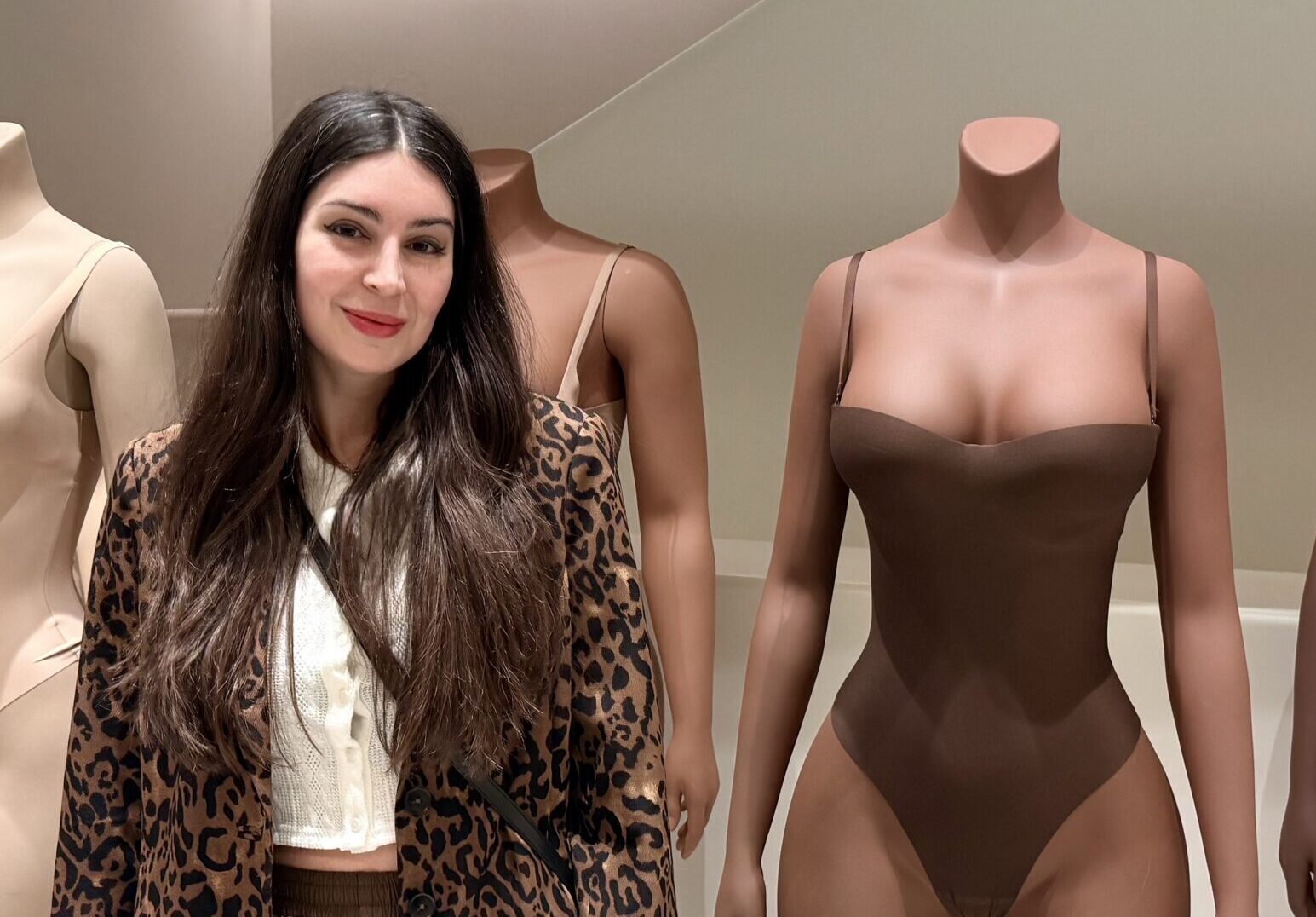
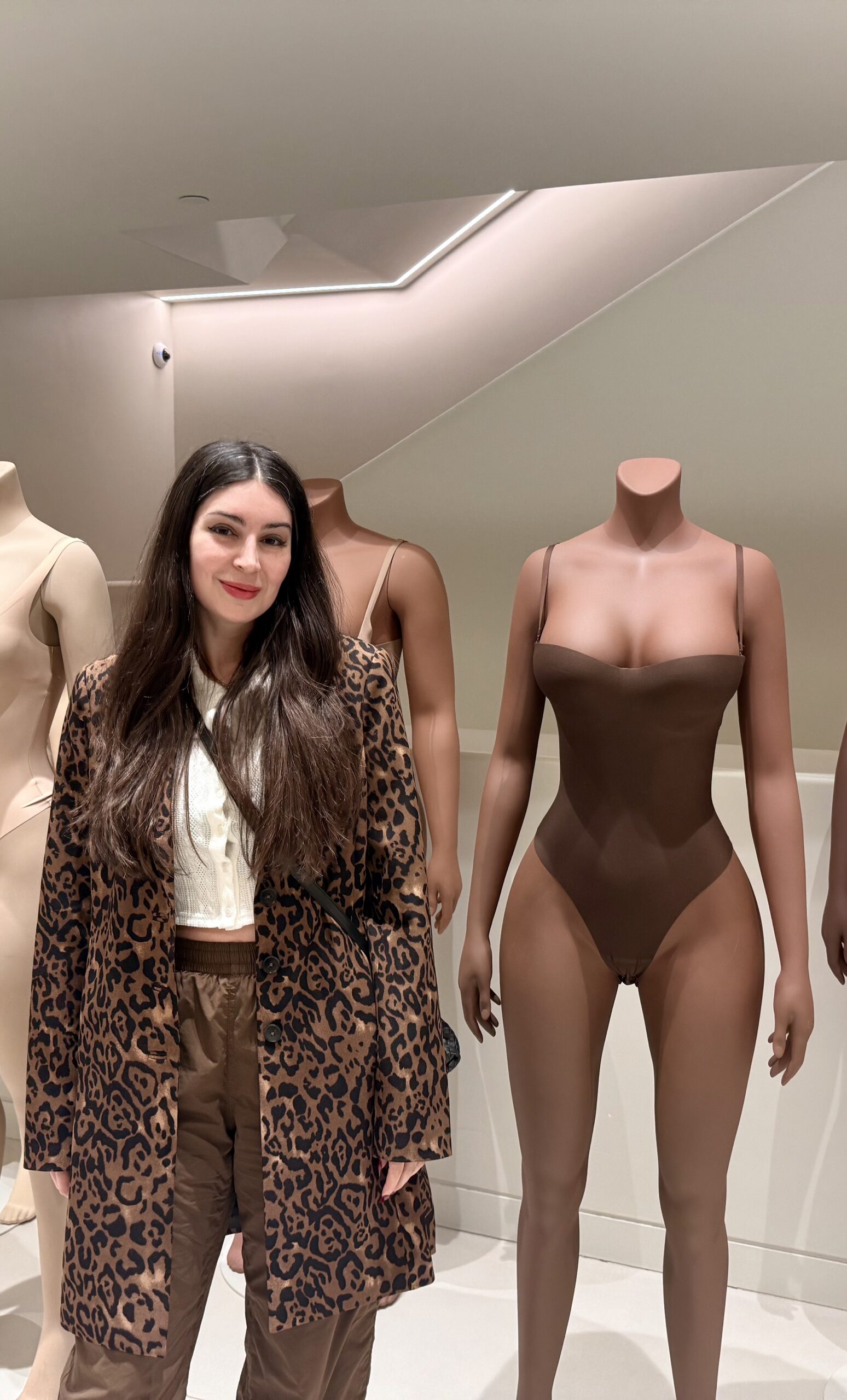
I met up with Corey at the SKIMS store to talk about Kim as a messianic figure, Kylie as a Foucauldian manifestation, and the Kardashians as a vessel for collective catharsis.
———
THURSDAY, 10:03 AM, APRIL 30, 2026 THE SKIMS NYC FLAGSHIP STORE
———
JESSICA DEFINO: Thank you for meeting me here. Have you been to the store before?
MJ COREY: No, I don’t own a piece of SKIMS.
DEFINO: It’s my first time too. It’s got a smell to it. Like a very Kardashian…
COREY: Full sensory experience, yeah. This store is actually exactly what I imagined—statues, mannequins, disembodied body parts.
DEFINO: It’s very reminiscent of an assembly line, like the making of the mannequin form.
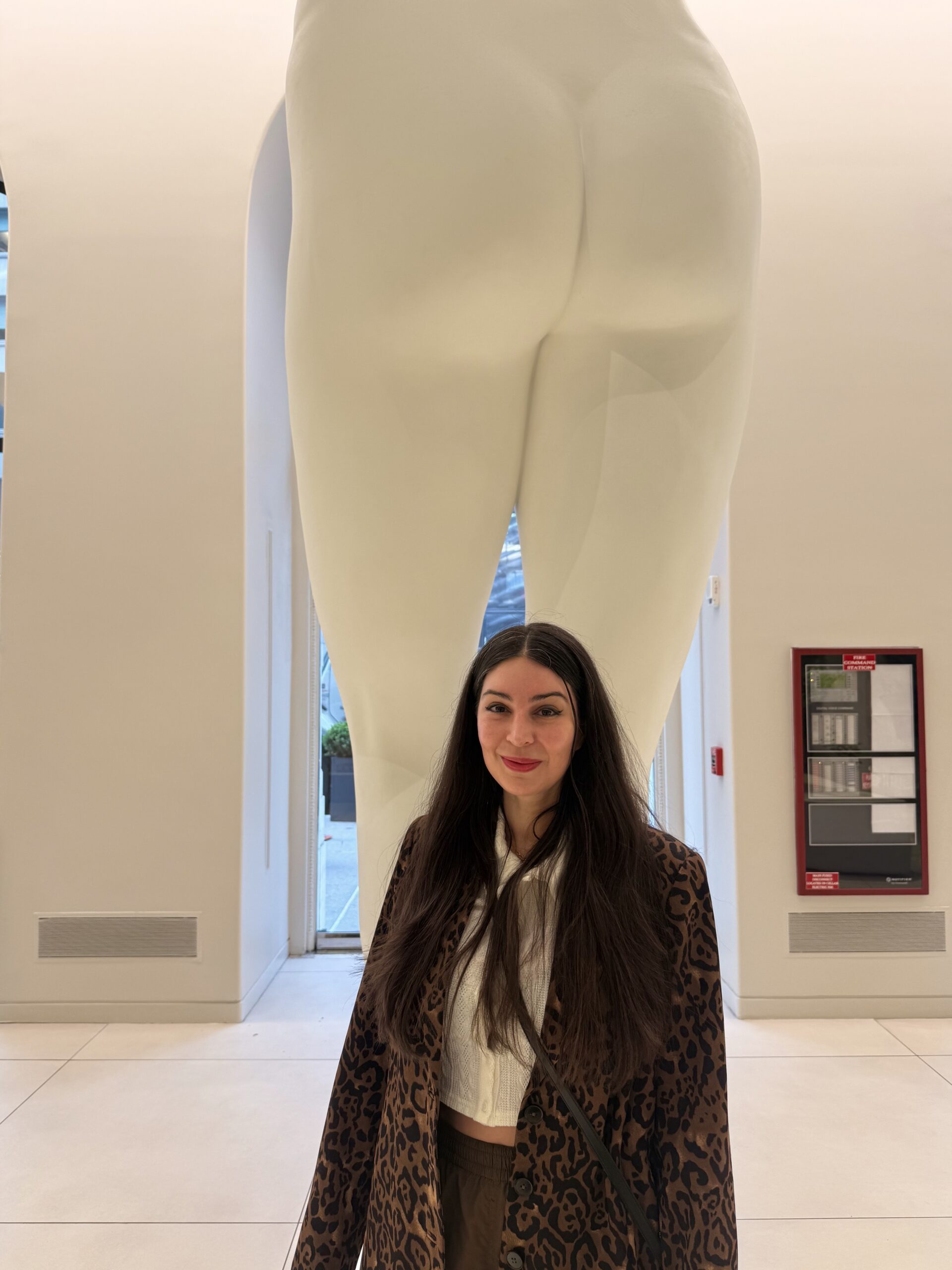
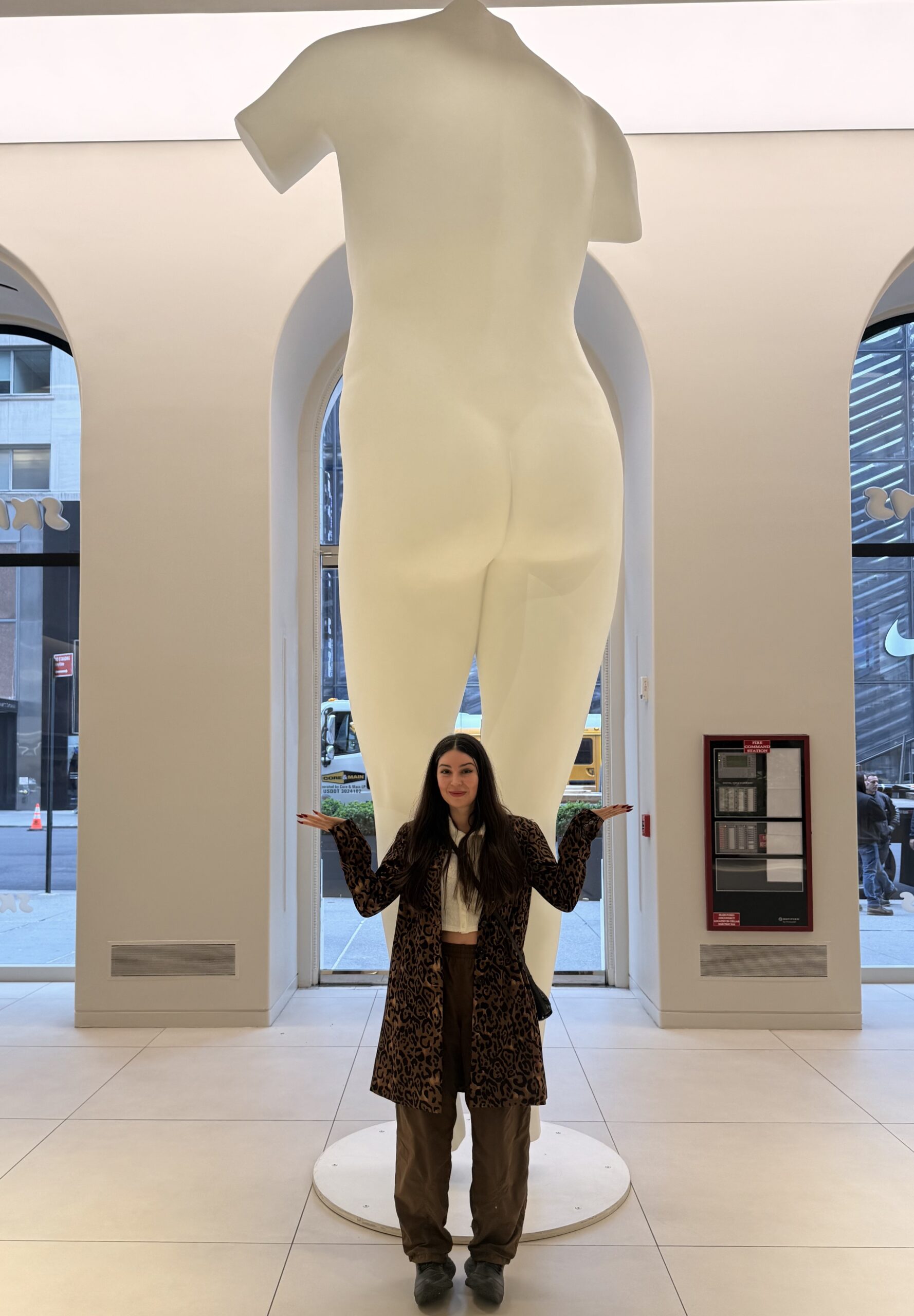
COREY: …And [a statue] of Kim’s butt. I actually wrote about this, I described Kim’s butt as her Mickey Mouse ears.
DEFINO: I was blown away by that comparison. The softness, the roundness, no hard angles. You quote a Disney associate as saying, “Circles never cause anybody trouble,” but people have “bad experiences with sharp points.”
COREY: The maternal, the fertility. Neal Gabler was kind of a god to me during the writing of the book. I loved his work [on Mickey Mouse], so that was really revelatory.
DEFINO: In the book, you argue that the Kardashians have become American icons on the scale of Disney, Las Vegas, and WWE. Why is this relevant now when—in the iconic words of Kourtney— “there’s people that are dying”?
COREY: I think the book is coming at an even better time than I could have imagined because the Kardashians are embedded in the establishment now, and we have a little bit more distance to look at them critically. That’s always been my whole thing, I want to analyze the Kardashians with the closest approximation of hindsight.
DEFINO: Yeah. It feels like the hype around them is waning, but they’re still almost omnipresent.
COREY: Their centrality is fracturing because media itself is fracturing. They were so dominant during the Instagram era, it felt like they were everywhere. I think we’re going to feel their influence in more embedded ways now, in subtextual and subliminal ways.
DEFINO: The subtitle of your book is “A New Media Manifesto,” and you say their ascent is inextricable from the ascent of new forms of media, like Instagram. How have they been able to dominate these platforms?
COREY: The Kardashians, because there are so many of them and they’re so archetypal, are able to be in a lot of different places all at once. In addition to that, Kim has made herself this amalgamation of different women, historical moments, and cultural tensions. And that’s why I do think they’ll find ways to overcome whatever changes happen in media, from TikTok to AI. And because they’re hanging out with the technocrats. They’re so good at getting onto new mediums and embracing change, which is also quite Disney-esque. Walt Disney was in cinema and then, unlike a lot of other people that were in the movies, he was unafraid of the advent of TV. They have those sensibilities that other great American icons have. I’ve looked at the patterns in my research for the book, and we can see that what the Kardashians embrace and anticipate, that it might be what’s next. … The whole thing about the Kardashians — the resistance they’ve kind of induced in people — is that it doesn’t feel consensual. You absorb information about them whether you want to or not.
DEFINO: The book references a lot of existing theory, some of which has been around for almost 100 years. Walter Benjamin’s work on aura and replication, Marshall McLuhan and “the medium is the message.” Your point is that the Kardashians embody, and essentially prove, these theories. So could this have happened with other people?
COREY: That’s why I’m such a fangirl for the theorists. It’s amazing to me how prophetic they were. They were writing at times when media was changing, and they were fascinated with it, and they were thinking a lot about the implications of it and anticipating the impact, and it’s come true. The Kardashians, I think, are natural outcomes of those legacies. But I don’t see anyone else doing it quite the way the Kardashians have. It required the embodiment of everything that those guys anticipated to evoke this feeling of them being everywhere all at once through the 2010s.
“The medium is the message” really is the best way to look at the Kardashians, because they made their bodies the mediums. And when they hit the scene, they actually were doing a lot of sex work and sexuality appropriations, like Playboy and Girls Gone Wild. They had an adult entertainer babysitting the Jenner sisters. That kind of thing. And then, as the culture kind of shifted to identity politics and concerns around racial appropriation, that’s when it started to really kick up. Kim was with Kanye, they were producing a lot of imagery, they were changing their bodies in even more caricatured ways. Then in the 2020s, at a time when class consciousness was at an all time high, Kim says, “People don’t want to work anymore” and they’re engaging in even more conspicuous consumption and leaning into the Marie Antoinette comparisons. They kind of do whatever reflects the moment.
DEFINO: What I love about you is that you’re very big on not moralizing. Why is that so important to your work?
COREY: I like to look at things from a colder perspective. I like to think my work could be a tool for people to use whatever their vantage point is. It’s also aligned with my message, which is to consume media and its content with more distance and skepticism. Sometimes training yourself to not react can be empowering, and I have a pre-existing muscle for that because I’m a psychotherapist. I always say, I don’t psychoanalyze the family, but this mirror that they hold up to all of us might be a useful psychoanalytic [tool].
DEFINO: Have you met them before?
COREY: No.
DEFINO: Do you want to?
COREY: I think it would be fascinating. I was there in the courtroom when Kim testified [at the Paris robbery trial], and that was the perfect way to see them in person for the first time. I’ve always found the Paris robbery to be really important to Kim’s myth.
DEFINO: You have a quote in the book about the “coliseum mentality.” Feminist scholar Ann duCille said that mass media plays “to the same coliseum mentality that thrilled at the sight of human slaughter. We have become a nation of voyeurs.” So we’re voyeurs of the Kardashians and their drama, but at the same time, there is actual war happening. There’s poverty, there’s genocide, there’s climate change. Why does it seem like the coliseum mentality only applies to entertainment? Why do the Kardashians generate more headlines than actual human slaughter? Is it the low stakes?
COREY: Yes, yes. It’s anesthetizing, it’s distracting. Part of why people hate the Kardashians is that they’re emblems of the Internet age, which we have a lot of anxiety about. Today we talk about how dystopian everything feels, how we’re living life online. We see terrible things online, and then we see the contrast of what the Kardashians present to us. They’re very useful for the cathartic expulsion of anger and frustration and fear, and they know it. They play that part. They have a function in society, in that way. For us to then try to figure out where we find our moral lines, which is also why I try really hard not to moralize in my book. I want to make space for the reader to figure out where theirs are. But yeah, the coliseum mentality has served a function forever for a reason. It tells us something about ourselves—that, for some reason, we need this.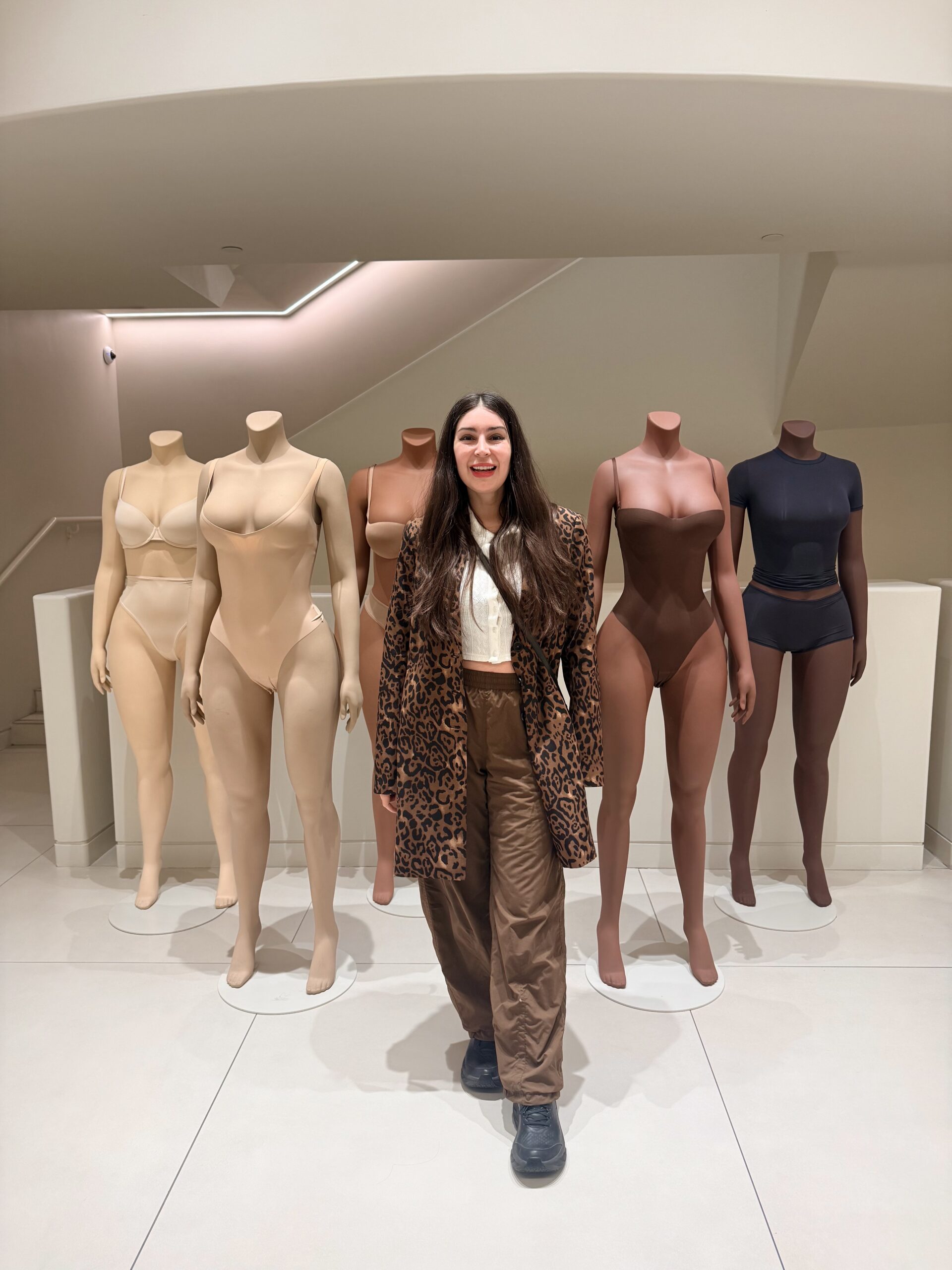
DEFINO: The theme of the underdog and The Hero’s Journey seem to fit here too. Kim is modeling this American Dream, underdog-to-champion thing, and you compare their plastic surgery and modification of their bodies to The Hero’s Journey. Do you think that we, the audience, consciously see the Kardash-ification of their bodies and our bodies as, like, a heroic triumph over the human form?
COREY: A lot of the public’s reaction to the Kardashians is an unconscious response to highly intentional and skilled narrativizing. But I do think there’s an instinct to it—we see them looking one way, then looking another way. Kris Jenner is the most willing to volunteer as tribute to do the gnarly, physical things we can assume they’re all going through. We see her recover, go under anesthesia for her facelift, and then we see her face look different. And now there’s this new facelift transparency she’s doing all these years later. There is a natural hero’s journey engagement with that story, and we are reacting to it. I’ve got to give Meredith Jones, the critical theorist and scholar, credit for really identifying this, like, Jesus-esque resurrection element.
DEFINO: I also loved the comparison of going under anesthesia as a sort of death and coming out post-surgery as rising from the dead. A rebirth, a messiah thing.
COREY: Meredith Jones writes it as, they wake up and see the light and then they’re someone a little bit new. Even the relationship to the plastic surgeon—the idea of the surgeon as the sculptor.
DEFINO: Speaking of cosmetic transparency, Kim has been at the forefront of so much in beauty culture, but not the cosmetic surgery transparency movement. The shift happened without her, and I’m curious why you think that is?
COREY: They really did create this relationship [with their audience]. Like, “Our faces have this flawless symmetry, and you can do it too with contouring, here’s our tutorial.” The Kylie Lip Kit is the most classic example. I suspect Kim is probably doing everything that one can do, and she won’t tell us because of her political aspirations. That’s my really hot take.
DEFINO: “Instagram Face” or “Kardashian face” will probably be an enduring visual semiotic for the family. In the book, you say that they’re simultaneously “architects, subjects, and objects of harmful standards.”
COREY: Billy Lezra gets credit for that quote.
DEFINO: I love it. And it is kind of controversial to imply that the Kardashians are victims of oppressive beauty standards too. I remember when Khloé was accused of Photoshopping Instagram pictures in 2021, she wrote about “the constant pressure of not ever feeling perfect enough.” The backlash from people was like, “But you and your family create that pressure for the rest of us.”
COREY: The gap will always be there to fill, in terms of beauty standards. They have taken on the role of being the leaders of this, and they’ve done it so well. Then, they also benefit from constructing relatability with us. So when Khloé—who I believe is dealing with the stress of beauty standards, probably—is saying that she’s just like us and deals with the stress of it, but she’s also an architect of it, it makes sense that there’s resistance to that. It’s a great example of the Kardashian worldview, the simulacrum. They’re referencing the feedback loop of pressure that people feel when they’ve consumed their content. And that’s also within the system where they have access to the money and best technologies to optimize their faces and bodies. So that’s going to have an impact on the public, and then the pressure to sustain that is self-inflicted.
DEFINO: I feel like so much of their influence in this area is about timing. They came up alongside a tech explosion in the beauty industry.
COREY: Totally. It aligned with that. Instagram came out, and a bunch of injectables were accepted by different regulatory systems to be used, and then cosmetic surgery is advancing at the same time. We’re seeing the impact of that explosion on their faces.
DEFINO: And our faces.
COREY: McLuhan wrote about how weapons are mediums. And I would say that probably, today, he would call beauty a medium too.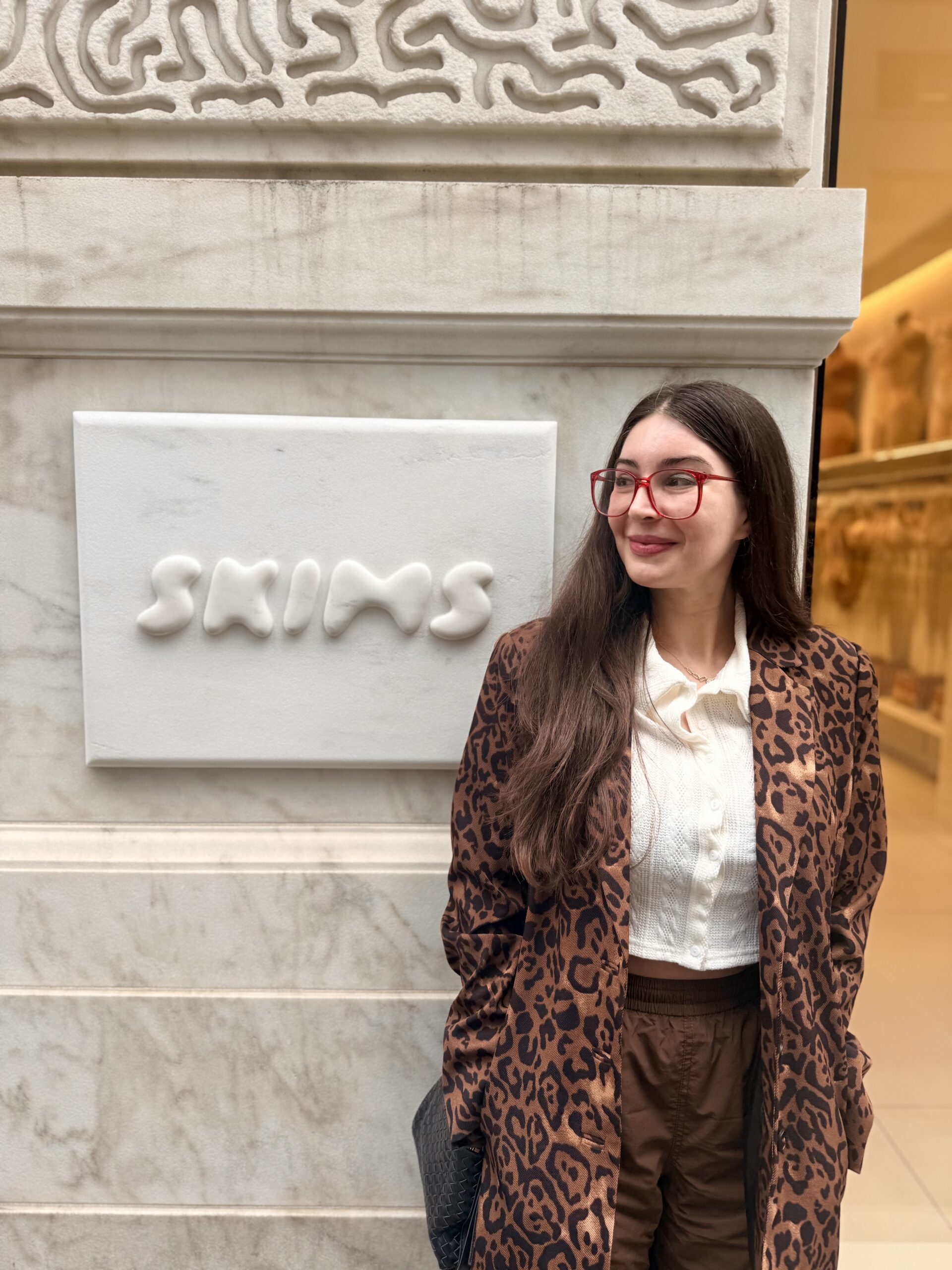
DEFINO: Well, and also a weapon. I think about Donda West, Kanye’s mother who passed away after plastic surgery complications. And Kim is known for inspiring people to get BBLs, which has one of the highest mortality rates of any plastic surgery. The concept of dying for beauty, or from beauty, seems so relevant to the Kardashian myth, but they distance themselves from that aspect of it.
COREY: Donda is a really scary case study, and it’s a real trauma in their family. Kanye was never the same after that loss. And yet, allegedly, they’re all engaging in these risky surgeries, we can presume. I write about the way they make mortality kind of camp. They’re unafraid to embrace it as a camp device, like Kris Jenner jumping into caskets and comparing them to Chanel purses. Even interacting with Robert Kardashian Sr.’s hologram is a very trippy thing to do. Their behind-the-scenes stories of plastic surgery are probably among the most interesting, harrowing ones they could tell—they are being cut open, they’re [exposing] themselves to real, brutal things—and they’re the ones we’re not hearing. It would be too risky for the brand. It’s so bodily. Too bloody.
DEFINO: Let’s talk about the selfie as a medium. Kim released a book of selfies called Selfish and, in the book, you write about the selfie in relation to Lacan’s theory of the “mirror stage” of infancy, which is “initiated when we first catch sight of our reflections and realize that we are embodied.” But there’s also a sort of alienation happening because you are not your reflection. You hopefully develop to the point of recognizing, “I am separate from this object. The reflection is not me.” And I wonder, if selfies have regressed us back to the mirror stage, what are the consequences of that? Of identifying with the image or the reflection more than the actual body?
COREY: It’s ancient. The myth of Narcissus resonates with us for a reason. The selfie phenomenon was so alienating for a lot of people during the time of Instagram because selfies were everywhere. And then there was this layer of “Kardashian face” that felt like it was everywhere, and fast fashion made the Kardashian fashion sense also feel everywhere. For what it’s worth, Kim has shared her strategy as like, “I’ll share a selfie of myself in a bikini, and then I’ll share an important law case, and then that’s what gets people paying attention.”
What worries me is this new world—that the Kardashians really have glamorized and normalized and encouraged—of required participation on the feeds to participate in society. Especially when you’re doing symbolic capitalist work. There have been times where I’m like, “Should I be posting more fucking selfies to matter more online?” And I hate that. I hate it because I don’t want to. I’m not good at them! The new selfie is really people putting themselves in videos. We’re being further pulled in, and that is the whole message of my book. Media is moving faster and faster and getting closer and closer, from big movie theater screens, to TV in our living rooms, to our phones in our hands in bed. It just worries me because commodifying ourselves takes more of our time. More of ourselves.
DEFINO: Rapid fire round. Would you rather have Kourtney’s unkempt bush or Khloé’s camel toe?
COREY: Unkempt bush.
DEFINO: Daily Fit Tea laxative diet, or eat poop every day to look younger?
COREY: Oh my god, that’s such a great question. I think the laxative tea.
DEFINO: Kim’s ability to smell a cavity, or having your vagina smell like fruit courtesy of Kourtney’s Lemme vagina gummies?
COREY: I think fruit.
DEFINO: Faux-nipple bra or faux-pube thong?
COREY: Faux-pube thong.
DEFINO: I thought about the SKIMS faux-nipple bra while I was reading your book actually. You wrote about Kanye’s “Bound 2” music video, and how Kim is both topless and nippleless in it. It’s such an interesting tie-in to the faux-nipple bra, almost like a nod to the mannequin-ization of her body.
COREY: No, totally. The weird thing about the Kardashians—but this is why I think they work, also—is the simulacrum. They already had naturally long, dark hair, but now it’s all extensions. Kim and the Kardashian sisters had curvy figures, but then they surgically modified them, or we can guess they have. Making products that replicate and then cover up things that bodies naturally have is very them.
DEFINO: Which theorist would each sister be? Or whose ideas do they most embody? Let’s start with Kourtney.
COREY: Let’s give Kourtney Lacan, just because there’s the baby element.
DEFINO: Kim?
COREY: I would say Kim is McLuhan.
DEFINO: Khloé?
COREY: I don’t know why, but Boorstin. Just because Boorstin is so much about the image, and Khloé’s got this ever-changing face. She’s mediatizing her face to be as optimized as her sisters’.
DEFINO: Kendall?
COREY: Kendall’s tough…
DEFINO: Kylie?
COREY: Kylie’s probably Foucault slash Bentham for the panopticon. Maybe we can lump Kendall into that because they both live in the fishbowl.
DEFINO: Finally, are you sick of the Kardashians yet? What’re you working on next?
COREY: I’m tired. I’m really tired. I’d like to do some thinking about other American icons, but there’s always going to be more to say about the Kardashians. I accept that.
